

Nigeria’s economy unstable yet – World Bank, IMF; NESG forecasts 5.5% GDP growth
The World Bank and the International Monetary Fund (IMF) yesterday urged decisive measures to further reduce inflation in order to translate economic gains into tangible improvements in household welfare.
The global lenders and development partners admitted that macro-economic gains are being recorded on the strength of reforms but declared that “inflation rate is still high.”
The World Bank’s Senior Economist for Nigeria, Dr. Samer Matta and Nigeria’s IMF Country Representative, Dr. Christian Ebeke, made the positions in Lagos while speaking as panelists at the Nigerian Economic Summit Group (NESG) 2026 Macroeconomic Outlook presentation.
The NESG report was themed “Consolidating economic stabilisation gains: pathway to sustainable growth in Nigeria.”
On Tuesday, the World Bank increased its projection for Nigeria’s economic growth rate for 2026 to 4.4 percent from the 3.7 percent forecasted in June 2025.
The global financial institution equally upgraded Nigeria’s economic growth rate for 2027 to 4.4 percent from 3.8 percent.
Speaking at the NESG event, IMF’s Ebeke warned that Nigeria is at the risk of “being very complacent and believing that the job is done.”
He also warned against what he called “hydrogenic volatility” whereby “self-inflicted policy mistake or pain that you basically bring into the system by doing some of the policy mistakes that you should not be doing.”
Ebeke urged the Federal Government and subnationals to demonstrate the quality of public spending for the macroeconomic stability to translate into improvements in Nigerian households.
He said “There is no other way for Nigeria, given the type of reforms that the country has undertaken. So, this is a country that has decided to allow the exchange rate to be flexible.
“This is a country that has opened its financial account, so the flows for participation in the fixed income market. This is a country that has basically allowed prices to move flexibly so that they can be a signal for the economy. So, bringing back distortions, bringing back the heavy intervention by the government in controlling prices and controlling volumes, it’s not something that is no longer sustainable for Nigeria.
“So, the goal is really going forward. To maintain or sustain the course of both the fiscal and monetary policy, there are things that are still, I would say, finished business. Inflation rate is still high. The job is not done.
“There are two risks that Nigeria faces right now, in my view. One is clearly the risk of being very complacent and believing that the job is done. Not necessarily at the federal level, I see this risk more at the sub-national level, where their fiscal space has increased substantially and the risk of cross-cyclical fiscal policy in the pre-election year becomes a very acute risk that they can actually undo their gains that CBN Governor Cardoso, other ministers have achieved.”
Also speaking, Matta said he was worried about the projection of Nigeria’s inflation dropping to single digit by 2029.
“That’s because if you think of it, what’s the role of policy making is to make people better, and one metric of it is inflation. And here we have two main metrics, gross and inflation.
“So, if inflation stays above double digits for a long time, it will be hard to bring down inflation,” he said.
He admitted that it is good to celebrate that inflation is reducing down, however, insisted that inflation remains a major impediment to household welfare.
“But I don’t think we should celebrate that this is over. So, I think this is the first point. And this is where I would emphasize that I think monetary policy is maxed out,” he said.
Matta also emphasized on spending by the government to guarantee social protection.
“And in 2025, actually starting in 2024, subnationals have much higher revenues than the federal government, and most subnationals have a fiscal surplus.
“So, the question is whether that spending is going into the right direction and whether that spending is going into not only capital or infrastructure, which is good, but also into other sectors in order to improve the well-being at the subnational level, because at the end, subnationals are at the forefront of public service when it comes to education and health.
“And I think the third important pillar is when it comes to social protection. And social protection, I think, it shouldn’t be only reduced to direct benefits. So, direct benefits are important, and these need to be continued and scaled up.” he said.
NESG forecasts 5.5% GDP growth, 16% inflation rate in 2026
The Nigerian Economic Summit Group (NESG) projected Nigeria’s gross domestic product (GDP) to grow by 5.5 percent in 2026.
The NESG’s Chief Economist and Director of Research and Development, Olusegun Omisakin, spoke while presenting the group’s ‘2026 Macroeconomic Outlook’ report, saying the projection is driven by the urgency of consolidation.
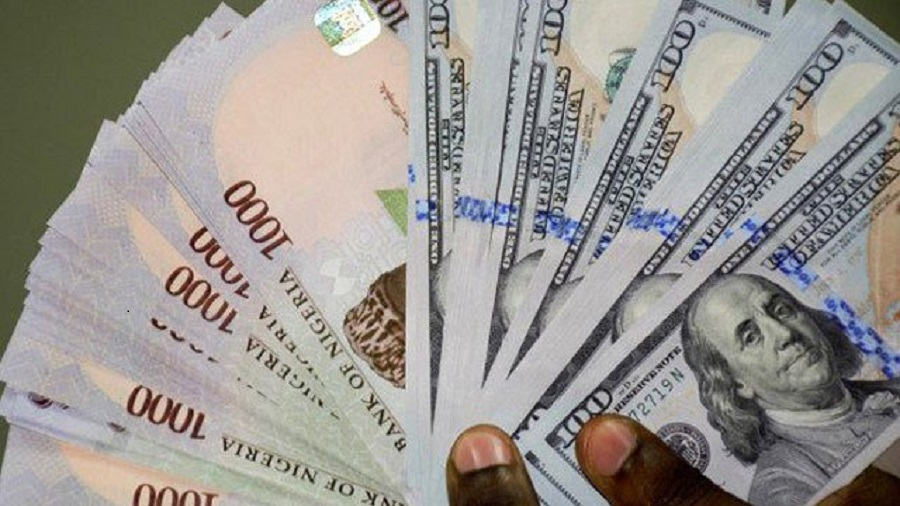
The report outlined key targets for the economy in 2026, including a 16 percent inflation rate and an exchange rate of N1,480 per dollar.
The external reserves are also expected to rise to $52 billion.
According to Omisakin, the country is currently in a consolidation phase, having recorded notable improvements in GDP, inflation control, and foreign reserves management, but warned that significant challenges remain.
The NESG economist highlighted four pillars critical to sustaining Nigeria’s economic gains, which include macroeconomic stability, structural transformation, institutional strength, and social protection.
On macroeconomic stability, he emphasised the need for single-digit inflation in the long term, foreign reserves above $50 billion, and maintenance of positive real interest rates.
He said structural transformation requires attention to agriculture, manufacturing, power, and export diversification.
“We have the manufacturing sector growing at 1.5 percent and the agricultural sector by 2 percent. This is a risky signal, as we have huge sectors that are not fulfilling the fundamentals of our consolidation goals in terms of job creation and inclusive growth, and infrastructure development,” he added.
On institutional strength, Omisakin noted the need for improved implementation of new tax laws, fiscal discipline, and transparency in public spending.
Social protection and job creation, the economist said, must shift from merely insulating citizens from economic shocks to actively integrating them into productive activities.
In his opening remarks, the Chairman of NESG, Niyi Yusuf, said Nigeria has emerged from “acute macroeconomic dislocation toward a more predictable environment.”
He, however, warned against what he called policy inconsistency and reform fatigue
According to him, 2024-2025 marked a stabilisation phase characterised by major structural reforms in foreign exchange management, energy pricing, and monetary policy.
He said the measures, though painful, were necessary to restore macroeconomic stability and reduce systemic volatility.
The chairman noted that while GDP growth strengthened to 3.8 percent in the first nine months of 2025 — up from 3.2 percent in the same period in 2024 — growth remained services-driven, accounting for nearly 60 percent of GDP.
“Stabilisation alone does not equate to prosperity. Growth remains modest and uneven, driven by a narrow set of sectors, with weak transmission to employment and household incomes.
“Oil purchasing power remains under pressure, and welfare outcomes continue to lag behind macro indicators.
“These realities underscore a critical point. Stability is a necessary condition for growth, but it is not sufficient,” he said.
N152trn public debt not from new loans – Edun
Meanwhile the Federal Government has explained that Nigeria’s N152 trillion public debt is largely driven by foreign exchange adjustments, and not new borrowings.
Minister of Finance and Coordinating Minister of the Economy, Mr. Wale Edun, during the launch of the Nigerian Economic Summit Group (NESG) 2026 Macroeconomic Outlook noted that the clarification seeks to address public concerns by breaking down the components of the debt increase and highlighting the impact of recent fiscal and exchange rate reforms.
In a statement issued on Thursday by Special Adviser on Communications, Media and Publicity to the Minister of Finance, Dr. Ogho Okiti, he said: “The Honourable Minister of Finance and Coordinating Minister of the Economy clarified that the N152 trillion public debt figure is largely the result of transparency and exchange rate correction, not excessive new borrowing.”
According to the Finance Ministry, about N30 trillion of the total public debt represents previously unrecognised Ways and Means advances that have now been formally captured in the government’s books.
These obligations, which had accumulated over several years, were recorded in line with improved transparency and accountability standards.
The statement further explained that nearly N49 trillion of the increase in public debt resulted from the revaluation of Nigeria’s foreign debt following recent foreign exchange reforms.
Responding to criticism on lower growth in agriculture and manufacturing sectors, Edun admitted but maintained that growths have been recorded across 27 other sectors of the economy.
He emphasised that following the removal of distortions and recent stabilisation measures, the focus of economic policy had shifted to driving growth through increased investment.
“Ongoing investments in digital infrastructure, including the rollout of over 90,000 kilometres of fibre optic cables in collaboration with the World Bank and the Ministry of Communications, are part of efforts to empower young Nigerians and support technology-driven growth,” he said.
CBN Now Boring, No Longer Flamboyant – Deputy Governor
The Central Bank of Nigeria’s Deputy Governor, Economic Policy, Dr. Mohammed Sani Abdullahi, says the apex has shifted from being “flamboyant” to a “very boring” institution by focusing on its core mandate.
Abdullahi, who spoke as a panelist, said pre-2023 the the Central Bank was “very flamboyant and very involved in every aspect of our economy, from sports to aviation to power to agriculture, and in a way that has even been more involved than the ministries that have been charged with those responsibilities.”
The development, he said, triggered major problems including about N30 trillion of ways and means that “were injected into the economy, which then fueled inflationary pressures.”
He said “So the decision at the beginning was, let’s be boring. Let’s be boring in terms of focusing strictly on our mandate.
“What is the mandate? Price stability, exchange rate management, currency, advisory to the government, those four or five things, and just try to do them really, really well. At the beginning, the conversation was, what is that anchor that even makes monetary policy effective?
Nigerians can now invest ₦2.5 million on premium domains and profit about ₦17-₦25 million. All earnings paid in US Dollars. Rather than wonder, click here to find out how it works.
Join Daily Trust WhatsApp Community For Quick Access To News and Happenings Around You.
Community Reactions
AI-Powered Insights
Related Stories

IMF backs Nigeria inflation easing after CPI methodology rejig

Inflation Eases to 15.15% Amid Moderation in Energy, Food, Commodity Prices

How to increase birds’ body weight, reduce livestock mortality

Discussion (0)