
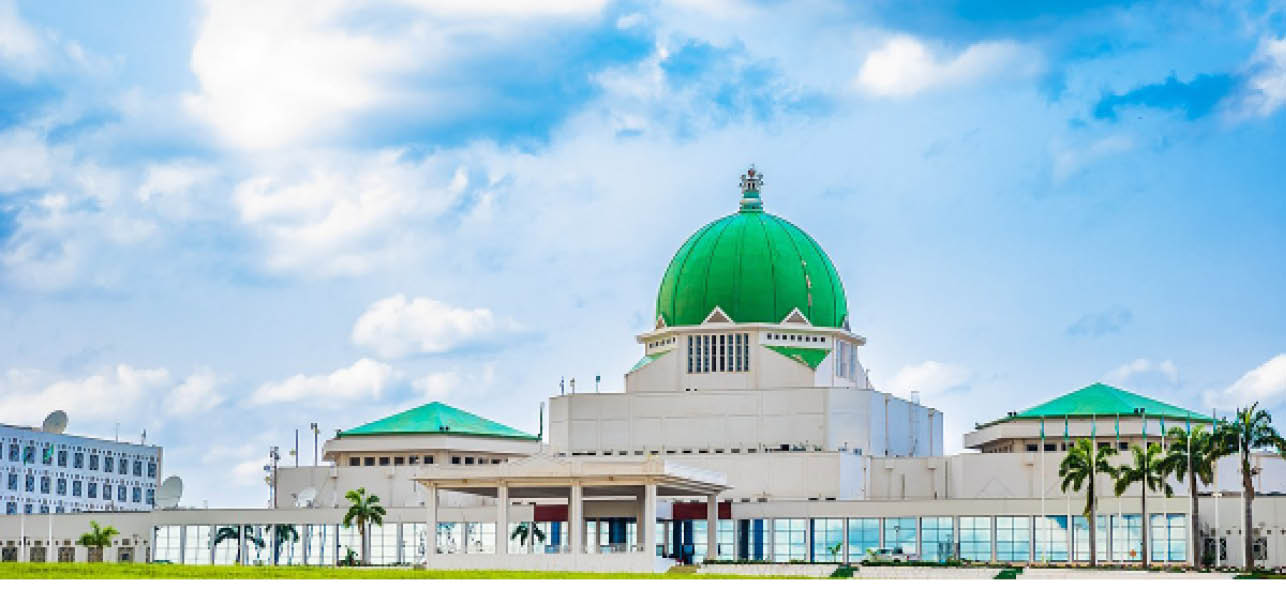
Discordant tunes from Nigeria’s policy room
In September this year, President Bola Tinubu gleefully told some members of the ruling All Progressives Congress (APC) that the government had, as of the previous month, August, met its revenue target for the year. According to him, since the revenue target had been met, there was no need for the country to borrow anymore.
However, three months after that declaration, Nigerians began to hear discordant tunes from leaders about the revenue target. Contrary to the president’s claims, the Minister of Finance and Coordinating Minister of the Economy, Wale Edun, declared recently that Nigeria had suffered a revenue shortfall of about 64.45 per cent. According to Edun, out of a revenue target of N40.8 trillion, Nigeria could only realise about N10.7 trillion by the end of the year, leaving N30.1 trillion unrealized.
Edun spoke at a session convened by the House of Representatives to discuss the assumption of the 2026–2028 Medium Term Expenditure Framework (MTEF) and Fiscal Strategy Paper (FSP), which form the backbone of the provisions in this year’s budget.
Nigerians could recall that the 2025 budget was christened the “Budget of restoration” and designed to stabilise the economy after the disruptive impacts of the 2024 budget and the harsh fiscal and monetary policies of the government. That budget was based on a total expenditure of N54.9 trillion, with a projected revenue of N40.8 trillion.
The contradiction between our president and the minister of finance, a key position in the government, is quite significant and should not be lost on Nigerians. It speaks volumes about everything wrong within the government. Edun also told Nigerians that the government had, within the period, borrowed as much as N14.1 trillion to cover the funding gap resulting from the revenue shortfall.
All this happened in a year in which the country witnessed what could be the worst budget implementation experience in its history. As the country comes to terms with the realities of our fiscal fiasco, it is necessary to raise some pertinent questions and hope that answers will be provided to prevent future occurrences of this dismal performance.
If the country could generate only about a third of its projected revenue for the year, how was it possible that the president did not know the true state of the nation’s finances by the third quarter of the year? While all the borrowing was going on, was the president not informed or carried along in the process of borrowing as much as N14.1 trillion by the government he heads?
A critical look at these developments reveals the hidden reasons for Nigeria’s messy experience with its fiscal programme. The different MDAs involved in the nation’s fiscal planning have informed us (and the President) that they used this year’s revenue to fund last year’s projects. Yet, what was collected of this year’s projected revenue was just a little over a third.
Daily Trust believes that the president should not be making such a political statement on serious economic issues. Such matters that deal with finance and the economy should not be politicised as a means of securing political support. Facts are immune to political manipulations, and any attempts to do so will show sooner or later. The government has the duty to always tell Nigerians the real state of the economy.
Moreover, such contradictions from two key government figures would likely erode confidence in our potential investors who require facts on the state of our economy before they invest.
Nigeria, in the past, made progress in the budgeting process. The country operated the January-December budget cycle, and it was effectively and efficiently implemented without the strange practice of rolling over budgets. Now we are being taken backward because it is now impossible to evaluate the extent of the budget implementation, let alone assess its impact on the economy.
It is such cover-ups that have led us to this mess that the government is trying very hard to clean up. This is not the progress that is being sold to Nigerians as part of the achievements of this administration.
We urge key government officials to gather their acts together to tell Nigerians the true position of the nation’s economy. This is necessary to engender goodwill and contribution of every Nigerian.
Nigerians can now invest ₦2.5 million on premium domains and profit about ₦17-₦25 million. All earnings paid in US Dollars. Rather than wonder, click here to find out how it works.
Join Daily Trust WhatsApp Community For Quick Access To News and Happenings Around You.
Community Reactions
AI-Powered Insights
Related Stories

Aviation Minister Signs Nigeria-Cameroon Technical Aeronautical Search, Rescue Agreement

Opposition parties hasten to INEC deadline on membership
Ombugadu dumps PDP


Discussion (0)