

Knowledge-driven training and community engagement are critical to Nigeria’s security – Ahmed Audi
For years, Nigeria’s security landscape has grappled with fragmented capacity, limited institutional development, and evolving asymmetric threats that require more than firepower; they demand knowledge, structure, and strategy.
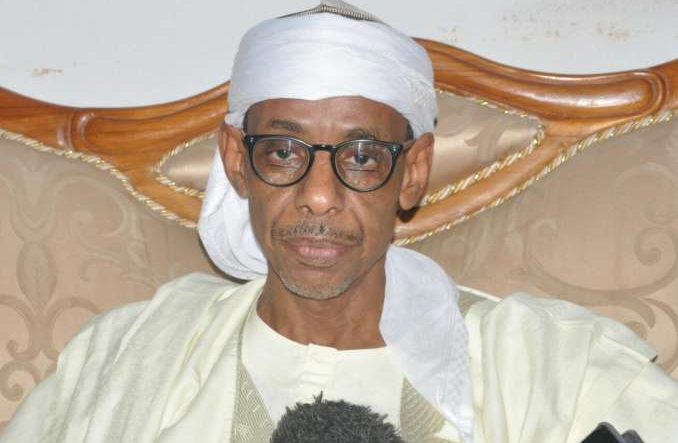
Ahmed Abubakar Audi, a professor, is the Commandant-General of the Nigeria Security and Civil Defence Corps (NSCDC). A member of the National Institute (mni) and an Officer of the Federal Republic (OFR), this is his 29th year in public service. Under his leadership, a monumental shift is taking root in one of the country’s most strategically positioned security institutions.
With a 50-page transformation blueprint, a renewed emphasis on training and career development, and bold reforms accentuating gender inclusion, mining security, community engagement, and protection of national infrastructure, the Corps is repositioning itself from reactive enforcement to intelligence-led security.
In this exclusive conversation with Bashir Ibrahim Hassan, General Manager, Northern Region, BusinessDay, Audi reflects on nearly three decades of service, explains why a structured development curriculum is foundational to discipline and operational efficiency, and outlines how women-led units, mining marshals, and AI-enabled intelligence are redefining the NSCDC’s impact nationwide. From voluntary beginnings to a full-fledged paramilitary force, the Corps is entering a new era of capacity, confidence, and clarity of purpose, and at its core lies one belief: everything starts with training.
Please put in perspective the challenge of leading the Corps and the vision that drives your mission?
Let me first introduce myself. My name is Professor Ahmed Abubakar Audi, MNI, OFR, a sitting commandant of the Nigeria Security and Civil Defence Corps (NSCDC). Let me profoundly thank you for your question, which is central. Today is my 29th year, and by next year I will have been three decades on this job. I thank Almighty Allah for allowing me to pass through the crucibles of this job. I joined the service as a graduate with two staff members. Today, I have reached the zenith of my career in the service. I have served in all the formations. I was in intelligence, operations, administration, procurement, training, local government, area command and the training college as commander. I was also a zonal commander, and it was from there that I was appointed as the commandant general. I have seen it all.
Perhaps because of my experience on the job, when we were asked to start the screening for the selection of the next commandant general, I was fortunate to be one of those selected to go through the process that the government designed. We passed through the process – oral interviews, written exams, and other kinds of screening – and by divine providence I was selected. I was the first in the ranking of results of those who went through the screening. Eighteen of us started the process; then we became 12, then we became six, and then three, and I was the first.
“We have also introduced a measure to curb the diversionary tactics that exploit mining for banditry – we see a nexus between mining and banditry. Oil thieves have shifted to solid mineral mining, and we have seen some collusion between local elites and some foreigners who cart away our natural resources.”
However, this is not even the issue. What I did first, towards the end of the process, when I reasoned that God may have approved of my becoming the commandant general, was to prepare a blueprint. I prepared a 50-page blueprint as a roadmap, indicating step-by-step, quarter-by-quarter, what I will do in the next five years because it is a five-year term. I am determined to follow this religiously, and I can give you concrete examples.
One of the big challenges we have in our service is training. Training is where everything starts. In fact, discipline itself starts from training. One of the things we have realised is that we do not have a career progression development course curriculum. One of the first things we have done is to work on a career progression development course curriculum. Before we started, we sought guides and models, a document or curriculum that we could convert into a scheme and lesson notes. This also means having a syllabus. For instance, when someone is going from level three to six, they have their course. We send them for training within the Corps for three or four months.
Before our arrival, we only did basic training. But some of us who have passed through the crucibles of the job have passed through many institutions and training schools; for example, I attended Jaji and NIPPS and went to police college. I have passed through these crucibles and have learnt and imbibed the culture.
How did you acquire this knowledge and these skills when, within the organisation, there was no career progression development course curriculum?
Sometimes these institutions write to us to nominate candidates for training. I was always fortunate to be tapped to attend because I am known to like training. At the time, I did not quite know how useful this was going to be. With this, I started lobbying my colleagues in other operations, the DSS, and the military, and remember that we work closely with the military. Leveraging this, I cultivated additional relationships with the military and requested additional support from many of these military training institutions, such as Jaji. They offer slots and recently increased our slots from 10 to 20. We also take training from the Army Resource Centre, and we take strategic courses too at NIPPS. This is what I have done so far and continue to do. This way, officers come back from the training and indoctrinate and mentor others. And we are getting excellent results. It is important to note that our Corps is elitist. We have over 40 PhD holders in this service. This is why, before we do anything, we conduct research. You find them across the country at commands and other formations.
You started as a graduate, but what we used to know about the Corps a quarter of a century ago was that it was a dumping ground for dropouts, but we have seen remarkable changes. What is responsible for this?
We started as a voluntary service organisation. However, some of us who started from the voluntary era know what we faced and have a kind of passion that is unparalleled. You can see that we love this country. When we came on board, we started working on the perception of our staff and the reduction of the preponderance of volunteering, because now that we have become a full-fledged paramilitary service, under rules and regulations, we should behave differently than before. But it has not been easy, having inherited some people from the volunteering service era and transiting into a full-fledged government service; it is difficult to move this old order to a new order. This is a new paradigm, and based on this, it has been a bit difficult. Gradually, we have come to see that globally, it is knowledge that drives development. We encourage our personnel to study courses relevant to what we do, our mandate. Since we are part of the nucleus of the security architecture of Nigeria, we decided to study courses such as social sciences, gender and security, governance, and leadership.
We have improved our research department. I joined as a graduate but carried on with postgraduate degrees as a member of the Corps. I am a seeker of knowledge and an avid reader. I have written in journals and published informed pieces and written books. I read and write a lot.
“We are also leveraging the contribution of companies. We are establishing public-private partnerships to help us arrange platforms that we can use in generating funds to assist the government, but generally, we are faring well.”
Why do you love to read and write?
I come from a highly educated family. My immediate elder brother is a professor and one-time vice-chancellor. I have other siblings who are PhD holders, so we are seekers of knowledge in our family. I imbibed this habit of reading right from childhood. I have six degrees, including a PhD, and this can only be borne of personal determination and an unwavering commitment to learning. The lessons from this are that you need knowledge to be a good leader. Research shows that any leader who is not able to have a positive influence on their subjects is not worth their salt.
Going back to the fifty-page document, training is fundamental. What else is in the document?
One other area we have not been doing well in is not giving women platforms for self-expression. For instance, in the history of our service, we have had only one female deputy commandant for nearly three decades that we have existed as a full-fledged paramilitary service. Currently, we have promoted three women as Deputy Commandant General, which has never happened, and we created units that would make women more visible and relevant in our mandate.
This is probably because of my area of specialisation, which is gender in the security service. So, we are creating platforms to give women a chance to compete favourably with their male counterparts. We created a female division, and a woman heads it. This did not exist before now. This division has some autonomy and a clear task.
Since schools are critical social assets of any nation, we have assigned the female division to provide security and safety for schools nationwide. They were trained by the 17 Brigade in Katsina. These women are doing well. They have thwarted over 48 attempts of school kidnapping nationwide. This is one of the platforms we introduced, a policy.
We have also introduced a measure to curb the diversionary tactics that exploit mining for banditry – we see a nexus between mining and banditry. Oil thieves have shifted to solid mineral mining, and we have seen some collusion between local elites and some foreigners who cart away our natural resources. To deal with this, we created another policy as a platform to provide security for the mining industry and the mining marshals. These mining marshals are selected from the special forces combinations who have been trained by the military. We always leverage the expertise and professionalism of the military because of our history, especially in counter-terrorism and counter-insurgency.
The involvement of mining marshals has increased the revenue profile in terms of payment of royalties. When we joined, we met the revenue profile at N6 billion. The projected revenue figure was N13 billion. But within a year, we have generated more than N38 billion for the ministry. We made the mining companies pay royalties because sometimes they underpay or don’t pay at all. We have arrested culprits and closed over 600 illegal mining sites nationwide.
Where do you place this corps in the security architecture of Nigeria, in terms of impact?
Based on extant laws and acts of government, our mandate is clear. The Corps should provide service in the protection of critical national security infrastructure. We have mapped critical national assets and infrastructure. We have a directorate in charge of critical national assets and infrastructure. We have done vulnerability studies to identify our critical national assets and infrastructure – this is called mapping. We want to see the nature and number of these assets and infrastructure. This has not been easy because we are about 63,000 in number as a corps; compared to the critical national assets and infrastructure, this is not enough. It will take time for us to have enough personnel to match the number of critical national assets and infrastructure, except if we recruit yearly. But we have made an important impact in protecting critical national assets and infrastructure.
For example, in the protection of our mining sites, we have made some impact. We have also made progress in the protection of our power installations, such as the national grid, water installations, dams, telecommunications and infrastructure. But it has not been easy because we have recorded losses of personnel. The insecurity we face is called asymmetric conflict because these bad guys hit on critical national assets to cause a massive impact. What we do through the intelligence directorate is to gather insights that guide our operations – covert or overt responses.
Another example is that we have a mandate to regulate the private security guard industry, which used to be unregulated. However, we produced some formidable platforms and made them professional. We are on the verge of repealing the obsolete Private Guard Security Act of 1986, or so. This is to enable us to synchronise it with global best practices. Transport marshals and power rangers are a critical part of the policies and platforms we have created. These have not started, though. This will start after our next round of recruitment.
Community collaboration is pivotal to tightening security. How does the core engage with local communities, traditional rulers and youth groups?
We have created some formidable platforms that promote advocacy. There is something called community policing in community effort; it comprises the collaboration between citizens and security agencies with the aim of providing safety and security for the lives and properties of citizens. In the areas of schools, we introduced the school community security vanguard. This is an advocacy that we established from our peace and conflict unit.
They are experts in conflict resolution, and we engage with them. They are highly educated. We split them into groups and have them go round schools engaging with school principals, heads of students, parents, traditional rulers and youth organisations in all communities. Given our mandate to protect critical national assets and infrastructure, the National Security and Civil Defence Corps also provides safety and security for farmlands and farmers. We have also created a platform that engages with farmers nationwide. Our agro-rangers are experts in alternative dispute resolution.
We have resolved over 1000 cases between farmers and herders. This is possible through our advocacy platforms. The Corps has two distinct comparative advantages that many Nigerians do not know. The Corps members do not live in barracks. We live and dine with civilians. So, it is easy for us to obtain intelligence. The Corps is trained by virtually all security agencies – the DSS, the police, and the military (especially the Army and Navy).
How do you work with the other security agencies?
The Civil Defence Corps is at the nucleus of the security architecture of Nigeria, perhaps because of its mandate to protect critical national assets and infrastructure. We are involved in joint operations nationwide. These joint operations have four services – the police and the military (Army and Navy). We work closely with the Navy in the creeks where the oil pipelines are situated. We all lose personnel in these joint operations. In Edo State recently, we lost some personnel. We have more sophisticated collaborations now than before. The triple Cs – collaboration, cooperation and coordination – are now conspicuous among these agencies.
Looking ahead, what are some of your strategic priorities for the next two to three years?
One central issue we need to leverage is training. We are going to train our personnel well. I thank the government for giving us an enabling environment for this. We have established two extra training schools, a command and staff college and a doctrine school that will train our armed squad. We did not have this before.
Going forward in the next one to three years, we want to consolidate what we have and perhaps create a policy that would create a platform to have specially trained personnel selected from our special forces group that would provide safety and security specifically for our power industry. We do not want to compromise on this. We want to promptly arrest vandals who cut and make away with our electricity wires. We have the mandate to prosecute vandals of critical assets and infrastructure. We have jailed over 100 and have over 250 cases in court. We closed over 700 illegal refineries through the introduction of a special intelligence squad. Going forward, we will strengthen what we have introduced and leverage what we have in our roadmap to create these two platforms.
What are some of the challenges you face?
Funding is sometimes a challenge and at other times not a challenge. However, within what we have available, we do our best. But if you allowed me, I would say we need an improvement in funding. Globally, there is the emergence of artificial intelligence (AI). AI has been proven to be part of the solution to security problems, although it has its own problems. It has both negative and positive effects. More funding will help us leverage AI more.
We have started by buying drones. For example, we got intelligence that there is an illegal mining site in Kogi State, which has over 1000 illegal miners with connections to bandits. We wanted to launch a sting operation, but it was AI that helped us; otherwise, we would have lost a sizable number of staff. There were three or four ambushes. We learnt this through the drones we sent. This is AI in action. So, we need funding to apply more AI tools.
How else do you source funds beyond the government and the act establishing the Corps?
It is difficult to generate funds outside of the government. By the act establishing the Corps, we generate some funds. For instance, before you establish any private security guard, you register it with the corps, and you pay levies. In a year, we generate up to N1 billion. But we are not allowed to take even a dime from it. We are reviewing this act because the Corps is about two decades old, and there are areas that need updating. We are also looking to get assistance from our foreign partners because we are a financial member of the International Securities Organisation. We are leveraging this membership to get equipment and other assistance. We are also leveraging the contribution of companies. We are establishing public-private partnerships to help us arrange platforms that we can use in generating funds to assist the government, but generally, we are faring well.
How do you assess the Minister of Interior, based on the work he is doing?
First, let me tell you who Dr Olubumi Tunji-Ojo is. He is a refined intellectual and a consummate political operator. He is a vibrant, focused, result-oriented person. We cherish him in the Ministry of Interior and in all the services because of his results, orientation and innovation. He pushes everyone to go for results.
He is obsessed with giving Nigerians the best and drives every agency within his ministry to do the same. Today, there is no promotion backlog. This speaks to his drive for staff welfare. Before he came, people stagnated for years – five, seven and some ten years behind. He has cleaned this up. He cleared salary arrears. This is why we cherish him a lot. We are with our minister, 100 per cent loyal. He is implementing the policies of Mr President as outlined in the Renewed Hope agenda.
What would you want to be remembered for?
I want to be remembered for building a culture of knowledge and driving development. This will mark the difference between someone who is highly educated and provides leadership compared to someone who is not so highly educated. Highly educated here means a PhD holder and professor. However, we need support and cooperation from Nigerians. I advise young Nigerians to shun drugs. Our last recruitment drug tests showed a drug problem among young Nigerians. I encourage young Nigerians to get busy and stay enterprising.
Join BusinessDay whatsapp Channel, to stay up to date
Community Reactions
AI-Powered Insights
Related Stories

War in The Middle East, Uncertainty in The World
The world dislikes the weak, by Hakeem Baba-Ahmed

Award‑Winning Action Epic ‘Son of the Soil’ Rolls Out to Audiences Across the African Continent


Discussion (0)