
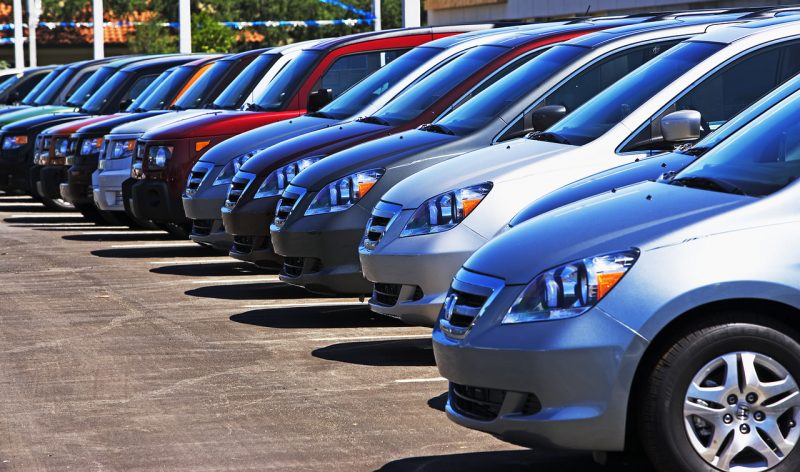
‘Auto dealership industry contributes over 7% to Nigeria’s GDP’
The Professional Platform of Auto Dealers Association (PPADAN), has revealed that the automobile import and dealership industry contributes more than 7% to Nigeria’s National Gross Domestic Product (GDP).
A chieftain of the group, Amobi Moghalu also clarified that this figure doesn’t account for the local manufacturing segment, which further amplifies the industry’s economic impact.
Moghalu noted that this conservative estimate also overlooks the substantial contributions made by related services, which support the auto dealership ecosystem.
From mechanics and painters to vulcanizers, panel beaters, spare parts suppliers, and off-road technicians, these auxiliary industries make the auto dealership sector a significant player in the Nigerian economy.
He made these statements at the second bi-yearly award and N350 million fundraising ceremony for the PPADAN secretariat, held in Lagos.
Moghalu who was Chairman, Organising Committee for the award emphasized the importance of establishing a dedicated secretariat to streamline documentation, memorabilia, and records for the association and its affiliates.
He stated that such a facility would not only create a conducive environment for meetings but also support the welfare of association members.
This proposed secretariat would also serve as a revenue-generating space for the association, with meeting rooms, lounges, and event areas available for public rental to help sustain the facility, he stated.
Moghalu expressed concern that, despite the size and importance of the industry, the auto trade lacks a fitting structure dedicated to its needs.
“It is a shame that such a significant sector does not have a proper edifice to support its players,” he said, adding that other sectors, such as artisanal trades, boast better facilities.
He described the current state of the auto trade as resembling a “big man’s cave.”
Moghalu outlined that the auto dealership community consists of two broad categories. The first group includes well-established, large importers who follow international standards and regulatory requirements.
These dealers often feel insulated from the country’s challenges, believing their businesses are robust enough to shield them from the difficulties posed by government policies and enforcement agencies.
The second group consists of smaller, standard-owning dealers, often younger individuals who operate as intermediaries between large importers and the buying public. These middlemen may not have showrooms or significant vehicle inventories, but they are vital in connecting large dealers to customers, often operating in market-like environments.
Moghalu also noted that some long-term dealers have rapidly evolved from being middlemen into car shop owners, emphasizing that the industry must recognize the value of all players, regardless of their size.
“We must treat all members with the same dignity and respect that we expect for ourselves,” he stated.
The event’s centerpiece was the fundraising campaign aimed at raising N350 million to build a “secondary grid” — a facility designed to accommodate both large and small auto dealers.
The proposed structure would serve as a space for resolving disputes, engaging with government representatives, and formulating policies that would help shape the future of the auto industry.
Moghalu explained, “We seek to build a secondary grid where aid and dealership disputes can be settled. It will be a space for dealers to engage with government officials, explain policy impacts, and facilitate policy formulation for the industry’s development.”
The secretariat would play a pivotal role in elevating the stature of auto dealers in Nigeria’s economic and policy landscape, he explained.
Nigerians can now invest ₦2.5 million on premium domains and profit about ₦17-₦25 million. All earnings paid in US Dollars. Rather than wonder, click here to find out how it works.
Join Daily Trust WhatsApp Community For Quick Access To News and Happenings Around You.
Community Reactions
AI-Powered Insights
Related Stories

War in The Middle East, Uncertainty in The World
The world dislikes the weak, by Hakeem Baba-Ahmed

Award‑Winning Action Epic ‘Son of the Soil’ Rolls Out to Audiences Across the African Continent


Discussion (0)