
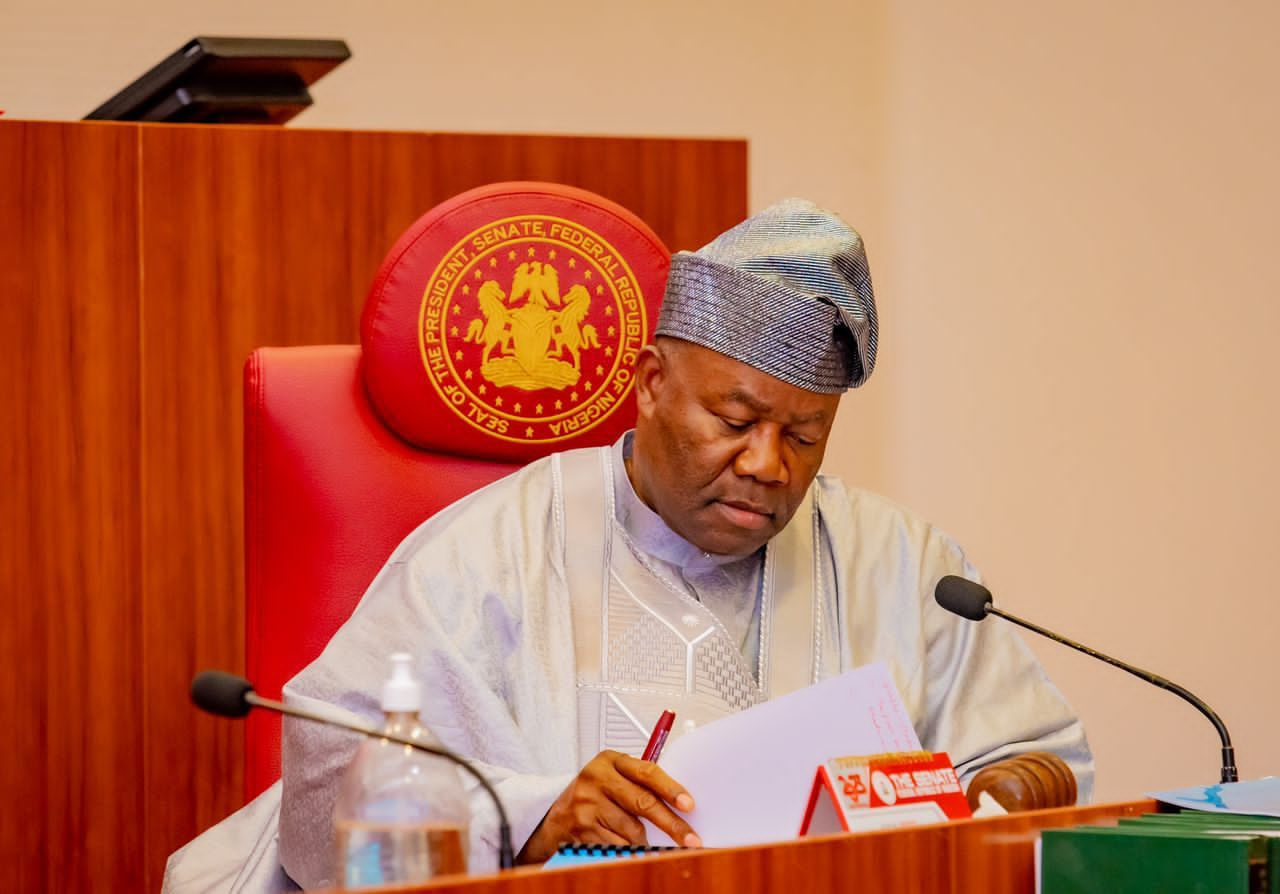
Electoral reform: Did 10th Senate dither, betray Nigerians?
Along the 29-month-old life of the Tenth National Assembly, several instances in its operations had largely portrayed a less-than-optimal premium, which the leadership had almost routinely accorded the sanctity of the institution’s position in the country’s political space. Among these instances feature the twists and turns that marked the emergence of its leadership in 2023 – a spectacle which many Nigerians still rue as an ‘arrangee’ dispensation at the instance of the President Bola Ahmed Tinubu in his desire to have a rather malleable federal legislature to work with.
Then come the instances of talk-down and emasculation of some vocal members of the institution, especially in the Senate by its President Godswill Akpabio. Easily recalled are the cases of Senator Abdul Ningi of Bauchi State, who was suspended for protesting the ‘sharing formula’ for budgetary allocation in respect of constituency projects. Also was the clampdown on Senator Ali Ndume by the hierarchy of the ruling party, the All Progressives Congress (APC), for resenting the isolation of President Bola Tinubu by his handlers from being directly in touch with the generality of Nigerians. Then also comes the face of between Senator Natasha Akpoti Uduaghan and Godswill Akpabio, which would eventually snow-ball into her suspension for six months, as well as constitute a matter for the courts.
Beyond the foregoing has also been the tendency of the institution to routinely acquiesce to the dictates of the executive arm of government, even in instances where the latter adopts patently anti-people stance. Nigerians are all too familiar with the President of the Senate Godswill Akpabio, even openly defending the diminished scrutiny of the executive arm by the National Assembly, citing the impropriety of the legislature engaging in perpetual mortal combat with the executive arm.
This is just as the constitution prescribes as the core responsibility of the legislature to hold the executive accountable to the common weal. If the constitutional provision does not connote scrutiny, then that word must have a different meaning in the lexicon of the Tenth National Assembly.
However, hardly would any of the aforementioned past instances of indiscretion compare in respect of incongruity and odiousness with the latest instance of public misgiving on its conduct, being the disturbing narrative of its tardy handling of the reform of the Electoral Act; and in particular, the vote on electronic transmission of electoral results from the polling booths elsewhere.
The Senate is currently ruing the situation where sections of the country’s media celebrated reports that it voted against the mandatory use of electronic transmission of results during polls exercises. In the reckoning of the Senate, the slant of the report by the media distorted the actual intent of the institution.
Indeed, so vociferous has the response of various lobbies in the Senate been – with even some opposition figures throwing their weight behind efforts to correct the twists in the narrative. Yet, so far, hardly has any response from any lobby of the Senate offered a satisfactory rebuttal to the ‘offending’ media reports, leaving the matter as another open wound for Nigerians.
Against the backdrop of the public’s take on its position on the burning issue of mandatory electronic transmission of polls results, the concern of the Senate is understandable. Among the weaknesses of the Electoral Act hardly does any compare in incongruity and odiousness with the slack, extant provision on the transmission of polls results, which was exploited by INEC to deploy manual transmissions along with wide spread human error; hence created room for the wide threshold of doubt over the integrity of polls results, including the last 2023 presidential polls, which ushered in the present administration of President Bola Tinubu. It is, therefore, also understandable that Nigerians had expected the National Assembly to be explicit in wordings with respect to whatever reforms it undertakes with respect to the Electoral Act, especially as such borders on elimination of manual interference with any aspect of the electoral exercise.
While the Senate may be ruing the alleged mis-presentation of its take on mandatory transmission of election results, the media, whose enterprise is driven by public interest, may simply be doing its legitimate duty, which is to raise the alarm over what it sees as a betrayal of the same public interest, which drives its sail.
In the circumstance, the Senate needs to admit its failing to convey a clear message to Nigerians with respect to the issue of mandatory electronic transmission of polls results as part of the reforms of the Electoral Act. This it has to do in appreciation of the fact that as far as Nigerians across the entire country are concerned, anything other than statutorily guaranteed, mandatory transmission of polls results from the polling booths elsewhere constitutes a dispensation to hoodwink Nigerians with the intention to rig electoral processes or results.
Any other dispensation – no matter how beautifully couched in flowery verbiage – remains suspect, anti-people and ultimately provocative. So outrageous and indefensible does such development remain that any contemplation or hope to pass it down the throat of Nigerians remains a betrayal of the people and justifies open resistance to constituted authority.
With the current state of affairs in the country, the political class, especially the National Assembly, needs to be well guided.
Nigerians can now invest ₦2.5 million on premium domains and profit about ₦17-₦25 million. All earnings paid in US Dollars. Rather than wonder, click here to find out how it works.
Join Daily Trust WhatsApp Community For Quick Access To News and Happenings Around You.
Community Reactions
AI-Powered Insights
Related Stories

NGOS AND IMPACT ON SOCIETY

KPMG Advises Businesses to Reinvent Tax Functions Amid Revenue Drive

Nuhu Ribadu Vs. El Rufai: Battle of The Last Hegemons


Discussion (0)