
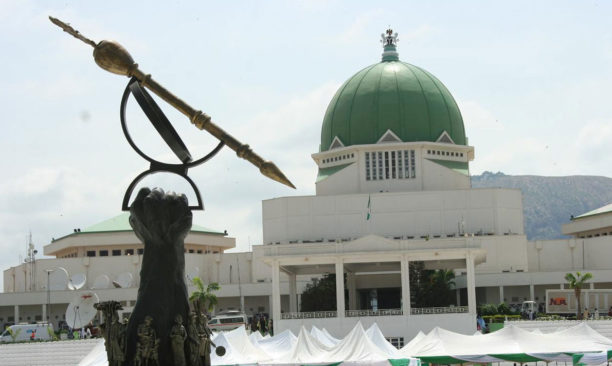
N’Assembly reconvenes tomorrow over 2027 election timetable
The National Assembly will reconvene tomorrow (Tuesday, February 17, 2026) to deliberate on electoral issues arising from the recently announced timetable for the 2027 General Elections by the Independent National Electoral Commission (INEC).
Both the Senate and the House of Representatives had earlier adjourned plenary to February 24 to attend to budget defence. However, the Senate reconvened last week for an emergency session to rescind its earlier decision rejecting electronic transmission of election results from polling units to INEC’s Results Viewing Portal (IReV).
Although a terse two-paragraph statement signed by the Clerk to the National Assembly, Kamoru Ogunlana, did not state the reasons for the session, a separate release signed by the Chief of Staff to the Speaker of the House of Representatives, Prof. Jake Dan-Azumi, explained that lawmakers would reconsider aspects of the Electoral Amendment Bill — particularly the timeline for the publication of notice of elections by INEC.
INEC timetable and Ramadan concerns
INEC on Friday announced that the Presidential and National Assembly elections would be held on February 20, 2027, while the governorship and state assembly polls are scheduled for March 6, 2027.
The commission also fixed party primaries between May 22 and June 20, 2026, for the nomination of candidates.
However, concerns have been raised by some Nigerians, especially Muslims, over the February 20 date, noting that it falls within the holy month of Ramadan.
In 2027, Ramadan is expected to commence in early February and end in March.
Among those who expressed concerns is a former presidential candidate of the Peoples Democratic Party (PDP), Atiku Abubakar, who urged INEC to reconsider the date.
In a post on his official X (formerly Twitter) handle on Friday, Atiku said the proposed date falls “squarely within the Ramadan period (February 7 – March 8, 2027), a sacred season of fasting, reflection, and spiritual devotion for millions of Nigerian Muslims.”
A former presidential aide, Bashir Ahmad, also called on INEC to reconsider the timetable.
Tagging the commission on X, he wrote in part:
“If the intention is to encourage full and inclusive participation in the electoral process, scheduling such a critical national exercise during Ramadan may present challenges for a large segment of the population. Many Muslims tend to reduce engagement in demanding worldly activities during this period in order to focus on religious obligations.
“Given the significant Muslim population in this country, it may be worthwhile to reconsider the timing to ensure broader participation and convenience for all citizens.”
The Action Democratic Party (ADP) also urged INEC to shift the election dates. In a statement signed by its National Chairman, Yabagi Yusuf Sani, the party welcomed INEC’s indication that it had begun consultations on the timetable, stressing that Nigeria’s democracy is strengthened by inclusivity and sensitivity to social realities.
“While electoral timelines must strictly comply with constitutional and statutory requirements, elections must also command public confidence and reflect the social realities of our diverse nation. The scheduling of major national elections during the holy month of Ramadan carries significant implications for voter participation, logistical coordination, and national inclusivity.
“In a plural and multi-faith society such as Nigeria, sensitivity to religious observances is not a concession but a democratic necessity. An election timetable that accommodates the spiritual commitments of millions of citizens strengthens participation, legitimacy, and national cohesion.”
Islamic groups react
The National Missioner of the Ansar-Ud-Deen Society of Nigeria, Sheikh AbdurRahman Ahmad, described the decision as insensitive and called for the elections to be moved outside the Ramadan period.
He argued that election dates are not sacrosanct, noting that adjustments have been made in the past.
“As Muslims, we do not complain when elections do not affect our religious activities. However, we must make our feelings known when actions appear to disregard our religious obligations. Millions of Nigerian Muslims are stakeholders in the Nigerian project and should be respected when fixing election dates. Elections are national exercises that should encourage the broadest participation. Fixing the polls during Ramadan may disenfranchise or discourage the active engagement of many Muslims,” he said.
Similarly, the National Amir (President) of The Companion — an association of Muslim men in business and professions — Imam Nojeem Jimoh, urged the commission to reconsider the dates in the interest of inclusivity and national cohesion.
Jimoh noted that previous administrations had adjusted election timetables due to security and logistical concerns, and urged INEC to engage in broader consultations with religious and community leaders before finalising the timetable.
“We are major stakeholders in the electioneering process because we assist INEC in mobilising a large percentage of Muslims to perform their civic duties. We should be consulted before decisions that affect millions of Muslims are taken. INEC should have a rethink; the Muslim community is not asking for too much. After all, off-cycle elections are not fixed on Christmas or Easter days. Even elections held on weekends are never scheduled on Sundays out of respect for Christians. Why then should Muslims’ interest be disregarded? Shifting the election dates will not adversely affect INEC. Our complaint is in the national interest,” he said.
INEC defends timetable
INEC, however, defended its decisio.
In a statement issued by the National Commissioner and Chairman of the Information and Voter Education Committee, Mohammed Haruna, the commission said the timetable was developed in strict compliance with the Constitution of the Federal Republic of Nigeria, 1999 (as amended), the Electoral Act, 2022, and the INEC Regulations and Guidelines for the Conduct of Elections, 2022.
Haruna quoted the regulations as providing that presidential and National Assembly elections shall hold on the third Saturday of February in a general election year, while governorship and state assembly elections shall hold two weeks thereafter.
“Accordingly, and in faithful observance of these extant legal and regulatory provisions, the Commission fixed Saturday, February 20, 2027, for the Presidential and National Assembly Elections and Saturday, March 6, 2027, for the Governorship and State Houses of Assembly Elections,” he said.
He added that the commission had taken note of concerns expressed by stakeholders and was currently undertaking consultations. Where necessary, he said, INEC may seek legislative intervention, while ensuring that any adjustment remains consistent with constitutional and statutory requirements.
INEC reiterated its commitment to transparency, inclusivity and the credible conduct of the 2027 general election.
Plenary session
Meanwhile, the Clerk to the National Assembly asked senators and members of the House of Representatives to attend the session scheduled for 11:00am tomorrow, noting that “very crucial decisions” would be taken.
In a separate release, the Clerk of the Senate, Emmanuel Odo, said the President of the Senate, Godswill Akpabio, emphasised that important national issues would be addressed during the sitting.
Earlier, the House of Representatives had announced plans to reconvene for an emergency session.
In a statement signed by House spokesman Rep. Akin Rotimi Jr., lawmakers were informed through an internal memorandum issued by the Office of the Speaker that the emergency sitting was necessitated by developments arising from INEC’s announcement.
According to the memo, the House intends to rescind and recommit the Electoral Act (Repeal and Re-Enactment) Bill to review and possibly adjust the statutory notice period for elections from 360 days to 300 days to allow greater flexibility in scheduling.
All legislative processes relating to the bill are expected to be concluded the same day.
The House reaffirmed its commitment to strengthening Nigeria’s democratic institutions through responsive and responsible lawmaking.
The statement signed by the Chief of Staff to the Speaker of the House of Representatives, while explaining the reasons for the emergency sitting, disclosed that “This follows the release earlier today by the Independent National Electoral Commission of the 2027 General Election Timetable.
“As has been observed, the proposed dates for the Presidential and National Assembly elections coincide with the period of Ramadan, a development likely to affect participation.
“Accordingly, it has become necessary to undertake a recision and recommittal of the Electoral Act (Repeal and Re-Enactment) Bill earlier passed by the House. Among other matters, the recommittal is intended to review and adjust the statutory notice period for elections by INEC from 360 days to 300 days, in order to ensure greater flexibility in the scheduling of elections and alignment with prevailing national considerations.
“All legislative processes relating to the Bill are expected to be concluded the same day to enable Members proceed with other scheduled political engagements, including the forthcoming APC Ward Congresses.
“Given the constitutional and national importance of this matter, all Honourable Members are strongly advised to prioritise attendance,” the statement added.
Nigerians can now invest ₦2.5 million on premium domains and profit about ₦17-₦25 million. All earnings paid in US Dollars. Rather than wonder, click here to find out how it works.
Join Daily Trust WhatsApp Community For Quick Access To News and Happenings Around You.




Discussion (0)