

Like Venezuela, like Nigeria
On Christmas Day, 2025, the US bombed Nigeria. A week later, on January 3, 2026, the US raided the Venezuelan capital, Caracas, in the middle of the night, bombed some strategic military positions and captured the country’s president, Nicolas Maduro, on allegations of narco-terrorism, for which he is now facing trial in the US. Far apart, and yet oddly linked by recent US hostilities and doxxing, the two have a lot in common.
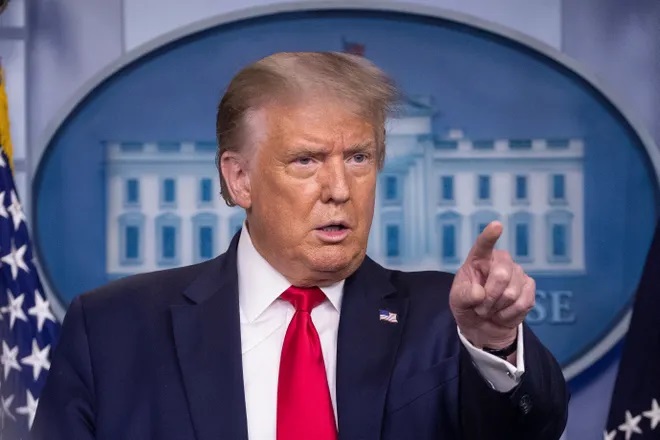
At the centre of this whirlwind week of America’s ostentatious exhibition of power has been the US president, Donald Trump, who has been rather burlesque in his proclamations, brutish in his approach, and baffling in how, with the intelligence reports available to him, he had arrived at some of his conclusions regarding Nigeria, Venezuela, South Africa, Gaza, Russia v Ukraine, Iran, trade tariffs, and sometimes China too. For a president who so blatantly but unsuccessfully campaigned to be awarded the Nobel Peace Prize-because Obama had taught the committee that awarding the prize to a black man for merely winning the US presidential election was not such an astute move-and ended up winning the newly minted FIFA Peace Prize, Trump has been caught in flagrante delicto ripping into peace.
Two things are clear. The first is that Nicolas Maduro has been a scourge on Venezuela and its people. What he has done to his country, one he has led since 2013, could morally be equated to a war crime. And I will return to this. The second is that what the US did in Venezuela violates every international law, especially Article 2 (4) of the UN Charter, which expressly stipulates that: “All Members shall refrain in their international relations from the threat or use of force against the territorial integrity or political independence of any State, or in any other manner inconsistent with the Purposes of the United Nations.” The illegality of one country raiding another, overthrowing its leadership and putting said leader on trial in this other country, has been emphasised by legal scholars.
The US is going to get away with this, unscathed, unsanctioned, because, well, it is the US, and in this world, might is right. It won’t be the first time either, as there has been a long history of such interventions dating back to 1890, when the US first sent ships to Argentina to “protect” US interests, and 1893, when it overthrew the Hawaiian monarchy and annexed Hawaii for economic reasons. From 1900 to the 1930s, the country launched several invasions in Honduras (1903, 1907, 1911, 1912) in favour of one regime or the other, Nicaragua (1909), overthrowing the government, Haiti (1910, 1911) when the National City Bank of New York took over the country’s finances; and the extended military occupation of Haiti between 1915 and 1934. The Dominican Republic and Nicaragua also suffered similar interventions in that period. In the 1950s, the US launched an operation that toppled the democratically elected Iranian Prime Minister Mohammed Mosaddegh in favour of the corrupt Shah because Mosaddegh had nationalised Iranian oil. The Shah’s misrule of Iran led to the Islamic Revolution of 1979 and the omnipresent tensions between Iran and the US today. Skipping over the 1960s and ‘70s interventions in several African countries, notably resulting in the overthrow of Patrice Lumumba of Congo, I suppose the pattern is clear.
The US economic interest (or the interest of some powerful US business persons) since the discovery of oil has been central to US interventions. The number of oil-related memes that have flooded social media since the US action in Venezuela says something about that, but the most glaring indictment is Trump’s recent proclamation on Truth Social in which he said he is “pleased to announce that the interim authorities in Venezuela will be turning over between 30 and 50 million barrels of high-quality, sanctioned oil to the United States of America.” His proclamation that the sale of this oil at market price and the control of the money by himself, as President of the US, for the benefit of the people of Venezuela sounds eerily familiar. Oh yes, we heard that before during colonialism.
What this unilateral action could imply is that China could decide to invade Taiwan or Russia can justify its invasion of Ukraine if they can hang a bad name on this country or claim some security concern.
While the US is acting on its interests, both Nigeria and Venezuela have not really acted in the interest of their citizens, presenting a weakness that Trump is preying on. First, the US targeted oil-rich countries with weak governments and internal turmoil. While Venezuela leads the world with a proven 303.2 billion barrels of oil reserves (about 17-18% of the world’s total), Nigeria ranks 10th globally with 37.3 billion barrels, placing it as Africa’s leading reserve holder.
Despite this abundance of wealth, both countries have been badly mismanaged. Between 1999 and 2013, when Hugo Chavez presided over the South American country, he ran a government that fed more on his charisma than on any knowledge of what to do with the country’s oil wealth. His policies were stopgap measures that were popular at the time but inherently suicidal and wasteful in the long run. By the time Maduro took over, lacking Chavez’s charisma but having more than twice his nescience about oil and the economy, and three times the dictatorial tendencies, things spiralled out of control.
Between 2013 and 2020, the country’s economy contracted by about 80 per cent, a decline that is considered more severe than the Great Depression the US suffered in the 1920s. Despite a recent GDP growth of 5.3 per cent in 2024, the country’s economy has remained less than half the size it was in 2013.
For a country with the highest oil reserves in the world, it is astonishing that about 73.2 per cent of the population lived in poverty in 2024, with 56 per cent in extreme poverty and 40 per cent experiencing moderate to severe food insecurity.
The impact of the economic crisis, coupled with Maduro’s brutality, has resulted in mass migration. A keenly contested election in which it is believed he lost but decided to hang on to power presents the perfect opportunity for a prowling power to come in.
Nigeria’s economy in the same period has been more stable when compared to Venezuela’s collapse, but in 2023, the poverty rate reached 46 per cent, with nearly 47 per cent of the population now living below the international poverty line of $2.15 per day, and low labour income pushing an estimated 14 million Nigerians into poverty in 2024. Current estimates show 19 million Nigerians (8% of the population) as food insecure. But where Nigeria takes the cake is in social tensions and insecurity. Only this week, about 40 villagers in Niger State were slaughtered at a market, and another nine were massacred in Plateau State.
In the first half of 2025, the Nigeria Human Rights Commission reported that 2,266 Nigerians were killed in a variety of violent attacks by terrorist groups, bandits, herdsmen, separatists, insurgents, and a potpourri of violent actors in the chaotic Nigerian scenario.
Like in Nigeria, where the US president decided to misrepresent the conflict, using exaggeration, misinformation, and malinformation (the deliberate dissemination of false information with the intent to cause harm), a similar strategy was deployed in vilifying Maduro and fabricating the claim of “narco-terrorism” levelled against the country.
Drug seizure data shows that Venezuela is not as prominent a supplier of cocaine to the US as other South American and Latin American countries. Colombia, Ecuador, and Panama are among the main direct traffickers of cocaine to the US via boats. About 74 per cent of cocaine flows through the Pacific Ocean via an “Eastern Pacific Vector,” which is far from Venezuela. So, while Venezuela functions as a traffic corridor for cocaine into the US, it is not the primary source.
There is a drug trafficking situation in Venezuela, and there are killings in Nigeria. However, the narratives have been exaggerated, misrepresented, and weaponised to justify these US interventions. The bigger truth is that both countries absolutely have no business being in these situations to be preyed upon. If both countries had been governed well, and the leadership had cared more about its people, it would have been hard for any such attacks to be justified.
Nigerians can now invest ₦2.5 million on premium domains and profit about ₦17-₦25 million. All earnings paid in US Dollars. Rather than wonder, click here to find out how it works.
Join Daily Trust WhatsApp Community For Quick Access To News and Happenings Around You.
Community Reactions
AI-Powered Insights
Related Stories

Tinubu’s oil revenue directive set to deepen fiscal federalism, empower states

Olawepo-Hashim wants INEC Chairman resigned or face mass action over new election timetable
Iran’s Supreme Leader is dead, says Trump


Discussion (0)