
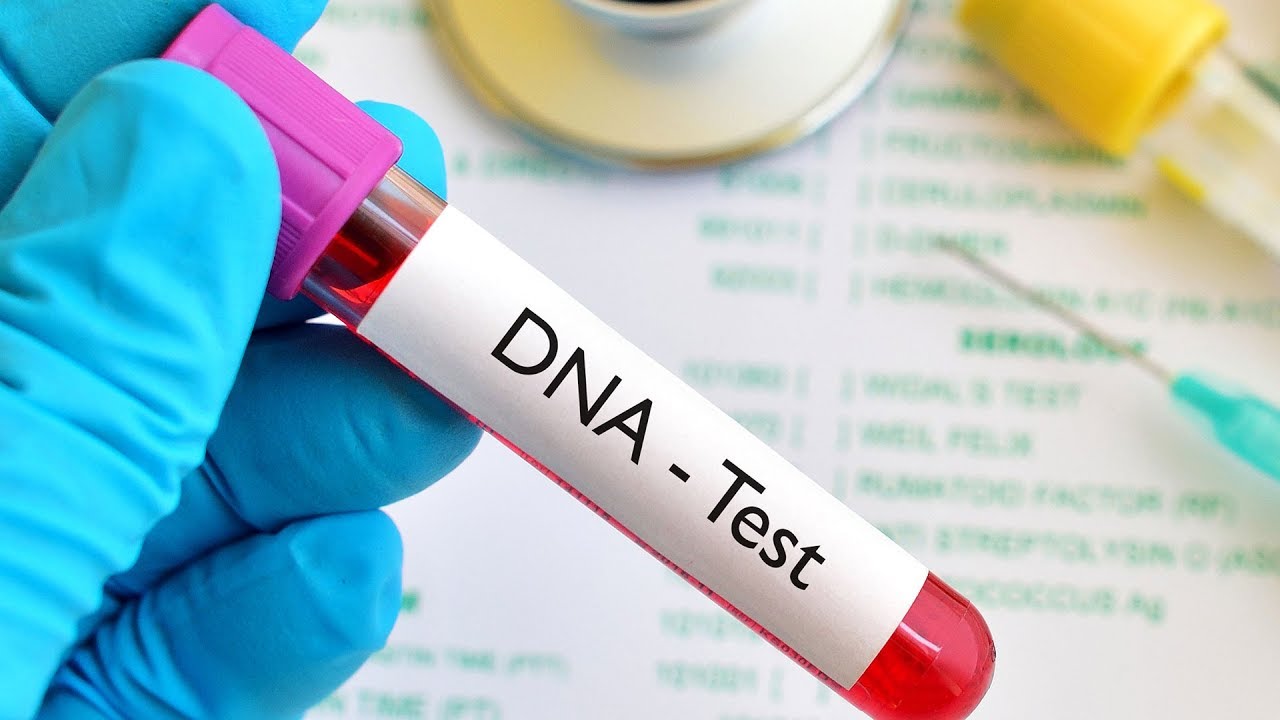
When DNA Results Don’t Tell the Whole Story
We often treat a DNA result like a final, divine verdict. In a time when truth can feel subjective, a laboratory report has become our ultimate anchor. We hand over a cheek swab, wait a week, and expect a simple answer that will settle a lifetime of questions. But science, for all its staggering precision, operates in a world governed by human error, biological anomalies, and the unpredictable reality of our own cells. Sometimes, a mismatch on a piece of paper is not the end of a relationship; it is the beginning of a much more complex conversation about what truly makes a family.
At its core, a paternity test is a game of biological matching. We inherit half of our genetic markers from our mother and the other half from our father. By isolating specific locations on the genome, scientists look for a profile that matches. If a child has a specific genetic marker that neither parent possesses, the mathematical logic of the test begins to disintegrate. In a vacuum, this often seems foolproof. But we do not exist in a vacuum. We live in a world where samples are handled by tired technicians, where home kits are contaminated by a stray hair on a kitchen table, and where the absolute truth of a printed result is only as reliable as the chain of custody that produced it.
The truth is that, while DNA testing is often touted as being 99.9% accurate, that tiny remaining fraction is where thousands of real lives exist. Globally, the prevalence of errors is not necessarily about the failure of science but about the process surrounding it. The explosion of “peace of mind” home kits has introduced a margin of error that most families are not prepared for. When a man collects a sample at home, there is no official witness to verify that the swab belongs to the person named on the envelope. Clerical errors, mislabelled vials, or even a simple mix-up in a sorting office can lead to a result that is factually correct for the sample provided but completely wrong for the family involved.
Beyond clerical oversight, there is the staggering, albeit rare, possibility of a hospital error. The “swapped at birth” narrative feels like the plot of a television drama, yet it remains a haunting reality in overworked or under-resourced maternity wards. There are moments in history where administrative chaos, sheer human fatigue, or even “deliberate miscalculation” has led to two newborns being placed in the wrong cribs. When a DNA test excludes a father, the immediate assumption is often infidelity, but the science does not account for the possibility that the child in the cradle is not the child the mother actually gave birth to.
In these rare, devastating instances, a negative result is a cry for a deeper investigation into a systemic failure rather than a personal one. This is why, in cases of doubt, a “maternity” test is just as vital as a paternity one. If a father receives a non-match, it is crucial to also test the mother. If the results show that the child does not match the mother either, the narrative shifts instantly. The crisis of trust between a couple evaporates, replaced by the chilling realisation that their biological child is somewhere else entirely. In such a scenario, the DNA test is technically “accurate” in its exclusion, but it is telling a story of a lost child rather than a broken vow.
Now, there are also “biological ghosts” in our machines. Humans are constantly evolving, and occasionally, a child will develop a spontaneous mutation at a specific genetic marker. If a lab only looks at a limited number of markers, a single mutation can make a biological father look like a total stranger to his child’s DNA. Even more surreal is the phenomenon of chimerism, where an individual carries two different sets of DNA—often from absorbing a fraternal twin in the womb. There are documented cases of mothers nearly losing custody because their blood DNA did not match their children’s, despite a clear biological birth. The same can happen to men; if the DNA in a father’s cheek swab does not match the DNA in his reproductive cells, the test will return a false negative.
Furthermore, we must consider the role of modern medicine. Procedures like bone marrow transplants can rewrite a person’s genetic signature in their blood. If a man has received a transplant, his blood will carry the DNA of his donor. A test taken from a blood sample would suggest he is not the parent of his own biological children, whereas a swab from his cheek might say otherwise. In these cases, the truth is hidden beneath layers of medical intervention that a standard test is not designed to see. It requires a specialist, a genetic counsellor, and a laboratory willing to look beyond the surface.
When a man holds a report that says he is excluded, the shock often triggers an intrinsic negative response. The world feels like it is tilting on its axis. And all of this comes at a great cost to physical, mental, emotional, and relational wellbeing. So, before imagining the worst or making accusations that cannot be reversed, it is vital to take a deep breath and look for the nuance. The first step should rarely be a confrontation but a conversation with a different, accredited laboratory. Opting for a “legal-grade” test, where identities are verified by a professional and the sampling is supervised, can eliminate the variables of a home-kit mishap, for example. It is also the moment to ask the lab if there is evidence of a mutation or to audit the birth itself if the mother’s DNA also shows a mismatch. This is a time for forensic curiosity rather than emotional finality.
We must also recognise that a DNA test is a tool, not a judge. It measures molecules, but it cannot measure history, intention, or the depth of a bond. Geneticists can tell us who provided the sequence of proteins, but they cannot determine who the real father is. History is full of men who discovered late in life that their children were not biologically theirs, only to realise that the years of bedtime stories, shared meals, and hard-earned wisdom were more real than a DNA result. The man who taught a child to ride a bike, who stayed up through the night during a fever, and who stood proudly at every graduation ceremony is not erased by a laboratory technician’s report.
If a result comes back as a mismatch, it is undoubtedly a crisis, but it is also an invitation to look at what actually builds a home. Families are constructed from more than just matching sequences of adenine and guanine. They are built through presence, through the shared language of a household, and through the choice to be responsible for another life. Whether the science confirms the bond or reveals a surprise that forces you to question everything you knew about your child’s birth, the commitment made to that child does not disappear into thin air because of a lab report.
Ultimately, we are more than the totality of our genes. Science gives us the data, but we give that data its meaning. True fatherhood is not just found in a vial of saliva; it is found in the daily, quiet choice to stay, to love, and to be the person that child calls “Dad”. When the DNA is not enough, the human heart must be.
Ojenagbon, a health communication expert and certified management trainer and consultant, lives in Lagos.
Nigerians can now invest ₦2.5 million on premium domains and profit about ₦17-₦25 million. All earnings paid in US Dollars. Rather than wonder, click here to find out how it works.
Join Daily Trust WhatsApp Community For Quick Access To News and Happenings Around You.
Community Reactions
AI-Powered Insights
Related Stories

FG formalises cross-border air rescue agreement with Cameroon

Sit-at-home in South East: A case of different strokes for different folks

Group rallies behind INEC, hails IReV upgrades, transparent result management



Discussion (0)