

Fintiri’s Local Government Tours: Leadership at the Doorstep
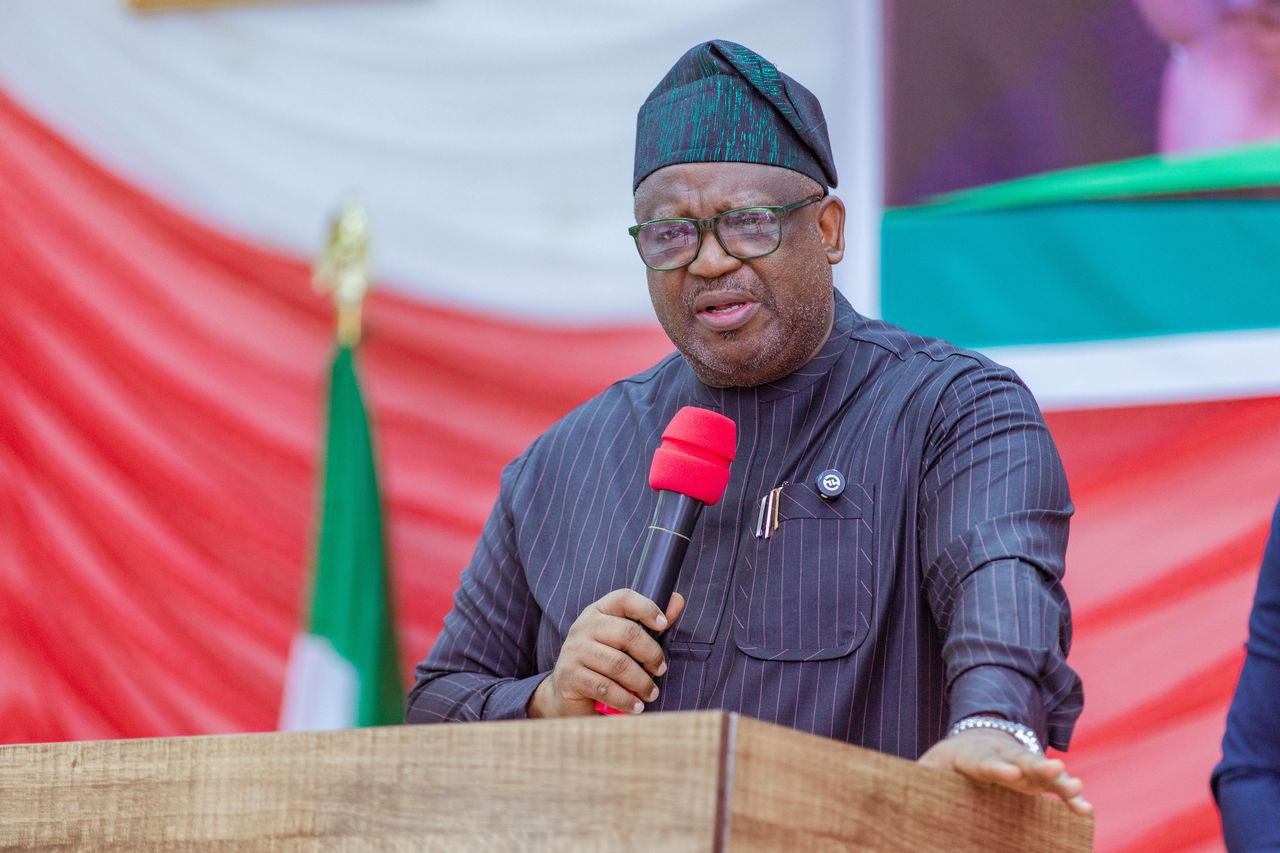
Governor Ahmadu Umaru Fintiri’s local government tour stands out not as a ceremonial excursion, but as a governing philosophy made visible. In a system where political outreach is too often compressed into campaign seasons and victory laps, a deliberate, structured engagement with communities outside electoral pressure reframes what leadership looks like in practice. It signals that governance is not an event but a relationship; not a broadcast from the capital but a conversation with the grassroots. The tour reads, therefore, as an assertion that public trust must be maintained through presence, not merely proclaimed through policy.
At a deeper level, the tour represents a corrective to one of the long-standing weaknesses of subnational governance: administrative distance. Too frequently, government becomes a remote abstraction – heard through announcements, felt through directives, but rarely seen in human form. When leadership physically enters local spaces – listens to community voices, inspects projects on site, engages traditional rulers, youth groups, civil servants, and ordinary residents – it collapses that distance. It restores a sense of immediacy to governance. Citizens no longer relate to power as rumor or radio statement, but as encounter and exchange. That shift is not cosmetic; it is democratic in substance.
The political importance of this kind of tour lies in how it builds legitimacy without the noise of campaigning. Campaign legitimacy is persuasive – it seeks consent. Governance legitimacy is performative – it demonstrates responsibility. By returning to communities after elections, the governor communicates that the mandate is not a trophy to be stored but a trust to be serviced. Each stop becomes a quiet reaffirmation that electoral victory is the beginning of accountability, not the end of engagement. It changes the emotional contract between the governed and the governor: from expectation deferred to expectation acknowledged.
There is also a narrative dimension to such outreach. In many political environments, the story of government performance is often told by intermediaries – critics, supporters, rumor networks, and partisan interpreters. A local government tour allows an administration to speak in its own voice, in the presence of its primary stakeholders. Projects are not merely listed; they are shown. Policies are not merely defended; they are explained in context. Challenges are not hidden; they are situated within constraints and plans. This direct narrative channel reduces distortion and strengthens credibility. It grounds political communication in physical evidence and shared space.
Ideologically, the tour aligns with a participatory and people-centered vision of leadership. It suggests that democracy is not exhausted by periodic elections but nourished by continuous consultation. It treats citizens as co-owners of governance rather than passive recipients of state action. The symbolism is powerful: authority goes to the people, not only the people to authority. In that symbolism lies a quiet ideological statement – that sovereignty lives in communities, and leadership must periodically return to its source for renewal and direction.
The exercise also has institutional consequences. When a governor systematically visits local governments, it elevates the status of those jurisdictions within the state’s governance architecture. Local administrations become more visible, more scrutinized, and more integrated into statewide development narratives. It encourages alignment between state priorities and local implementation. It also places constructive pressure on local officials to improve performance, knowing that their domains are not politically invisible. Over time, such habits can help build a more balanced governance ecosystem in which the center does not merely command but connects.
From a developmental standpoint, the tour functions as a field audit of reality. Reports, memos, and dashboards rarely capture the full texture of implementation. Physical inspection and direct listening often reveal gaps that paperwork conceals – stalled works, unexpected community needs, innovative local solutions, or social tensions that require early intervention. Leadership that sees firsthand governs with sharper judgment. Policies shaped by ground truth tend to be more adaptive and more efficient. In this sense, the tour is not only symbolic outreach but operational intelligence gathering.
Importantly, the positive projection of the tour rests on tone and method. When engagement is conducted with openness rather than choreography, listening rather than lecturing, inclusion rather than selectivity, it strengthens social cohesion. Communities feel recognized, not managed. Citizens feel heard, not staged. The governor appears not as a distant authority passing through, but as a steward checking on a shared enterprise. That emotional resonance is politically stabilizing and socially unifying.
Looking forward, the long-term significance of this approach could be transformative if it becomes institutional habit rather than one-time initiative. Regular post-budget tours, project verification visits, citizen feedback forums, and sector-focused community consultations could grow from this model. Such practices would gradually normalize executive accessibility and deepen democratic expectations. Future leaders would then be judged not only by what they build, but by how often they show up.
Ultimately, the local government tour, viewed in its best light, is governance stepping into the public square without the urgency of votes at stake. It is leadership choosing visibility over comfort, dialogue over assumption, and proximity over protocol. It says, in practical terms, that government belongs among the people – not only when it needs them, but because it serves them. That is why the tour matters now, and why its greatest value may lie in the standard it sets for what leadership should continue to be.
Nigerians can now invest ₦2.5 million on premium domains and profit about ₦17-₦25 million. All earnings paid in US Dollars. Rather than wonder, click here to find out how it works.
Join Daily Trust WhatsApp Community For Quick Access To News and Happenings Around You.
Community Reactions
AI-Powered Insights
Related Stories

NGOS AND IMPACT ON SOCIETY

KPMG Advises Businesses to Reinvent Tax Functions Amid Revenue Drive

Nuhu Ribadu Vs. El Rufai: Battle of The Last Hegemons


Discussion (0)