

NECA task FG on stronger labour justice reforms
The Nigeria Employers’ Consultative Association (NECA) has urged the Federal Government and key stakeholders to strengthen labour justice institutions and preventive workplace mechanisms to ensure industrial harmony and economic stability in Nigeria.
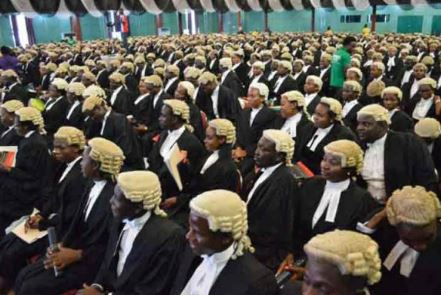
This call was made at the 4th edition of the International Labour Adjudication and Arbitration Forum (I-LAAF), organised by NECA with the theme: “Access to Labour Justice in a Rapidly Changing World of Work.”
Speaking at the forum, Ifeanyi Okoye, president NECA, said, as technology reshapes jobs, new forms of employment emerge and economic pressures intensify, access to labour justice has become critical not only for workers but also for employers, government and society at large.
“In such an environment, access to legal justice is not a luxury. It is a necessity for social stability, investor confidence and sustainable economic growth,” Okoye said.
While stressing that the most effective labour justice system is one that prevents disputes before they escalate into litigation, he noted that clear human resource policies, sound collective bargaining processes, compliance with labour laws and sustained social dialogue are essential in reducing workplace conflicts.
Read also: Power outages: NLC seeks new power sector roadmap
“Prevention, compliance and dialogue are the first layers of legal justice. delays, technicalities and procedural bottlenecks in formal dispute resolution systems increase the cost of doing business and weaken confidence in institutions, he noted.
Okoye called on government to continue strengthening institutions such as the National Industrial Court of Nigeria (NICN), the Industrial Arbitration Panel (IAP) and labour inspectorates to ensure faster, transparent and professional handling of disputes.
Muhammad Dingyadi, minister of labour and employment, reiterated government’s commitment to tripartite social dialogue as the preferred mechanism for preventing and resolving workplace disputes.
He highlighted efforts to review and update labour legislation and enhance labour inspection systems.
Didi Esther Walson-Jack, head of the civil service of the federation, said access to labour justice in the public service must begin with transparent HR processes and credible internal grievance mechanisms.
On the legislative front, Senator Diket Plang, chairman of the Senate Committee on Labour and Employment, said the National Assembly is working with stakeholders to modernise labour laws to reflect current workplace realities, including the growth of informal and platform-based work.
Joe Ajaero, president of the Nigeria Labour Congress (NLC), cautioned that access to justice must translate into real and enforceable outcomes for workers.
He said, “in a rapidly evolving labour market marked by precarious employment and casualisation, workers must have confidence that courts and arbitration bodies will protect their rights.”
He urged the judiciary and arbitrators to recognise the power imbalance between workers and large employers, and to uphold international labour standards, including freedom of association and collective bargaining.
“True industrial peace can only be built on genuine justice,” Ajaero said, warning that when formal systems fail to deliver timely remedies, workers may resort to collective action.
Read also: The constitution is ambiguous on gross misconduct – Ex-Wike Special Adviser
Other participants, including representatives of the Department of State Services (DSS), the National Institute for Legislative and Democratic Studies (NILDS), the Michael Imoudu National Institute for Labour Studies (MINILS) and the International Labour Organization (ILO), linked effective labour justice to national security, evidence-based policymaking and sustainable development.
The ILO reaffirmed its support for Nigeria in strengthening tripartite engagement and implementing core labour standards, noting that access to justice is central to the Decent Work Agenda.
The forum concluded with a consensus that access to labour justice must be fair, timely and affordable serving workers, employers, government and society alike in order to foster industrial harmony, protect rights and sustain economic growth in a rapidly changing world of work.





Discussion (0)