
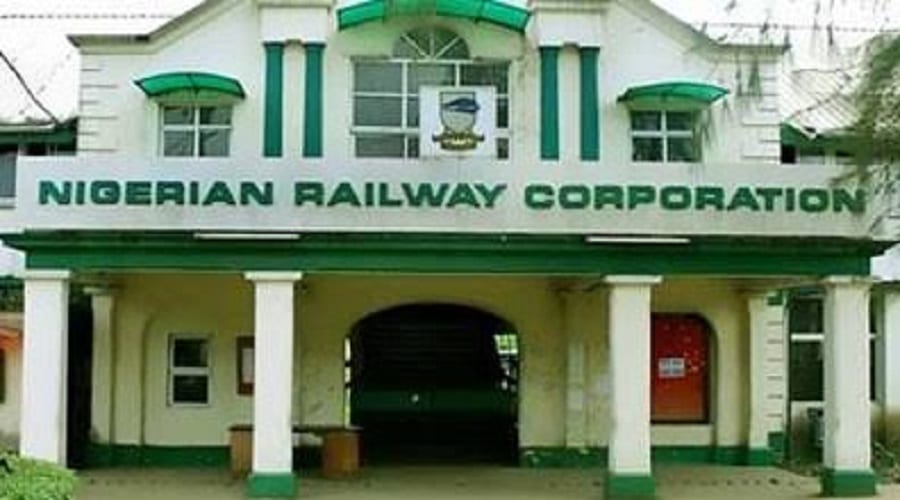
One year of railway system: How far, so far?
The appointment of Dr Kayode Opeifa, as Managing Director of the Nigerian Railway Corporation (NRC) in January 2025, came with a lot of expectations as the railway sector, long plagued by decay, vandalism, inefficiencies, and policy inertia, is undergoing transformation.
His appointment also coincided with the New Year when stakeholders – the
One year later, the critical question on the mind of stakeholders is the extent to which the railway system has gone under the new leadership.
Unlike many public-sector appointments where direction emerges gradually, Opeifa set the tone early with a five-point reform framework: bothering on legal Enabling Architecture, rehabilitation and optimisation of railway assets; railing with the States and Track Access Policy, freight Revolution and vision 2:5:10:20 (short-, medium-, and long-term growth targets)
This clarity of purpose has shaped both policy choices and public engagement over the past year.
Perhaps the most consequential shift has been the renewed emphasis on freight rail, a segment neglected for decades despite its economic importance.
It would be recalled that the NRC in partnership with APM Terminals (APMT) as well as other stakeholders including the Nigerian Shippers Council (NSC), the Nigerian Ports Authority (NPA), the Nigerian Customs Service (NCS) flagged off the cargo evacuation at the port in February 2025 which marked a symbolic and operational return of rail into Nigeria’s logistics value chain.
Container movements from Lagos through inland corridors—Kaduna, Ilorin, Minna, and Kano—have repositioned rail as a cost-effective alternative to road haulage. While volumes remain modest relative to national demand, the institutional groundwork for scaling freight operations is now firmly in place.
Railing with the states: Subnational buy-in
A major policy breakthrough under Opeifa has been the deliberate engagement with state governments. Through the “Railing with the States” initiative, NRC has signed or initiated Memoranda of Understanding with several subnationals, including Plateau, Ekiti, Ogun, Niger, and South-East regional bodies.
This marks a departure from the old unitary rail mindset and aligns with Nigeria’s evolving constitutional and economic realities. The result is growing subnational interest in dormant rail corridors, urban rail integration, and last-mile connectivity.
One year under Opeifa has also exposed the scale of systemic sabotage facing Nigeria’s railways. Incidents of vandalism—from Kafanchan to Zakirai, Bauchi, Delta, and the Eastern corridor—have tested operational resilience.
Rather than downplaying these challenges, the NRC adopted a zero-tolerance posture, collaborating with the NSCDC, Man O’ War, and local security formations. Arrests, recoveries of stolen assets, and public naming of sabotage networks have sent a strong deterrence message.
However, vandalism remains a persistent threat, underscoring the need for deeper community ownership and technology-driven surveillance.
Funding challenges
With the several ongoing railway projects, experts however said funding remains the greatest challenge to railway modernisation even though the administration has prioritised safety and reliability over aggressive expansion. Temporary suspension of services like the Warri–Itakpe Train Service (WITS) following technical glitches reinforced a safety-first culture.
Festive surge management—such as the deployment of extra rakes during Sallah—improved passenger experience, even as rolling stock limitations persist.
Experts say the real test lies ahead: scaling freight volumes, deepening state partnerships, securing assets, and attracting private capital at scale.
But this can only be done with adequate funding of the railways system to enable the opening up of more rail routes.
Checks by Daily Trust indicated that about N34 billion was allocated for the NRC in the 2026 budget.
Muhammad Iskeel Abdullahi, a public affairs analyst said, “The overarching challenge remains government funding, essential for any meaningful rail revival.
“Capital-intensive requirements- fleet expansion, spare parts procurement, infrastructure upgrades, and advanced staff training – cannot rely solely on internal revenue or short-term fixes.
“Inconsistent allocations have forced practices like parts cannibalization, where components are stripped from damaged units to keep others running. This offers temporary solutions but depletes the asset pool, exacerbating vulnerabilities over time.”
Professor of Transportation Management, Ibe Callistus in a chat with our correspondent sought more investment in railways to connect different states, saying Nigerians should be able to have different choices for intra and interstate movement.
“Our government needs to invest more now in rail because rail is the ultimate transportation mode that can help to improve development, that can open up areas, that can reduce the cost of transportation of goods and services, that can facilitate penetration of the hinterlands,” he said.
Nigerians can now invest ₦2.5 million on premium domains and profit about ₦17-₦25 million. All earnings paid in US Dollars. Rather than wonder, click here to find out how it works.
Join Daily Trust WhatsApp Community For Quick Access To News and Happenings Around You.



Discussion (0)