
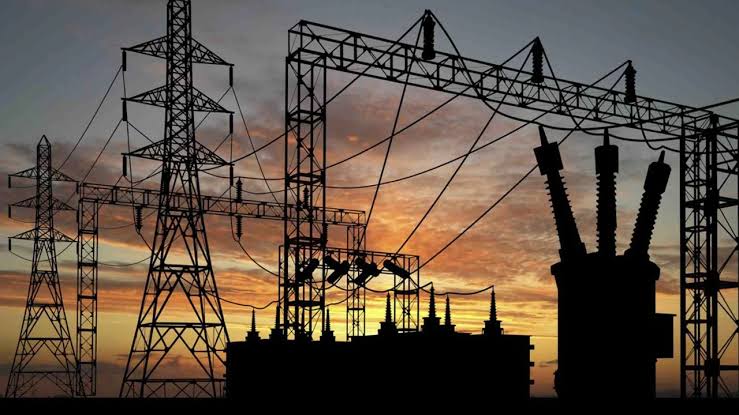
Issues that shaped power sector in 2025
Nigeria’s power sector has continued to be dogged by the same problems of inadequate supply, liquidity challenges and aging infrastructures.
In 2025, there was a new dimension to the leadership crisis rocking the Nigerian Electricity Regulatory Commission (NERC) which led to four individuals emerging as chairmen.
Also, the country came to the brink of total blackout as owners of power plants threatened shutdown over debt owed by the federal government that accumulated into N4 trillion and the first standoff between an electricity distribution company (DisCo) and state electricity regulator.
Debt crises
The Association of Power Generation Companies (GenCos) had in April threatened to shut down their operations over N4 trillion debt owed them by the federal government.
A statement by the Chairman, BOT of Power Generation Companies, Col Sani Bello (rtd), said it was forced to issue the threat due to the prevailing situation in the power sector that has seen GenCos brought to their knees in payment settlement for services they render to the sector despite keeping their promise in expanding their operations.
The statement had stated that the debt rose from the legacy debt the government owed the companies when the sector was privatized in 2013 which was N2 trillion with another N2 trillion from subsidy the government was paying for some electricity customers.
The revolt culminated in President Bola Ahmed Tinubu inviting the owners to the Presidential Villa where an agreement was reached that 50 per cent of the money will be paid through a federal government’s backed bond.
The bond was eventually issued last month with the call for subscription of N180bn to be subscribed to by potential investors.
Drop in grid collapse
The National Grid saw one of its stable years as the country witnessed less than three occasions of reported grid collapse.
Though NERC and the Transmission Company of Nigeria (TCN) had said there was no collapse in the earlier month of the year as reported by the media, it said the issues were a partial disturbance and does not count as a collapse.
But in September, DisCos reported a loss of supply from the grid and a significant drop was reported on the dashboard of the Nigeria Independent System Operator (NISO).
The dashboard showed that electricity generated by power plants dropped from 2,917MW to 1.5MW between 11 am and 12 pm on September 10.
Clash between Enugu DisCo and EERC
The year saw the first conflict that arose from the 2023 Electricity Act that allows states to regulate the electricity sector in their state, which was hitherto a responsibility of the federal government.
In Enugu State, the Enugu Electricity Regulatory Commission (EERC) reduced the price of electricity consumers in Band A from N209 per kilowatt-hour to N160/kWh, effective August 1, 2025.
It ordered the subsidiary of Enugu DisCo, MainPower to effect the decision owing to a review of the company’s tariff that shows the company charges customers over N94 more than it should have.
A statement by the EERC had stated that it used its Tariff Methodology Regulations 2024, and the supporting Distribution Tariff Model to get an average price of N94.
“The price is low because the Federal Government has been subsidising electricity generation cost, which charges only N45 out of the actual cost of N112. That was how we came about the average tariff of N94 as a cost-reflective tariff at our level as a sub national electricity market.
The move drew the ire of Enugu Disco, subsequently, reducing power supply to the state. This led to blackout in some communities in the state
The Disco had argued that it was not generating electricity from the state but the national grid, adding it was not in the state’s purview to review its tariff. The standoff was eventually settled by NERC after hosting the two warring utilities and the order was rescinded.
New agency birthed
The 2023 Electricity Act also gave room for the establishment of the Nigerian Independent System Operator (NISO) from the Transmission Company of Nigeria (TCN), thereby splitting the latter into two.
TCN had been in control of the grid since the privatisation of the power sector in 2013, the only government-owned agency that survived the unbundling of the defunct Power Holding Company of Nigeria (PHCN).
But experts say the inefficiency in the agency has led to continuous grid collapse and lack of expansion of the grid.
Some stakeholders have blamed the agency for holding back the reforms to strengthen the sector.
But after the split, the TCN oversees the physical infrastructure on the grid like transmission towers and their expansion while the NISO now serves as a coordinator that oversees how electricity generated is distributed.
It serves as a linchpin that communicates between the power generating companies, TCN and electricity distribution companies to maintain stability on the grid.
Four chairmen in NERC
The year will be remembered for giving NERC four chairmen with three emerging after the retirement of Engr. Sanusi Garba.
Garba, whose tenure was supposed to end in December, was cut short after reaching the age of 70 in August.
This led to the Vice Chairman of NERC, Musiliu Oseni, heading the commission in acting capacity before the President nominated Engr. Abdullahi Ramat as the new chairman.
A mix up in communication by the presidency had led to Ramat to storm the headquarters of the commission for an informal handing over in preparation for his tenure.
Though, this was caused by the statement announcing his nomination, urging him to resume with immediate effect. He immediately moved to resume the following day.
But this was later reversed as the chairman’s appointment requires the approval of the Senate. The presidency later issued another statement, urging Oseni to continue as the Acting chairman.
Oseni eventually left the chairmanship briefly as his four-year tenure as a commissioner ended on December 4. This led to Yusuf Ali, its commissioner for Planning, Research and Strategy, acting as the chairman before the presidency decided to appoint Oseni as the substantive chairman for a period of four years on December 18 and Ali as his vice.
The Minister that went AWOL
The year also saw the Minister of Power, Chief Adebayo Adelabu, focusing more on his governorship aspiration than steering the power sector out of the wood as many stakeholders believe.
Adelabu was referenced to have made more political statements on the 2027 gubernatorial election in Oyo State than the power issue. He had declared that 2027 will be his year to govern Oyo State.
Speaking at a recent event last month, the minister invoked the Yoruba phrase “Emi lokan,” which means, “It’s my turn.”
“In 2027, God has shown that it’s my turn. Emi lokan o, Adelabu lo kan,” the minister declared, adding that “there’s a lot of hard work ahead” for his gubernatorial ambitions.
The statement was a clear signal that his focus is increasingly divided between his current portfolio and his political future in Oyo, where he has already lost two gubernatorial contests – in 2019 and 2023 – to incumbent Governor Seyi Makinde.
Commencement of 2 million free meters
The year witnessed the commencement of distribution of two million free meters under the Distribution Sector Recovery Programme (DISREP), a World Bank loan project.
But the beneficiaries are mostly Band A customers and few from Band B.
Grid records 6,003 megawatts of electricity
The grid made the record of generating 6,003 megawatts of electricity in March, which was the first in the country.
A statement by Bolaji Tunji, Special Adviser on Strategic Communication to the Minister of Power, Adebayo Adelabu, said the generation is the highest in the nation’s history.
“This was followed by another landmark within the period, when the country recorded a peak generation evacuation of 5,801.84 MW and a daily maximum energy output of 128,370.75 megawatt-hours (MWh).”
He said these achievements represent a significant leap forward in the sector’s capacity to meet the growing energy demands in the country, ongoing reforms in the power sector and the avowed commitment of the administration of President Bola Tinubu to ensure regular electricity supply in order to galvanise the nation’s economy.
Nigerians can now invest ₦2.5 million on premium domains and profit about ₦17-₦25 million. All earnings paid in US Dollars. Rather than wonder, click here to find out how it works.
Join Daily Trust WhatsApp Community For Quick Access To News and Happenings Around You.
Community Reactions
AI-Powered Insights
Related Stories
FG formalises cross-border air rescue agreement with Cameroon

Sit-at-home in South East: A case of different strokes for different folks

Group rallies behind INEC, hails IReV upgrades, transparent result management

Discussion (0)