

UBA SANI AT 55
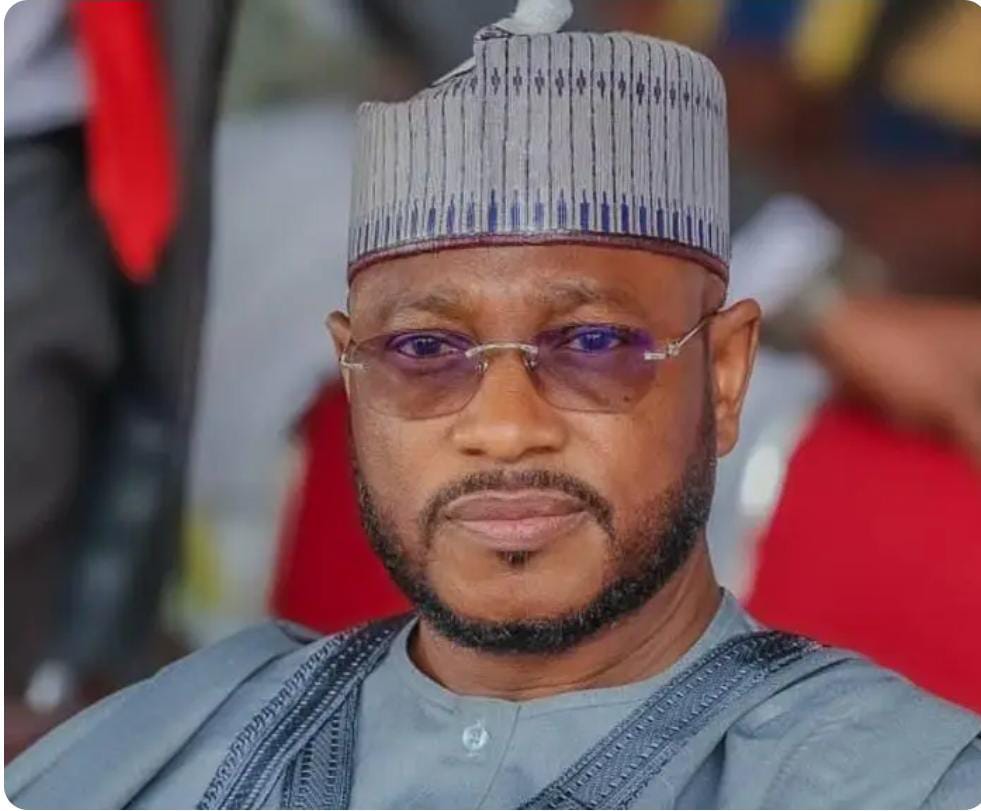
Governor Uba Sani of Kaduna State
EMMANUEL MUSA writes that Governor Sani exemplifies a life of conviction, courage and service
At 55, the Governor of Kaduna State, Senator Uba Sani, stands as one of Nigeria’s most compelling examples of how principled activism can evolve into purposeful governance. His life journey spanning civil society advocacy, pro-democracy struggles, legislative service and executive leadership, reflects an uncommon consistency of values anchored on justice, inclusion and the dignity of the ordinary Nigerian.
Governor Uba Sani’s story is not merely about political success; it is about conviction. Long before he assumed public office, he was deeply immersed in Nigeria’s struggle for democracy, human rights and accountable governance. As a young activist, he emerged during one of the most turbulent periods in the nation’s history, the era of military dictatorship, when courage was scarce and the cost of dissent was high.
Uba Sani was a prominent figure within Nigeria’s vibrant civil society space in the 1990s, where he aligned with progressive forces demanding an end to military rule. He was actively involved in the National Democratic Coalition (NADECO), the umbrella body that coordinated resistance against authoritarianism following the annulment of the June 12, 1993 presidential election.
At great personal risk, Uba Sani worked alongside other pro-democracy campaigners to mobilise public opinion, document abuses and sustain pressure for the restoration of democratic governance. He was part of a generation of activists who believed that Nigeria deserved a system rooted in popular will, rule of law and civil liberties. Arrests, intimidation and uncertainty did not deter him; instead, they strengthened his resolve that governance must ultimately serve the people.
Those years shaped his worldview. They instilled in him a deep sensitivity to marginalisation, injustice and the dangers of exclusion—lessons that continue to define his leadership style today. For Uba Sani, democracy was never an abstract ideal; it was a lived struggle.
With the return to civil rule in 1999, Uba Sani transitioned seamlessly from activism into structured public service. His election into the National Assembly marked a new phase—one where advocacy translated into policy, and ideals found expression in legislation.
As a Senator representing Kaduna Central, Uba Sani distinguished himself as a thoughtful lawmaker committed to national cohesion, security sector reform and social justice. He used the Senate floor to speak for communities affected by violence, poverty and displacement, particularly in northern Nigeria. His interventions were often informed by grassroots realities rather than political expediency.
His legislative years further burnished his reputation as a bridge-builder—someone capable of engaging across political, ethnic and religious lines. This capacity for dialogue would later become one of his most defining assets as governor of a state as diverse and complex as Kaduna.
When Uba Sani assumed office as Governor, he inherited a state grappling with deep-seated challenges: insecurity, mistrust among communities, economic hardship and the aftershocks of years of social fragmentation. Many wondered whether anyone could heal such wounds.
Yet, drawing from his civil society background and democratic ethos, Governor Uba Sani approached governance not as conquest, but as consensus-building. One of his earliest priorities was security—not just through force of arms, but through reconciliation, dialogue and community engagement. The Kaduna Peace Model, which emphasises conflict resolution, stakeholder engagement and trust-building, has since helped reopen farmlands, restore livelihoods and bring displaced families back home.
His administration recognised that sustainable peace cannot exist without justice, equity and opportunity. Under his leadership, Kaduna has witnessed deliberate efforts to reintegrate affected communities, address historical grievances and foster coexistence.
Governor Uba Sani’s governance philosophy is rooted in the belief that development must be people-centred. This has reflected strongly in his budgetary priorities, where capital expenditure consistently outweighs recurrent spending—signalling a commitment to infrastructure, education, healthcare and rural development.
In education, his administration has reopened hundreds of schools previously shut due to insecurity, returned thousands of out-of-school children to classrooms and invested heavily in classrooms, teacher training and vocational education. He understands that education is not merely a sector, but the foundation upon which peace and prosperity are built.
Healthcare has also received significant attention, with the upgrade of primary healthcare centres, renovation of general hospitals and the commissioning of specialised medical facilities. These interventions have expanded access to quality healthcare, particularly for rural and vulnerable populations.
On infrastructure, Governor Uba Sani has prioritised roads that connect neglected communities, open economic corridors and stimulate local commerce. His rural transformation agenda recognises that development must reach farms, markets and villages—not just city centres.
True to his civil society roots, Uba Sani has placed social inclusion at the heart of governance. Women, youths, persons with disabilities and other vulnerable groups are not treated as afterthoughts, but as stakeholders. Programmes targeting skills acquisition, youth employment, social protection and community development underscore his belief that no group should be left behind.
His insistence on participatory governance—consulting traditional rulers, civil society organisations, professional bodies and grassroots groups—reflects the same democratic ideals he fought for decades ago. It is governance by listening, not by decree.
At 55, Governor Uba Sani remains animated by the same values that defined his early years in activism: fairness, accountability and service. Power has not dulled his humility, nor has office distanced him from the people. He continues to see leadership as stewardship—a temporary trust to be exercised with conscience.
His journey from the trenches of NADECO activism to the helm of one of Nigeria’s most strategic states is a testament to the enduring relevance of principled leadership. It proves that those who fight for democracy can also govern democratically; that activists can become administrators without losing their moral compass.
As Kaduna State continues its journey of healing, growth and renewal, Governor Uba Sani’s 55th birthday offers more than a moment of celebration. It is a reminder that nations and states are best served when leaders are forged in sacrifice, guided by ideals and committed to the common good.
Musa writes from Kaduna State
Community Reactions
AI-Powered Insights
Related Stories

The Unravelling of ‘Kwankwasiyya’

Lawal begins project inspection tour in LGs

50 Zamfara students get certificates nine years after graduation


Discussion (0)