

60 years without the Sardauna: An open letter to Sir Ahmadu Bello
Dear Sir Ahmadu Bello,
When I was growing up in the 1970s, my late father used to tell me stories about Africa’s great leaders. What he emphasised about your life and leadership they left a lasting impression on me. Today marks 60 years since you were taken from Northern Nigeria. As my father often said, your untimely departure was not by fate, but by violence; not by history’s inevitability, but by human recklessness.
Your assassination on January 15, 1966 was not merely the loss of a man. It was the abrupt termination of a development philosophy, a moral compass, and a patient vision for a region finding its feet in a new nation. You chose Kaduna over Lagos, institutions over personal power, and long-term development over short-term politics. In doing so, you offered Northern Nigeria something rare in post-colonial Africa: direction without domination, authority without arrogance, and power restrained by purpose.
Sixty years later, I write to you with a heavy heart—and uneasy honesty.
I must report to you what became of the region you were building. Under your leadership, Northern Nigeria pursued deliberate and structured progress. Let me cite four key areas: (i) Education through scholarships, teacher training, and regional institutions; (ii) Agricultural modernisation anchored on groundnut pyramids, extension services, and regional marketing boards; (iii) A professional civil service built on merit and discipline; and
(iv) Cultural cohesion that balanced diversity with shared purpose. My father printed and hung in our living room your instructive quote: “In Northern Nigeria, we have people of many different races, tribes, and religions who are knit together by a common history, common interests, and common ideas; the things that unite us are stronger than the things that divide us.” You taught unity in diversity. You taught sustainable diversity management as a foundation for Northern Nigeria’s success. Your death shattered this trajectory.
I have no intention of causing you discomfort, but I must report that the current endemic poverty in the land is the most painful verdict of our failure. Today, Northern Nigeria is the epicenter of poverty in Nigeria—a country that itself hosts the world’s largest population of extremely poor people. Over 65 per cent of Nigeria’s multi-dimensionally poor live in the North, according to national statistics. In several core Northern states, poverty rates exceed 80–90 per cent, measured not just by income, but by lack of education, healthcare, electricity, water, and sanitation. Your beloved Sokoto is among the poorest states. Of Nigeria’s estimated 20 million out-of-school children, about 70 per cent are in Northern Nigeria—a tragic irony for a region whose most visionary leader believed education was destiny. Sir, this poverty is not accidental. It is the cumulative outcome of broken institutions, policy inconsistency, and leadership failure. It represents a total renunciation by our politicians of the purposeful leadership you exemplified.
Today, we have leadership without a shared vision. Perhaps the most painful departure from your legacy is not economic—it is political and moral. I will highlight four areas of serious concern: (i) Fragmented political leadership with no shared regional development agenda; (ii) Competitive populism replacing long-term planning; (iii) Political loyalty prioritised over competence; and (iv) A generation of leaders more skilled at winning elections than building systems. Northern Nigeria, once relatively cohesive, now speaks with many voices but no common direction. States pursue isolated agendas; leaders abandon projects initiated by their predecessors; institutions are personalised, weakened, or discarded. What you built patiently in a decade has gradually unravelled.
As my father often said, your departure was irreplaceable. As he predicted, the decades following your assassination brought: (i) Prolonged military rule that centralised power and resources, weakening regional initiative; (ii) Policy instability that discouraged long-term investment; and (iii) Rising insecurity that has devastated agriculture, trade, and education. Armed conflict, banditry, and insurgency are symptoms—not causes—of a deeper malaise: economic exclusion, youth unemployment, and institutional collapse. A region that once fed the nation now struggles to feed itself.
Yet, Sir, all is not lost. If this letter ended in lament alone, it would betray your spirit. You were not a romantic; you were a pragmatic optimist. And so, we must also speak of the future.
As an optimistic citizen of the North, I see the possibility of a prosperous Northern Nigeria in the coming decades. The region today stands at the edge of a technological revolution you could only have imagined. I will not bore you with details, but new knowledge – particularly Artificial Intelligence (AI) and smart governance—offers transformative possibilities. AI can help Northern Nigeria leapfrog decades of underdevelopment through: (i) Data-driven targeting of poverty, education gaps, and health services; (ii) AI-supported budgeting and procurement to reduce corruption; and (iii) Digital identity systems to deliver subsidies directly to farmers and households. What once required massive bureaucracies can now be achieved with data, code, and political will.
Another area of promise is AI-enabled agriculture. With vast land and a youthful population, the North can become Africa’s food engine through: (i) Precision farming using satellite data and AI-based weather models; (ii) Smart irrigation systems to address climate variability; (iii) Digital commodity exchanges connecting farmers directly to markets; and (iv) Technology-driven productivity that restores agriculture as a source of dignity and prosperity. As you famously said while referring to Ahmadu Bello University: “Our university must grow out of our own soil. We shall be a truly Nigerian institution and not the mirror image of some alien body.” I can report that AI now offers the possibility of democratising education across the North. AI tutors, online universities, and low-cost digital classrooms can reach millions of out-of-school children, train teachers at scale, and deliver technical and vocational skills aligned with the modern economy. The North does not lack intelligence; it lacks access. Technology can close that gap faster than bricks and mortar ever could.
There are other areas of new knowledge that hold immense potential for our youth. With the right policies, Northern cities can become hubs for agritech, renewable energy, health tech, and education tech. Young people can build startups instead of joining criminal networks, and traditional institutions can be complemented—not replaced—by modern innovation ecosystems. This is institution-building for the 21st century – the very principle you stood for.
Sir Ahmadu Bello, your assassination broke the rhythm of Northern Nigeria’s development, but it did not erase its potential. The tragedy is not that we fell behind—but that we forgot the principles that once guided us. If the next 60 years are to differ from the last 60, Northern Nigeria must rediscover your teachings. I have distilled some of them and teach my son every day: leadership as service; institutions over individuals; unity without uniformity; and development measured by human dignity, not rhetoric. History denied you the chance to complete your work. The future still gives us that chance—if we choose wisely.
May your legacy continue to judge us—and inspire us.
May your soul rest in perfect peace.
With respect, regret, and renewed resolve,
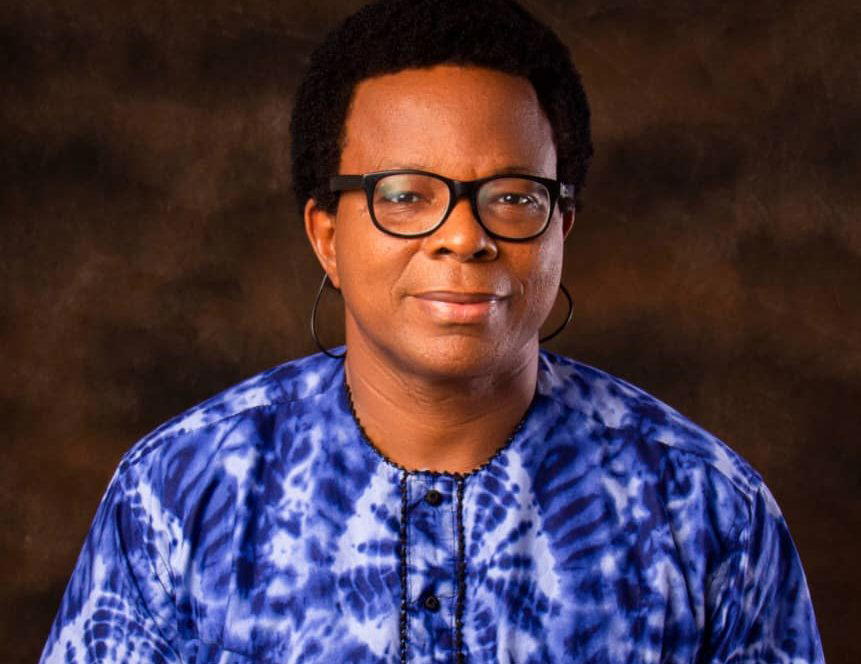
Baba El-Yakubu,
A Citizen of Northern Nigeria, 15 January 2026
[email protected]
Nigerians can now invest ₦2.5 million on premium domains and profit about ₦17-₦25 million. All earnings paid in US Dollars. Rather than wonder, click here to find out how it works.
Join Daily Trust WhatsApp Community For Quick Access To News and Happenings Around You.



Discussion (0)