

From zero to ecosystem in 3 months: Composing an EV symphony in Nigeria (Part 1)
I have always loved classical music. My dad still recalls how Handel’s Messiah played through speakers used to calm my restlessness while I was still in my mother’s womb. To those who know me, the ‘symphony’ metaphor is unsurprising; to fellow lovers of classical music, neither is the analogy that follows.
After years in a classical choir as both singer and instrumentalist and several more years building and operating businesses, I have come to see ecosystems as orchestras. Where an orchestra has brass, woodwinds, and strings, a business ecosystem has infrastructure, players, and commerce. And like any symphony, every section must sync perfectly to make beautiful music.
But for that to happen, there must be a mutually agreed musical score. In business ecosystems, that “sheet music” is cash flow, and the tempo is the rhythm of profit generation.
Creating an ecosystem, then, is like composing a symphony. The builder acts as conductor, holding the entire piece together, ensuring every section plays to the same profitable tempo.
Over the next few minutes, I’ll take you through how I led a team to compose a profitable symphony in Nigeria’s mobility space with electric vehicles, complete with charging infrastructure and commercial players, in just under three months.
There are three key sections that make up both business ecosystems and classical symphonies:
A symphony’s first movement is fast-paced (like infrastructure: you need it quickly); the second is slower and deliberate (like building player relationships); the third is light and energetic (like commerce flowing freely).
Let’s begin with the first movement.
Like any symphony’s opening, infrastructure had to be built fast—decisively, without hesitation. Time was not a luxury. Investors watched their assets deteriorate in Nigerian ports, incurring storage fees by the day. Meanwhile, we had no charging network, no operational base, and a market that barely understood electric mobility.
My first task? Clear the instruments from the ports.
What followed was weeks of running from one customs office to another, sometimes begging, sometimes pleading. One breakthrough came only after a call from Abuja intervened on behalf of “the young man just starting out.” Eventually, the entire fleet was released and moved to a holding facility in Lagos.
This taught me a vital lesson: your environment conforms to the pace you set. When told “you just have to wait”, I walked into the office, causing the delay and demanded a resolution. Within minutes, uncertainty turned into a clear path forward.
But getting the vehicles was only half the battle. They needed to charge, and that’s where the real complexity began.
Establishing a charging network in Lagos felt like playing 3D chess while blindfolded. We needed locations that were:
But these were also prime commercial real estate, and “affordable” vanished from the conversation. One Lekki Phase One landlord demanded we upgrade their diesel generator before even discussing space. Another quoted a monthly lease higher than our annual budget elsewhere.
The breakthrough came when we unbundled our proposal: instead of asking for “a charging bay”, we broke it into land access, power supply, security, and branding and negotiated each component separately. This reduced friction and clarified value for hosts.
I also made sure each partner understood they weren’t just renting space; they were joining Nigeria’s green mobility future. That narrative, paired with pragmatism, opened doors.
The moment I knew the first movement succeeded wasn’t vehicle delivery or charger installation. It was when I plugged Unit 23 into Charging Bay 12, heard the soft click, and saw the charging light turn green.
Just weeks earlier, neither car nor charger existed in that space. The property owner hadn’t budgeted for this. Yet now, a working EV system stood ready to move someone sustainably from A to B.
In that instant, months of stress melted away. Someone who didn’t know my name would soon benefit from this invisible labor.
But euphoria faded quickly. Vehicles and chargers were just the stage. Now, I needed musicians: the players who would bring this infrastructure to life through commerce.
“There’s no need to try to do everything,” a key stakeholder told me. “The way to win is to build an ecosystem where multiple players can engage and grow profitably.”
We had the instruments. Now we needed conductors, mini-conductors, really, who could lead their own sections while staying in sync with the whole.
Before recruiting players, we wrote an operator’s manual grounded in operational reality:
This wasn’t theory; it was survival. Without it, EVs would sit idle or break down from overuse.
I needed fleet operators with driver management experience, maintenance systems, and revenue discipline. By sheer fortune, and marriage, I partnered with Chichi Arinze, CEO of AutoGirl Ltd, one of Africa’s largest vehicle rental platforms. She lent us part of her ops team in exchange for commission. A second operator, experienced in managing ICE fleets, joined under similar terms.
Neither had EV experience but they had the manual. Their “sheet music” was ready.
Infrastructure can be rushed. Trust cannot. You can’t force belief—you can only create conditions where it becomes logical. Human systems require patience, empathy, and constant alignment.
As this movement closed, I heard the sections begin to synchronise. The infrastructure hummed. The players collaborated. The tempo was emerging.
It was time for commerce to flow.
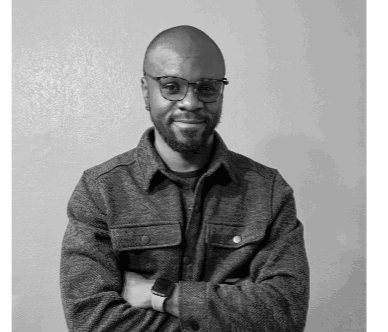
Uche Ukonu Jnr is a venture builder, operator, and a software engineer turned entrepreneur with over a decade of experience identifying opportunities in problems and leveraging technology to build scalable businesses.
Join BusinessDay whatsapp Channel, to stay up to date
Community Reactions
AI-Powered Insights
Related Stories
Why Nigerian movie industry not thriving as it should — Okakoso

NSCDC Dismantles Illegal Arms Factory, Arrests Four in Katsina

Are AI music tracks the future of afrobeat? Exploring the revolution


Discussion (0)