

Gov Yusuf moves, Kwankwasiyya holds
The rank of the opposition parties in Nigeria was further depleted yesterday with the resignation of the Kano State governor, Alhaji Abba Kabir Yusuf, from the New Nigeria People’s Party (NNPP).
Four opposition parties as at May 2023, when the current administration was inaugurated controlled 15 states while the ruling APC was in control of 21 states.
With yesterday’s resignation of Governor Yusuf and possible movement to the APC, the ruling party will now have 29 governors while the opposition parties having lost Kano State are left with seven states with the PDP controlling fives states while APGA; Labour Party and Accord Party have one each.
What next?
Apart from the expectation that Governor Yusuf will join the APC, there’s a split in opinion over whether he had the blessing of his former boss, Rabiu Musa Kwankwaso to defect.
The atmosphere in Kano, following Governor Abba Kabir Yusuf’s defection from NNPP is tense and divided, Weekend Trust gathered.
Supporters of the governor are celebrating the move as a strategic alignment with national power, while loyalists of the NNPP leader, Rabiu Musa Kwankwaso, see it as a betrayal, fuelling political uncertainty and reviving anxieties.
Many APC supporters in Kano view the defection as a victory that strengthens their dominance in the state.
Kwankwaso urges supporters to remain loyal amid political shifts
Leader of the Kwankwasiyya movement and former Kano State governor, Senator Rabiu Musa Kwankwaso, has urged his supporters to remain steadfast and loyal, describing political perseverance as difficult but necessary in the struggle for social justice and good governance.
Kwankwaso made the remarks while addressing members of the Kwankwasiyya movement in his Kano Miller road residence, after the governor’s resignation, praising their loyalty and commitment despite financial and political pressure.
“Everyone knows the difficulty in spending for a movement. We are proud of you because you are loyal. We are always praying to God to give us the strength to continue with the good work we are doing,” he said.
The former minister emphasised that the movement stood for progressive ideals and concern for the common man, warning against political opportunism driven by money.
“In this state, we need people who are like-minded and progressive in their ideology, not people who will be given money and move elsewhere,” Kwankwaso said, adding that the dedication of his followers continues to give him courage.
He noted that without strong personal conviction, even long-standing political figures could be tempted to abandon their principles.
“If not for this kind of doggedness, even I would have been sold. Maybe I would have ended up in the ideology of capitalists who do not care about the common poor man,” he stated.
Kwankwaso called on members of the movement to intensify grassroots mobilisation, urging them to carry their message to families, friends, and neighbours.
“Let us continue to work hard and get the attention of our families, friends and neighbours. Let them understand that fighting for freedom is not easy,” he said.
The resignation
Governor Yusuf in a statement issued on Friday by his spokesperson, Sunusi Bature Dawakin Tofa cited deepening internal crisis and persistent leadership disputes within the party as his main reason for leaving.
Yusuf conveyed his resignation in a letter addressed to the Chairman of the NNPP in Diso-Chiranchi Ward, Gwale Local Government Area, with effect from January 25, 2026.
The governor attributed his decision to what he described as unresolved internal disputes and prolonged legal battles that have continued to unsettle the party’s structure at both state and national levels.
“In recent times, the party has been confronted with persistent internal challenges arising from leadership disagreements and ongoing legal processes, many of which are presently before the courts for judicial determination,” he noted.
He added that the disputes have led to growing disenfranchisement among party members, widening divisions and weakening internal cohesion.
“The growing disenfranchisement among party members has created deep divisions within the party structure, resulting in cracks that appear increasingly irreconcilable and have generated uncertainty at both state and national levels,” Yusuf said.
The governor said his resignation followed careful reflection and was guided by what he considered the best interest of the people of Kano State.
It was disclosed in the statement that 21 members of the Kano State House of Assembly, eight members of the House of Representatives, and 44 local government chairmen across the state have also resigned from the party.
The NNPP Secretary of Diso-Chiranchi Ward, Kabiru Zubairu, acknowledged receipt of the governor’s resignation letter.
“I wish to concur with His Excellency on the lingering crisis in our party. Though we are trying our best to contain it, we have no option than to accept the resignation of one of the most performing governors of the NNPP,” Zubairu said.
NNPP flag removed from Gov’s office
Weekend Trust observed that the flag of the NNPP has already been removed from the governor’s office.
In a viral video posted by his spokesperson, Sanusi Bature Dawakin Tofa, he was seen taking away the party’s flag which was located at the back of the governor’s seat in his office.
Some state Executive Council members have also started tendering their resignations. The commissioner for water resources, Umar Haruna Doguwa, who was the party’s chairman during the 2023 general elections, was the first to tender his. He resigned his membership of the New Nigeria Peoples Party (NNPP), citing deep internal divisions within the party and his desire to support Governor Abba Kabir Yusuf’s development agenda.
Doguwa’s resignation was contained in a letter dated January 23, 2026, and addressed to the Chairman of the NNPP in Ragada Ward, Doguwa Local Government Area of Kano State.
In the letter, the commissioner said his decision was informed by persistent leadership crises within the party, which he noted had resulted in multiple court cases involving rival national leadership factions.
“My decision to resign was necessitated by the total division in the party that resulted in so many court cases favouring different sides between the two functional national leaderships of the party,” he stated.
Doguwa also said his resignation was aimed at aligning himself with Governor Yusuf’s efforts to advance development in Kano State.
Kano APC welcomes Yusuf, reserves No.001 card for him
The Kano State chapter of the All Progressives Congress (APC) has welcomed Governor Abba Kabir Yusuf, following his resignation from the New Nigeria People’s Party (NNPP), expressing optimism that he would formally join the ruling party in the coming days.
The APC State Secretary, Ibrahim Zakari Sarina, disclosed this while responding to questions on the governor’s next move.
“He is welcome. That is all we are going to say for now,” Sarina said.
Although Governor Yusuf has yet to officially declare for the APC, Sarina said the party was hopeful that he would soon align with it, stressing that its doors were fully open to him and his supporters.
“Even though he didn’t specifically declare for APC, hopefully he will soon come to APC. Our doors are open and we welcome him,” he said.
The APC scribe described the development as a welcome boost for the party, noting that the governor was reportedly moving with a large number of elected officials and political appointees.
He added that the party had already taken practical steps in anticipation of the governor’s defection by reserving a special electronic registration number for him.
“We have started e-registration and have reserved the 001 registration number for the governor. Yes, it is true. We reserved that number for him at his Chiranci-Diso ward,” he confirmed.
According to Sarina, the gesture extends beyond the governor alone, as the APC is prepared to accommodate his cabinet members, supporters and political associates.
Kwankwasiyya faces test after defections, says analyst
A political analyst, Dr Kabiru Sufi, said the Kwankwasiyya movement may undergo internal realignments as its leader, Senator Rabiu Musa Kwankwaso, moves to reorganise the structure of the movement, following the recent defection of key figures allied to Kano State Governor, Abba Kabir Yusuf.
He said the immediate task before Kwankwaso would be to assess the scale of the vacuum created by the departure of political office holders and loyalists who exited the movement alongside the governor.
“I think Kwankwaso will take stock of his loyalists that remain and probably make some realignments. That means trying to fill the vacuum created by the absence of those people that left with the governor,” he said.
According to him, the process would involve identifying those who have left, the positions they previously occupied, and the leadership roles that now need to be filled within the Kwankwasiyya movement.
He noted that the reorganisation would not be limited to top leadership but would also affect grassroots mobilisation and visibility, which have been the key strength of the movement over the years.
“That is especially not only within the leadership of the movement but also within the foot soldiers in terms of visibility and the ability to project the movement as it has been done before,” he said.
The analyst added that the promotion of loyal members to replace those who have left would largely determine the future strength of the movement.
“I think the next step after taking stock is to now think of who and who needs to be promoted to fill in the vacuum created by those that have left,” he said.
Sufi, however, acknowledged that the movement may appear weakened in the short term, depending on the number and influence of those who have defected.
“Depending on their number, the movement may, at face value, be a little bit weakened. But the ability to fill in that vacuum will determine a lot in terms of the strength of the movement after their departure,” he said.
He also suggested that the situation may not have come as a surprise to Kwankwaso, noting that the former Kano State governor had previously allowed members holding political offices to align with other interests.
“Kwankwasiyya may have seen this situation playing out. He has made it clear before that people holding political positions can play along,” Sufi said.
He said the development has made it difficult to clearly determine who has fully left the movement and who may still be maintaining ties while aligning with the government.
Voices from the streets
When news of the Kano State governor’s resignation from the New Nigeria People’s Party (NNPP) filtered in on Friday evening, many residents said they had long anticipated it and, therefore, did not regard it as a surprise.
However, the resignation quickly became the talk of the town, though without questions being raised about which party the governor was heading to, as it was widely believed that he would join the All Progressives Congress (APC).
Ironically, symbols of the Kwankwasiyya movement remain visible among those who resigned from the NNPP. They were seen wearing the symbolic red cap that distinguishes members of the movement from others.
A serving Special Adviser to the state governor, who spoke on condition of anonymity, said Governor Abba and his allies were merely “changing the bottle, not the content.” According to him, the Kwankwasiyya movement is simply extending its influence to another platform, noting that the public has witnessed how the transition unfolded.
“The public has borne witness to how members of the Kwankwasiyya movement handled the transition process. Those who chose to remain behind still interacted freely with those who decided to leave, and throughout the process, no one abandoned our symbolic red cap. This shows that Kwankwasiyya is not just a movement, but an ideology that will outlive all of us,” he said.
According to Usman Shaga, a Kwankwasiyya loyalist, the governor’s resignation was long overdue and therefore did not unsettle members of the movement. He said they wished the governor well but remained loyal to the movement’s leader, Senator Rabi’u Musa Kwankwaso.
“We wish him well, but our loyalty remains with our leader, Rabi’u Musa Kwankwaso. As you are aware, he dominates Kano politics, and the confidence of the people of Kano State lies in his political decisions. Therefore, we are waiting for his directives on the next line of action,” he stated.
A Peoples Democratic Party (PDP) supporter, Hamza Gidan Kwano, said the governor’s resignation had brought an end to what he described as a political drama scripted by some Kano politicians and directed by another group, with the governor and others acting out the roles.
He added that the drama was well-articulated and cleverly staged to mislead unsuspecting grassroots politicians in Kano. He explained that wherever the governor moves to after leaving the NNPP, he is going as an advance party to pave the way for his political leader’s grand entrance.
“The amusing part is how Kano people were made to believe that Governor Abba was leaving without his godfather. Wherever Abba is going, he is going there as the leader of an advance team that will clear all obstacles for the arrival of his boss, Kwankwaso. I urge Kano people to exercise a little patience, and they will see that I am right,” he said.
He further stated that Kwankwaso’s political tactics are open for all to see, though only a few grounded politicians fully understand them. He alleged that the public had witnessed similar patterns during Kwankwaso’s time in the PDP and his exit from the APC during the Buhari administration.
A Kano resident, Auwal Sani, said the move will help the state secure many federal projects and appointments.
He said, “I think this is a strategic and well-considered decision. Aligning with the center is important, especially in a system where federal influence significantly affects state-level development. Over time, Kano State has missed certain opportunities from the presidency, partly because the governor emerged from a smaller party.
“Beyond that, the current political climate in the country shows a clear trend of governors, including those from strong opposition parties, moving to the APC due to internal party challenges. If governors from the PDP can decamp, it is understandable that Governor Abba would also reconsider remaining in the NNPP, a party currently facing leadership disputes, legal battles, and structural uncertainty.
Another resident, Musa Abdullahi, said the decision, if pursued in the best interest of the state, will help stabilise the polity that has long been tense.
He said, “This is the best decision for Kano. With APC at the center, we will finally get more federal projects and support. The governor has shown wisdom. He will also get the needed stability to focus on governance.”
But Aisha Dankawu described the move as a betrayal, saying they voted for him because of Kwankwaso’s influence.
“We voted for NNPP because of Kwankwaso’s vision. Yusuf has betrayed us. This move is about power, not the people,” she said.
For Abdullahi Hassan, a civil servant, he is indifferent as long as it brings prosperity and improved workers’ welfare.
“Honestly, I don’t care about the party. What matters is stability. If this defection brings peace and salaries on time, then it’s fine.”
Sunusi Ibrahim, on the other hand, is not sure whether the move will end the Kano emirate tussle that has lingered for almost two years.
He said, “This defection may worsen the emirship crisis. Politics should not interfere with tradition, but now the palace is once again in the spotlight.”
But some residents, like Aminu Musa, believe the defection has already turned the state into a one-party state with no strong opposition in sight.
“We are tired of politicians switching parties. It feels like they don’t stand for anything. The youth want consistency, not endless defections. Now, I am afraid Kano won’t have any strong opposition voice to hold government accountable or even field strong candidates for election,” Musa said.
Yusuf’s resignation a betrayal of trust – NNPP
The New Nigeria Peoples Party (NNPP) has described the resignation of Alhaji Abba Kabir Yusuf from the party as a betrayal of trust.
The party in a statement by its national publicity secretary, Bamofin Ladipo Johnson said it is deeply regrettable as a man entrusted by the people of Kano State on the strength of his decades of unwavering loyalty and dedicated service to the Kwankwasiyya Movement, “has now chosen to betray that sacred trust.”
The NNPP said by this action, the Governor risks returning the state to the very forces that have long opposed its progress and the aspirations of its people.
“It is noteworthy that our party, the NNPP had recently conducted congresses for its leadership from the ward to the national convention, held on 20th December 2025, which the governor himself was present, and INEC had supervised.
“The party had also participated and won in two supplementary elections for Bagwai/Shanono and Ghari/Tsanyawa constituency, respectively held in August 2025, about three months ago. The assertion he made of an irredeemable crisis in the party is therefore baseless and an afterthought. “
The party said while this development is deeply disturbing and painful for all who have invested in the Kwankwasiyya vision, it is urging “the 1,019,602 people that cast their votes for his election, as well as the good people of Kano State and Nigeria to remain calm, patient, and restrained. Let us not descend into acrimony or division.”
It added: “History has consistently shown that those who trade loyalty for expediency, and honour for deceit, rarely escape the judgment of the people. The truth endures, and the loyalty of Kano’s masses to principled leadership will ultimately prevail.”
The initial hiccups
It’s more than a month since the governor was reported to have indicated his intention to defect from the New Nigeria Peoples Party (NNPP) to join the APC.
It has been a series of back and forth since December when the intention of the governor to shift political camp became public.
His resignation from the NNPP which will pave the way for him to move to another party has long been expected .With the resignation, the governor is expected to defect to the ruling APC.
The defection to the APC has been postponed several times due to many reasons that included enabling him to be the first to be registered in Kano when the online registration was to commence and the need for him to exhaust consultations with NNPP leader, Rabiu Musa Kwankwaso.
Others before Gov Yusuf
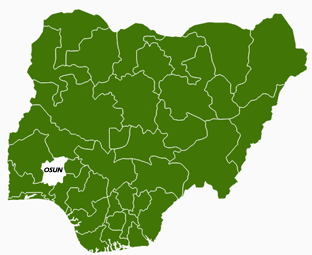
At least six governors from the opposition parties have defected to the ruling APC within a spate of one year. They include Delta State Governor Sheriff Obovrevwori, Governor Umo Eno of Akwa Ibom state, Enugu State Governor Peter Mbah; Agbu Kefas, governor of Taraba and Plateau State governor, Caleb Mutfwang while the Osun State governor Ademola Adeleke left for the Accord Party.
Nigerians can now invest ₦2.5 million on premium domains and profit about ₦17-₦25 million. All earnings paid in US Dollars. Rather than wonder, click here to find out how it works.
Join Daily Trust WhatsApp Community For Quick Access To News and Happenings Around You.
Community Reactions
AI-Powered Insights
Related Stories

Fatai Buhari: Excellent Fit for ‘Agodi 2027’
Osun Assembly speaker, 24 lawmakers leave PDP for Accord
Osun APC Reps caucus demands probe of alleged payroll fraud, cites audit findings

Discussion (0)