
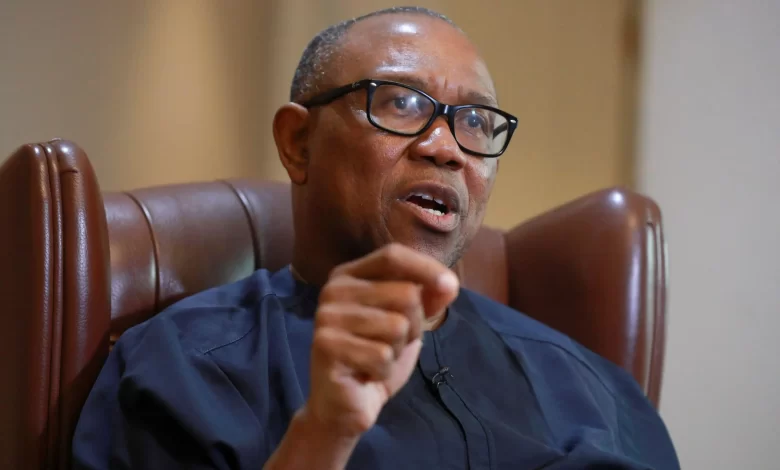
Obi Faults Slow Implementation of 2026 Budget
Presidential Candidate of the Labour Party in the 2023 general elections, Peter Obi, has criticised the Federal Government over what he described as “fiscal recklessness” in Nigeria’s budgeting process.
Obi’s remarks come amid reports that the Senate may approve the 2026 national budget on March 17.
Daily Trust had reported how the Senate Committee on Appropriations, at a special session held in Abuja, fixed February 2 to Feb 13 for consideration of the budget estimates at committee levels.
Obi, in a statement posted on his X handle on Monday, questioned which budget the country is currently operating.
He noted that Nigeria has in recent years been implementing items from multiple budgets simultaneously.
He argued that the practice has weakened fiscal discipline, undermined transparency and accountability, and contributed to poor budget credibility, insisting that “no serious country manages its budgets or fiscal operations in such a manner.”
“With the announcement that the Nigerian Senate is likely to approve the 2026 National Budget on March 17, every Nigerian is asking an important question: Which budget will Nigeria use this year? Will it be the budgets for 2023, 2024, 2025, or 2026, or some combination of all these years? It is worth noting that as of last year, in our government, implementation of budget items from the 2023, 2024, and 2025 budgets was in a unique approach to budgeting, which continues to perpetuate a trend of fiscal recklessness.” he wrote.
He said President Bola Tinubu inherited a legally signed N21.83 trillion budget for 2023, but later presented a N2.17 trillion supplementary budget which, according to him, attracted criticism for prioritising benefits for public office holders while Nigerians were grappling with difficult economic reforms.
Obi also faulted the continued expansion of budgets, citing the N35.06 trillion 2024 budget and the N54.99 trillion 2025 budget, and claiming that within three years the administration has exercised appropriation powers over more than N114 trillion, without achieving up to 50 per cent implementation.
“President Tinubu inherited a legally signed N21.83 trillion budget for 2023. A few months after taking office, he presented a N2.17 trillion supplementary budget that faced widespread criticism for prioritising benefits for public office holders at a time when Nigerians were enduring painful economic reforms without a credible social protection framework. Instead of restoring fiscal discipline, the President repeatedly expanded the 2023 budget without a clearly defined end date.
“The pattern persisted with the passage of a N35.06 trillion budget for 2024 and a N54.99 trillion budget for 2025. In less than three years, President Tinubu has exercised appropriation powers over more than N114 trillion in public spending. Yet, the government has failed to achieve even fifty per cent budget implementation, exposing a profound crisis of budget credibility.
“Alarmingly, until mid-2025, Nigeria was effectively operating with about three overlapping budgets, without clear legal or fiscal guidance on when each one expired or began. No serious country manages its budgets or fiscal operations in such a manner.
“Even more troubling is the government’s opaque decision to repeal the 2024 and 2025 budgets and re-enact them with extended implementation timelines. Nigerians have not seen these re-enacted budgets, and there is no public information regarding the specific capital projects included or their associated costs. This is not reform; it represents fiscal obscurity elevated to the level of state policy.”
Obi also alleged that the proposed 2026 budget lacked what he called critical details, indicating, according to him, the administration’s poor attitude towards addressing structural weaknesses of the country’s financial system.
He further faulted the government for allegedly stopping the publishing of treasury reports, a development he said has dismantled vital transparency framework inherited from the previous administration.
Nigerians can now invest ₦2.5 million on premium domains and profit about ₦17-₦25 million. All earnings paid in US Dollars. Rather than wonder, click here to find out how it works.
Join Daily Trust WhatsApp Community For Quick Access To News and Happenings Around You.
Community Reactions
AI-Powered Insights
Related Stories

NGOS AND IMPACT ON SOCIETY

KPMG Advises Businesses to Reinvent Tax Functions Amid Revenue Drive

Nuhu Ribadu Vs. El Rufai: Battle of The Last Hegemons


Discussion (0)