
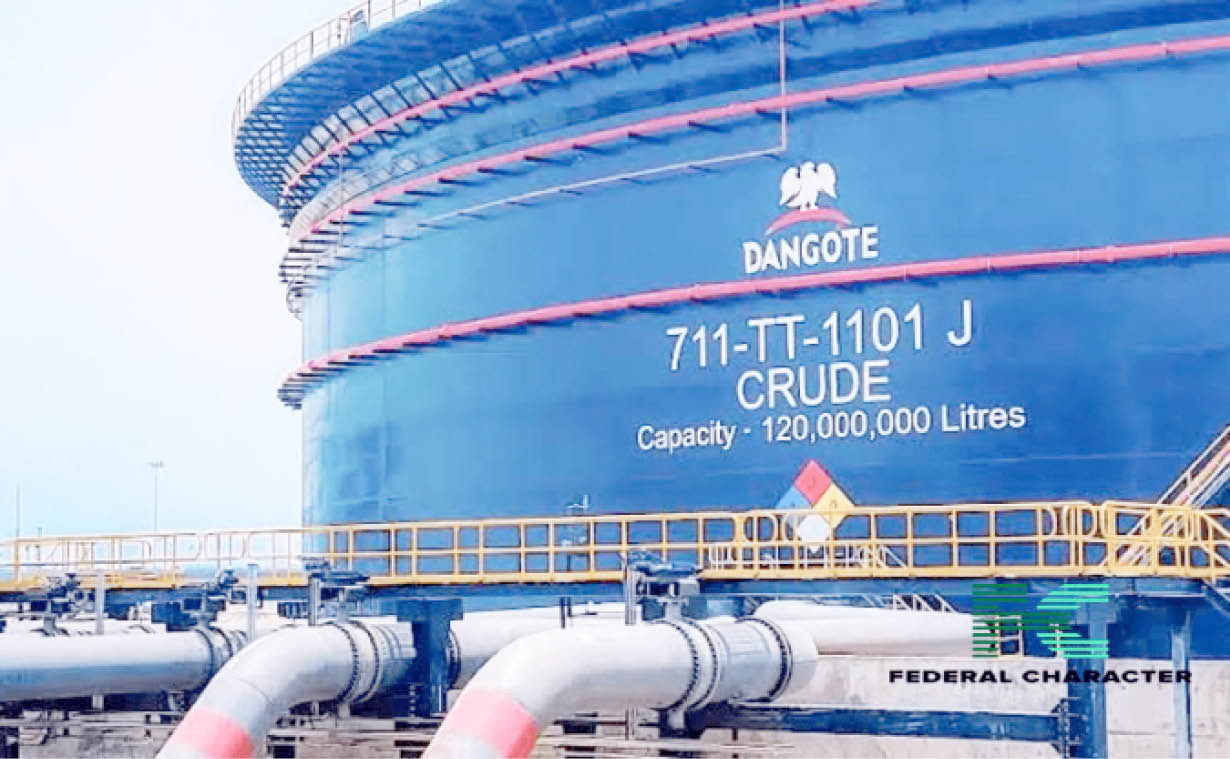
Dangote to fuel marketers: Coastal loading’ll attract extra N75/litre
Determined to significantly reduce the importation of petroleum products by major marketers, the Dangote Petroleum Refinery has made a renewed overture to the affected operators by offering them the option of coastal loading, Daily Trust can report.
This comes despite the additional logistics cost associated with transporting petroleum products by vessel from the refinery to depots across the country, with Dangote warning that coastal evacuation could add about N75 per litre to the cost of petroleum products.
Daily Trust reports that despite the commencement of operations by the 650,000 barrels-per-day refinery, which insists it has sufficient products to meet domestic consumption, the importation of petroleum products has continued, with marketers still importing more than 50 per cent of supplies.
The refinery and major marketers—particularly members of the Major Energies Marketers Association of Nigeria (MEMAN) and the Depot and Petroleum Products Marketers Association of Nigeria (DAPPMAN)—have remained sharply divided over the preferred method of product distribution.
While Dangote favours gantry loading, marketers prefer coastal distribution using vessels. Gantry loading involves dispatching petroleum products directly from the refinery using tankers, while coastal loading entails transporting products by sea to depots along the coastline.
Many marketers, especially MEMAN and DAPPMAN members, have invested hundreds of billions of naira in tank farms and depots across the country. To enhance product availability nationwide, Dangote Refinery has also invested over N700 billion in procuring 4,000 compressed natural gas (CNG)-powered trucks for direct distribution of Premium Motor Spirit (PMS), diesel and aviation fuel.
Despite a significant reduction in imports since the refinery began operations, import volumes remain high.
According to the December 2025 factsheet released by the Nigerian Midstream and Downstream Petroleum Regulatory Authority (NMDPRA), Dangote Refinery supplied 32.02 million litres of PMS in the month. Capacity utilisation peaked at 71 per cent, up from a target of 50 million litres per day.
The regulator said PMS supply increased from 19.5 million litres per day to about 32 million litres daily due to improved output from the refinery. However, it clarified that the figures did not include PMS stock earmarked for the domestic market, as reported consumption data reflected only volumes trucked into the market.
The data showed that more than half of PMS consumed during the month was still imported, despite Dangote’s growing capacity.
Earlier in January, the refinery reiterated that its operations remained stable and uninterrupted, with the capacity to supply between 40 million and 50 million litres of PMS daily, subject to market demand. It said 50 million litres were produced on January 4, with 48 million litres evacuated via gantry the same day, noting that existing stocks could cover over 20 days of national consumption.
Dangote also confirmed that it has consistently loaded between 31 million and 48 million litres of PMS daily from its gantry since December 16, 2025, figures which it said are verifiable through NMDPRA depot records.
Dangote offers coastal option, warns of price impact
In a bid to increase domestic sales, Dangote has now offered marketers the option of coastal loading, but warned that the additional logistics cost could raise PMS prices to nearly N1,000 per litre if passed on to consumers.
Currently, petrol sells for between N835 and N839 per litre in Lagos and up to N950 in other parts of the country.
The refinery maintained that gantry loading remains the most cost-effective and efficient distribution option, warning that heavy reliance on coastal evacuation could significantly inflate fuel prices due to maritime and port-related charges.
According to Dangote, coastal logistics introduce port fees, vessel charges and maritime levies that add little value to end users but significantly increase pump prices. It estimated that coastal delivery could add about N75 per litre and, using Nigeria’s average daily PMS consumption of 50 million litres, could cost the economy about N1.75 trillion annually.
“These additional costs would ultimately be borne by Nigerians, either through higher pump prices or reduced margins across the value chain,” the refinery said.
It added that its gantry facility—equipped with 91 loading bays—can dispatch up to 2,900 tankers daily, moving over 50 million litres of PMS and 14 million litres of diesel round the clock.
Dangote also renewed calls for nationwide pipeline investment to cut distribution costs and improve energy security.
Addressing claims that it imports finished products, the refinery said it only imports intermediate feedstock while its Residue Fluid Catalytic Cracking Unit undergoes maintenance, insisting that domestic refining has already helped reduce diesel prices from about N1,700 per litre to below N1,000, while PMS prices have dropped from roughly N1,250 to between N839 and N900.
Marketers insist coastal products should be cheaper
Despite Dangote’s openness to coastal loading, marketers insist that products distributed via that channel should be cheaper, arguing that bulk transportation lowers costs.
They also want Dangote to absorb port and transhipment charges, many of which are paid in US dollars to agencies such as the Nigerian Ports Authority (NPA) and the Nigerian Maritime Administration and Safety Agency (NIMASA).
A source familiar with the negotiations said Dangote is not opposed to coastal sales but is unwilling to bear the additional N75 per litre logistics cost.
“Does it make sense to move products by vessel from Ibeju-Lekki to Apapa and then still use trucks for inland distribution?” the source queried, insisting gantry loading eliminates avoidable costs.
However, the Petroleum Products Retail Outlets Owners Association of Nigeria (PETROAN) disagreed. Its National President, Dr Billy Gillis-Harry, said coastal delivery encourages bulk purchases and should therefore be cheaper.
“When you move 25,000 metric tonnes by vessel to Port Harcourt, it serves multiple states at once. That reduces road risks, delays, theft and multiple checkpoints,” he said.
Another major marketer said coastal shipping saves the cost of deploying thousands of trucks, adding that bulk buying should naturally attract lower pricing.
Expert weighs in
Professor of Petroleum Economics, Wumi Iledare, described the debate as one of logistics economics rather than politics.
“If coastal loading adds N75 per litre, the question is whether that reflects real efficiency costs or market power,” he said, urging NMDPRA to ensure that no logistics arrangement becomes anti-competitive.
“Whether the charge is N75 or N100 only matters if it reflects abuse of market power, not genuine cost recovery. The priority should be efficiency and transparency, not the loading method itself,” he added.
Nigerians can now invest ₦2.5 million on premium domains and profit about ₦17-₦25 million. All earnings paid in US Dollars. Rather than wonder, click here to find out how it works.
Join Daily Trust WhatsApp Community For Quick Access To News and Happenings Around You.
Community Reactions
AI-Powered Insights
Related Stories

FMITI Targets Improved Productivity via Policy Implementation

Champion Breweries Completes Acquisition of Bullet Brand Portfolio, Expands into African Markets

Plus Incubation Hub Launches the Plus Factor Grant Program


Discussion (0)