
Fourth Republic: Democracy of scandals, state capture, and cronyism
A symptom that the Fourth Republic was infested with viruses that would cripple Nigeria’s infant democracy came to light in less than a month after the birth of the Fourth National Assembly (1999-2003). The infection emerged in the form of a scandal that contaminated the integrity of the House of Representatives; it would sweep away Salisu Buhari from the magisterial seat of Speaker of the House of Representatives in June 1999, after a mere 49 days of a four-year term.
The young politician had soared to the exalted position as a serial liar who perfected the craft of forgery, perjury and barefaced falsehood. He would be unravelled in no time. The 29-year-old in 1999 had rejigged his date of birth on a certificate, claiming to be 36 years old to qualify for the position of Speaker of the House. He fooled his colleagues with more forgeries: his Bachelor’s degree from Ahmadu Bello University, Zaria, was not genuine. Though he was once admitted into ABU, he had been expelled over certificate forgery.
For his National Youth Service Corps (NYSC), Buhari had a document to show he did his primary assignment at a construction company in Kano State. Not true. A further enquiry from the University of Toronto in Canada, from where Salisu Buhari claimed to have obtained a higher degree, proved that the elected Speaker and fourth most powerful political figure in the country was an international criminal. The Canadian institution claimed not to have any record of Salisu Buhari as a student. The heavy wind that accompanied the exposure forced Salisu to fall from the seat on July 11, 1999. He was prosecuted and convicted for forgery and perjury, and sentenced to two years in prison with the option to pay a fine, which he did. He would later be granted a state pardon by former President Olusegun Obasanjo.
Nigerians were astonished at how a desperate man, devoid of academic discipline and manifesting dubious character, beat layers of scrutiny to become Speaker. It may not be correct to assume that his constituency in Kano State, the ruling Peoples Democratic Party (PDP), the Directorate of State Services, the Presidency, and the establishment in the National Assembly that voted him in as Speaker of the House of Representatives were fooled. No. Rather, these institutions and former President Olusegun Obasanjo were said to have looked the other way and had Salisu elevated to the position as a strategy to make the Legislature a pawn in the schemes of the Executive.
Perhaps, actors in the country’s democracy learnt a few lessons from the fall of Salisu Buhari. In 2018, Kemi Adeosun resigned from her lucrative position as Finance Minister, following mounting evidence and national outcry that she had paraded a forged National Youth Service Corps (NYSC) exemption certificate to get into the Federal Executive Council (FEC). Also, in October 2025, Mr Uche Nnaji, who was Tinubu’s Minister of Innovation, Science and Technology, had to resign from his position over an allegation that one of his credentials, his University of Nigeria, Nsukka (UNN’s) Bachelor’s degree, was forged.
Just like the House of Representatives in 1999, so it was in the Upper Chamber of the National Assembly. Evans Enwerem (1935-2007), known to have forged his birth certificate, a man who had been indicted in the Second Republic for abuse of office and financial impropriety, was propped up by the Executive as Senate President. His records eventually rose to destroy him, as he, too, was compelled to resign on November 18, 1999.
With the fall of Buhari and Enwerem, former President Olusegun Obasanjo lost grip of the National Assembly for the remaining period of his first term, where the tension between the Executive and Legislature played out like a naked dance in the market square. The dirty fight manifested in the form of financial impropriety. Enwerem’s successor as Senate President, Chuba Okadigbo (1941-2003), faced a series of mind-boggling financial scandals. He was deposed on account of conflict of interest, abuse of office, and extra-budgetary spending. The Idris Kuta panel that investigated Senate President Okadigbo summarised its findings with the impression that the National Assembly had become a place where people could make money without doing anything.
At a point, a power struggle in the National Assembly took a tragic bend when a member of the House, Dr Aminu Safana, representing Batsari/Danmusa/Safana Federal Constituency of Katsina State, collapsed and died on October 17, 2007, during a chaotic debate on allegations of fraud against then Speaker Patricia Etteh. She was being probed for awarding a contract of N628 million for the refurbishment of her house and that of the Deputy Speaker, as well as the purchase of cars for their offices. The rancorous session led to shouting, scuffling, and some members exchanged blows. Safana, a trained physician and close associate of then President Umaru Musa Yar’Adua (1951-2010), was on the side of the Speaker and was among those who shouted “Etteh Must Stay” and “Winner, Etteh!” He would return to his seat only to slump and die. Though Speaker Patricia Etteh resigned from her position in the cloud of the corruption allegations, Dr Safana’s death was a very high price to pay for the desperation for money that had become a constant feature and factor in the National Assembly.
Two other incidents drove home the perception that the National Assembly mixed lawmaking with service to Mammon, the god of money. A former Minister of the Federal Capital Territory (FCT), who would later become the Governor of Kaduna State, Nasir el-Rufai, accused Deputy Senate President Ibrahim Mantu (1947-2021) and Deputy Majority Leader Jonathan Zwingina (1953-2024) of demanding a bribe from him [el-Rufai] as a precondition for being confirmed as Minister. Though the accused Senators denied the allegation and described el-Rufai as a ‘pathological liar,’ feelers from the National Assembly would later prove that ministers paid their way through the Senate when being screened for the position of Minister.
A more dramatic evidence of bribery in the National Assembly occurred in November 2000 when a House of Representatives member, Jagaba Adams Jagaba, representing Kachia/Kagarko Federal Constituency of Kaduna State, publicly displayed bundles of cash on the floor of the House. Amounting to N4.5 million in total, it was believed that the Presidency under Obasanjo distributed the money among many lawmakers to influence them.
Perhaps, the most scandalous incident in the House that crowned the perception of the body as a cash-and-carry legislature was traced to the shameful way a towering member of the House, Farouk Lawan, was brought down by his demand for a bribe from Femi Otedola, a businessman. As Chairman of the House Committee that probed alleged fuel subsidy fraud, Lawan wielded so much power, seen as the leader of ‘Integrity Group’ and an anti-corruption ideologue in the House. However, a video evidence of him asking for a $3 million bribe from Otedola, and receiving an advance payment of $500,000, spread shock and despair among Nigerians. Lawan was said to have made the demand as a precondition for striking out the name of Otedola’s company from the list of companies being probed for illegally benefiting from fuel subsidy. The video evidence was unbelievable. It was not surprising, therefore, that the court found Lawan guilty of corruption and sent him to jail. The Kano politician served the jail term, was released from prison and eventually received a presidential pardon in October 2025.
The National Assembly is not the only theatre of the undesirable since the Fourth Republic. Political parties that provide the platform for politicians to seek political power have faced enormous temptation and lost enormous powers as they tend to cave in under pressure from the Executive. A major incident that may be considered as the index case was the controversial and forced resignation of Chief Audu Ogbeh (1947-2025) from his position as National Chairman of the ruling Peoples Democratic Party (PDP) in 2005. A politician of the old order under the defunct National Party of Nigeria (NPN) where party supremacy was not negotiable, Chief Ogbeh, sensing the hand of Esau and the voice of Jacob in the political crisis in Anambra State, wrote a strongly-worded letter to President Obasanjo, warning that the party could lose face with Nigerians and also lose power if the Anambra error was not addressed.
The crisis in Anambra State was the earliest evidence of state capture by individuals who claim to be godfathers. Chris Uba, an acclaimed chieftain of the PDP, had orchestrated the abduction and forced resignation of Chris Ngige as governor for not keeping to the terms of the agreement for his election as governor. Apparently, Obasanjo had a soft spot for Chris Uba, who claimed to have bankrolled and facilitated Ngige’s election as governor. The ugly incident had the stamp of authority, as an Assistant Inspector General of Police (AIG) Raphael Ige, was reportedly an integral part of the plot to force Ngige to resign on July 10, 2003. Though the plot was foiled and incredible stories about how the governor was compelled to swear to an oath of allegiance at Okija shrine left the country dumbfounded, the strange and dubious impression that Chris Uba considered Anambra State as his personal estate and must determine who got what left Nigerians wondering about the nature of democracy that unfolded in the Fourth Republic. That an individual became law and exerted authority over and above a duly elected governor was beyond the comprehension of lawyers and democrats.
Chief Audu Ogbeh’s letter to Obasanjo criticised this development. The consequence of the bold step was devastating to Chief Ogbeh and the political parties. As recounted several times by Ogbeh, the president sent a 10-page reply to Ogbeh’s letter, a response that was widely shared among journalists and reported in the media. Obasanjo followed up with a nocturnal visit to Ogbeh’s residence in Abuja, where he was said to have eaten sumptuously cooked pounded yam and soup, only to present a letter of resignation to Chief Ogbeh to sign. The National Chairman was forced out of office on January 28, 2005, for warning the president about a slide in the country’s democracy into not just authoritarianism, but patrimonialism, where an individual would take over a state as personal property.
The forced resignation of Chief Ogbeh destroyed the concept of party supremacy in Nigeria since 2005, as party chairmen became subservient to the president, described as the leader of the political party. At inception, the person considered as the leader of the PDP was usually the Chairman of the Board of Trustees (BoT) of the party, who must possess a personality that commanded respect, even from the president. Chief Ogbeh’s exit as PDP chairman obliterated this notion as subsequent party chairmen operated at the pleasure of the president. The All Progressives Congress (APC) chairmen are no different; they do the bidding of the president in whatever form.
A political development in Oyo State, where Governor Rashidi Adewolu Ladoja was impeached in a politically charged event on January 12, 2006, demonstrated that the PDP and Obasanjo had a soft spot for individuals who laid claim to states as their personal estate. The governor’s impeachment was caused by his face-off with Chief Lamidi Adedibu (1927-2008), a political “kingmaker” and power broker, known as the “strong man of Ibadan politics.” Chief Adedibu had claimed that Governor Ladoja did not give him his share of the security vote allocated to Oyo State. Considering his status in the South-West state and his influence in the country’s politics, Chief Adedibu must be entitled to some kind of support from the state government, but the fact that he mobilised the state House of Assembly to move and remove Governor Ladoja was an extreme expression of power beyond the state. Though the Court of Appeal and Supreme Court declared the impeachment null and void, leading to Ladoja’s reinstatement in December 2006, ending an 11-month crisis, it was clear that the country’s democracy had taken a downward slide for the worse.
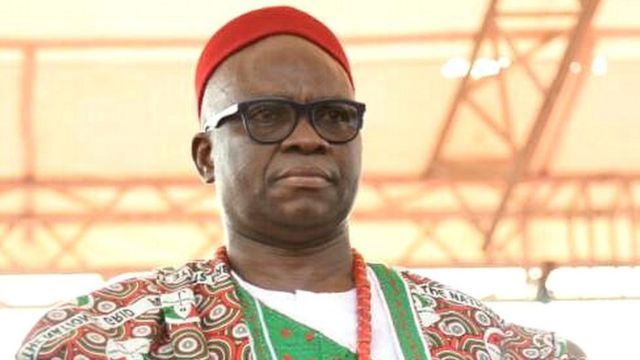
The same year in October 2006, Ekiti State Governor Ayo Fayose was impeached by the state House of Assembly over allegations of corruption, believed to have been orchestrated by Abuja. The confusion that followed the half-baked impeachment created a vacuum that Obasanjo had to fill by declaring a state of emergency and sending a former military officer, Retired Brigadier General Tunji Olurin (1944-2021), to oversee the state. In 2015, the Supreme Court set aside the impeachment as it decided that the process that led to Fayose’s removal was not valid.
Many governors have been suspected of being involved in corrupt practices, but very few have been convicted, no thanks to the weak state Houses of Assembly, which are in awe of governors. There were two exceptions, however. Former Plateau State Governor Joshua Dariye and former Taraba State Governor Jolly Nyame were prosecuted by the Economic and Financial Crimes Commission (EFCC) and jailed for fraud to the tune of N1.16bn and N1.6bn, respectively. Senator Dariye was meant to spend 10 years in jail, while Jolly Nyame was sentenced to 12 years. However, former President Muhamaddu Buhari (1942-2025) pardoned the two former governors in 2022.
The Fourth Republic has been plagued by various ailments, but the desperation of individuals to capture states and corruption in the three arms of government have weakened the institutions put in place for democracy to thrive. It was clear that Obasanjo’s design to put the ruling party, the legislature and even state governors under his armpit set the tone and example for the Executive arm of government to bring other organs of democracy under subservience in the name of loyalty. The legislature, both federal and state, has not recovered from the seed planted in Obasanjo’s first term. It is not shocking that in the Eighth, Ninth and Tenth National Assembly, there are rare critical reviews of Executive Bills and policies, as the ‘the president means well’ assumption leads to the approval of even frivolous and half-baked policies. Worse still, as Nigeria looks forward to the 2027 elections, state governors are jumping to the ship bearing the label of the ruling All Progressives Congress (APC). Some are even selling their birthright in the process.
Nigerians can now invest ₦2.5 million on premium domains and profit about ₦17-₦25 million. All earnings paid in US Dollars. Rather than wonder, click here to find out how it works.
Join Daily Trust WhatsApp Community For Quick Access To News and Happenings Around You.
Community Reactions
AI-Powered Insights
Related Stories

BD Sunday 01st Mar 2026

World on Edge as US, Israel Attack Iran, Global Leaders React

As Lithium Mining Reshapes Life in Nasarawa Community


Discussion (0)