

AI development and disruption in Nigeria’s Fourth Republic
When Nigeria returned to democratic rule in 1999, the country did not only mark a political transition, it also entered a new technological era, albeit quietly and unevenly. The Fourth Republic coincided with a period of rapid global digital transformation, one that would gradually reshape how Nigerians communicate, trade, govern, and organise society. Today, as artificial intelligence (AI) begins to influence decision-making across sectors, it is worth asking how Nigeria arrived at this point, what has worked, what has not, and what the future may hold.
Technology did not suddenly appear in Nigeria after 1999. Long before the Fourth Republic, Nigerians were already adapting tools to survive and innovate within difficult constraints. However, the character, scale, and impact of technology before 1999 were shaped by structural limitations that democracy would later begin to loosen.
Technology before 1999: Constrained potential
Prior to 1999, Nigeria’s technological landscape was largely analogue and centralised. Government record-keeping relied heavily on paper-based systems. Data management was fragmented, manual, and vulnerable to loss or manipulation. Telecommunications were under state monopoly, expensive, and inaccessible to the majority of citizens. Fixed telephone lines were scarce, internet access was minimal, and computing facilities were largely confined to universities, research institutions, and a small urban elite.
Innovation existed, but scale did not. Importantly, military rule prioritised control and hierarchy over openness and experimentation. Technology was not viewed as a tool for citizen empowerment or service delivery, but as an administrative support system for the state. As a result, Nigeria entered the Fourth Republic with a large population, strong human ingenuity, but weak digital infrastructure and limited institutional readiness for the technological wave that was already building globally.
1999–2010: Liberalisation and digital opening
The early years of the Fourth Republic marked a turning point. One of the most consequential decisions of the period was the liberalisation of the telecommunications sector. The rapid expansion of mobile telephony transformed everyday life in ways few could have predicted. Within a decade, mobile phones moved from luxury items to basic tools of communication, commerce, and social connection.
Internet access followed a similar trajectory. Cybercafés emerged across cities and university towns, offering Nigerians their first sustained interaction with the digital world. Media organisations embraced online platforms, expanding the reach of news and public debate. Technology began to lower barriers to information and participation, subtly reinforcing democratic culture.
This period represents one of the Fourth Republic’s quiet successes. Market openness, private sector participation, and youthful adoption combined to accelerate digital inclusion. However, while access expanded rapidly, policy thinking lagged behind. Digital growth was largely organic, driven by market forces rather than a coherent national technology strategy. Regulation was reactive, and public institutions struggled to keep pace with the speed of change.
2010–2020: Platforms, data, and uneven gains
By the 2010s, Nigeria’s digital economy had matured into a platform-driven ecosystem. Fintech firms reshaped financial services. E-commerce platforms altered consumer behaviour. Digital identity systems, biometric databases, and data-driven tools entered governance, security, and social service delivery.
Data became the new currency. Decisions increasingly relied on digital records, analytics, and automated processes, often without clear frameworks for accountability, privacy, or redress. While innovation flourished, especially among young entrepreneurs, the benefits were unevenly distributed. Urban centres surged ahead while rural communities lagged. Connectivity improved, but digital literacy gaps persisted.
This phase exposed a central tension of Nigeria’s Fourth Republic: the country embraced technology faster than it built the institutions required to govern it. Innovation outpaced policy. Systems were adopted before risks were fully understood. In many cases, technology became a substitute for institutional reform rather than a complement to it.
2020 to the present: AI enters the public space
The past few years have marked a new phase. Artificial intelligence has moved from the margins into mainstream discourse and practice. AI-powered tools are now used in financial services, security analysis, recruitment, education, media, and content moderation. Automated decision-support systems increasingly inform choices that affect livelihoods, access to services, and public perception.
In Nigeria, AI adoption has been pragmatic rather than strategic. Organisations deploy tools to solve immediate problems, often importing models and platforms developed elsewhere. While this approach accelerates adoption, it also raises concerns. AI systems trained on external data may reflect biases that do not align with Nigeria’s social realities. Automated decisions can lack transparency, and accountability mechanisms remain weak.
Crucially, Nigeria does not yet have a comprehensive national AI governance architecture. Policy discussions exist, but institutional capacity is still developing. Many public officials interact with AI-enabled systems without sufficient understanding of their limitations, risks, or ethical implications. In this context, AI is no longer a future concern. It is a present governance challenge.
What is working
Several factors are working in Nigeria’s favour. The country possesses a vibrant innovation culture driven largely by its youth. Nigerian technologists are adaptive, creative, and increasingly globally connected. The private sector has demonstrated agility in adopting and scaling new technologies. Awareness of AI policy and digital governance is also growing within government and civil society circles.
These strengths reflect the democratic space created by the Fourth Republic. Openness, competition, and freedom of expression have allowed ideas and enterprises to flourish. Technology has, in many respects, expanded economic opportunity and civic engagement.
What is not working
However, structural weaknesses remain persistent. Institutional capacity has not kept pace with technological change. Regulatory frameworks are often fragmented or outdated. Ethical considerations are frequently addressed after deployment rather than before. Coordination across government agencies is limited, leading to duplication and policy incoherence.
Perhaps most importantly, accountability mechanisms remain underdeveloped. When automated systems fail or cause harm, responsibility is often unclear. This mirrors broader governance challenges of the Fourth Republic, where diffusion of responsibility has too often undermined trust and effectiveness.
Looking ahead: Governance, not just innovation
As Nigeria looks to the future, the question is no longer whether AI will shape society, but how. AI will amplify existing strengths and weaknesses. Without deliberate governance, it risks deepening inequality, entrenching bias, and eroding trust. With the right frameworks, it can enhance service delivery, improve decision-making, and support inclusive development.
The priority for Nigeria should be a shift from adoption to governance. This includes building AI literacy among policymakers, strengthening institutional oversight, and developing context-aware regulatory frameworks rather than copying models wholesale from other jurisdictions. Transparency, accountability, and inclusion must guide AI deployment.
Nigeria’s Fourth Republic has shown that political openness can unlock innovation. The next phase must demonstrate that democratic institutions can also guide technology responsibly. The future of AI in Nigeria will not be determined by algorithms alone, but by the quality of institutions and values that govern their use.
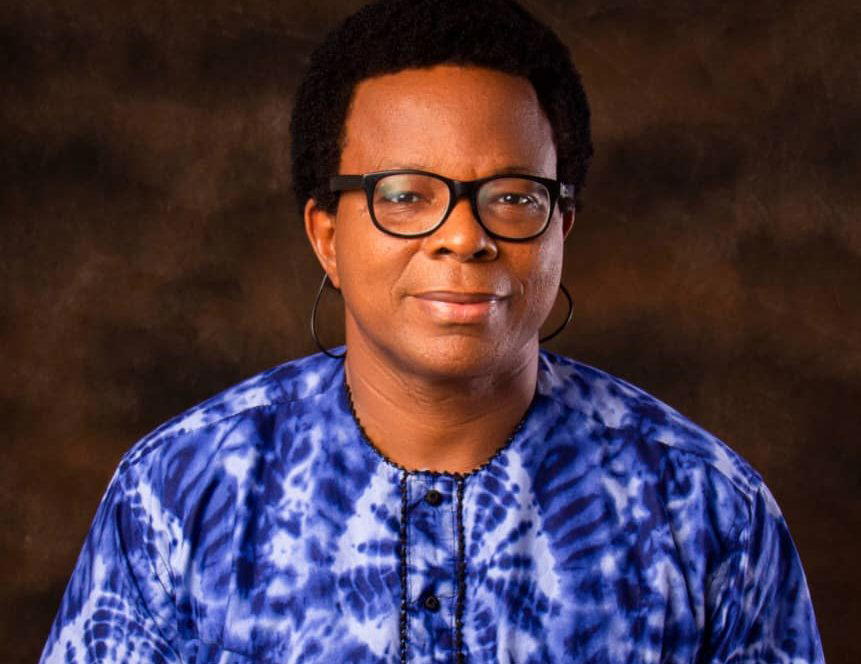
Suleiman resides in Abuja. He is a Governance, Security, and Development Consultant and an AI Policy and Governance Advocate committed to shaping Africa’s technological future through responsible innovation and ethical public policy. He can be reached at [email protected].
Nigerians can now invest ₦2.5 million on premium domains and profit about ₦17-₦25 million. All earnings paid in US Dollars. Rather than wonder, click here to find out how it works.
Join Daily Trust WhatsApp Community For Quick Access To News and Happenings Around You.




Discussion (0)