

Scars that won’t heal 60 years after coup
In its Thursday, January 15, 2026 edition, Daily Trust published a report on the January 15, 1966 coup in which many prominent political leaders and military officers, mainly from Northern Nigeria, were killed.
Due to how the incident has become a highly sensitive matter in Nigeria’s political history, narratives, counter narratives, views, perspectives and claims have continued to pour in, revealing that many still carry the scars of the coup, including people with more than passive interests, those that witnessed the incident, relations of those killed in the coup and those who only read about it.
Till today, the incident is seen as the foundation of all the political problems in the country, giving rise to the mutual suspicion, regional sentiments and unhealthy rivalry.
Reactions to the coup led to several other events that later shaped the country. The counter coup of July 1966, the creation of 12 states, the civil war and the efforts reintegrate and unite all parts of the country.
To some, it is nothing but an Igbo coup, some say it wasn’t, some blame the politicians of the First Republic; some say the soldiers of that era were overambitious and that a coup would have happened even if the Nzeogwu-led one had not occured.
There have been different accounts of the coup and how some of the political leaders and military officers were killed .
Femi Fani Kayode, whose father, Remi Fani Kayode, was the deputy premier of the Western Region at the time of the coup, recalls that he was only six then.
He said: “At around 2.00 a.m., my mother, Chief (Mrs) Adia Aduni Fani-Kayode, came into the bedroom which I shared with my older brother, Rotimi and my younger sister, Toyin. I was six years old at the time.
“The lights had been cut off by the mutineers, so we were in complete darkness and all we could see and hear were the headlights from three or four large and heavy trucks with big loud engines.
“We saw four sets of headlights and heard the engines of four lorries drive up the driveway.
“My father courageously went out to meet them, after he had called us together, prayed for us and explained to us that since it was him they wanted, he must go out there,” he narrrated.
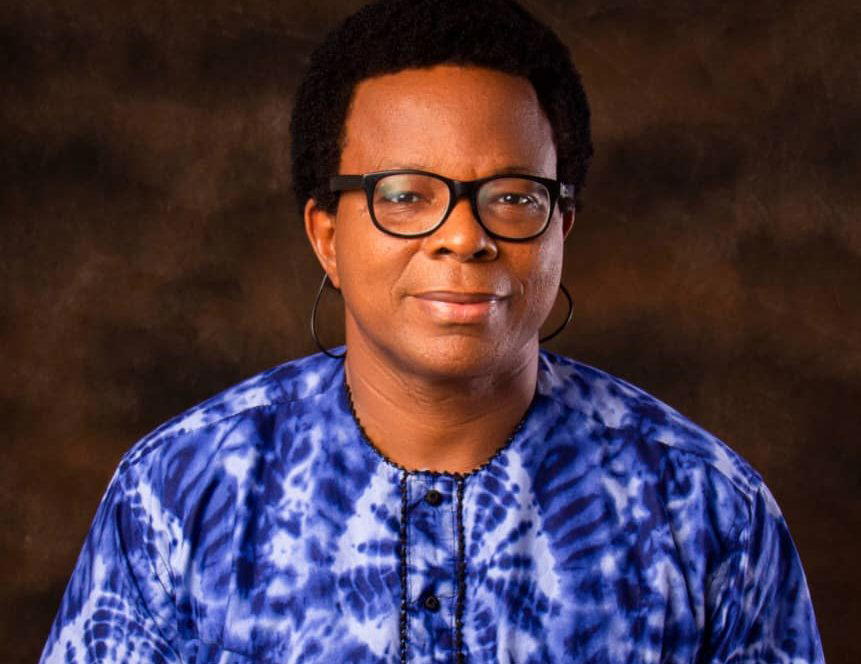
Dr Ishaya Pam, a former Chief Medical Director of the Jos University Teaching Hospital (JUTH), who is a son to Lt Col James Yakubu Pam, who was also killed in the coup also narrated: “I was one year and nine months old when the coup happened on January 15, 1966. We are six siblings and I am a twin. My father was killed on the 15th of January 1966, during the events of the military coup, and he was the Adjutant-General at the Army Headquarters in Lagos. We lived at Number 8 Ikoyi Crescent in Lagos, and at about 2:00 a.m. on the fateful day, our house was attacked by soldiers who were among the coup plotters.
“They broke into the house, slashed his car tyres and accosted him. Before then, he tried to make some phone calls while they were breaking in. After they accosted him, he asked them what they wanted. Surprisingly, the leader of the team was his deputy and a close confidant, Major Humphrey Chukwuka.”
Those killed
Apart from Sir Abubakar Tafawa Balewa, the Prime Minister of Nigeria; Sir Ahmadu Bello, the Premier of the Northern Region; Chief Samuel Ladoke Akintola, the Premier of the Western Region and Chief Festus Samuel Okotie-Eboh, the Minister of Finance of Nigeria, others who lost their lives included Brigadier Samuel Adesujo Ademulegun, Commander of the 1st Brigade, Nigerian Army; Brigadier Zakariya Maimalari, Commander of the 2nd Brigade, Nigerian Army; Lt Colonel James Pam; Colonel Ralph Sodeinde; Colonel Arthur Unegbe; Colonel Kur Mohammed and Lt. Colonel Abogo Largema
Hajiya Hafsatu Bello, the wife of the Sardauna of Sokoto and Mrs Lateefat Ademulegun, the wife of Brigadier Ademulegun, were also killed.
Brig. Maimalari was one of the pioneer officers of the Nigerian Army and a central figure in its formative years. Born on January 17, 1930, at Maimalari village in the old Borno Province, now Yobe State, he attended Barewa College, Zaria, before joining the Royal West African Frontier Force in 1950. He was commissioned a second lieutenant in 1953 after training at the Royal Military Academy, Sandhurst, making him one of the first Nigerians to receive a regular combatant commission. He later underwent advanced military courses in the United Kingdom, Pakistan and at the Royal College of Defence Studies in London, rising steadily through the ranks to command the Nigerian Army’s 2nd Brigade in Apapa, Lagos.
Lt. Colonel Abogo Largema, a native of Damboa in present-day Borno State, was also among the first generation of professionally trained Nigerian officers. He enlisted in the Nigerian Regiment of the Royal West African Frontier Force and rose to become the Commanding Officer of the 4th Battalion in Ibadan. Trained overseas as part of efforts to indigenise the officer corps after independence, Largema was considered an experienced field commander. He was killed at his duty post on January 15, 1966, a loss that underscored the heavy toll the coup took on the army’s senior northern officers.
Colonel Kur Mohammed, born in Bama, Borno State, was another prominent northern officer whose career was cut short by the coup. He was assassinated in Lagos during the coup, alongside other senior officers and political leaders, in what historians have described as a defining moment in Nigeria’s political and military history.
Lt. Colonel James Yakubu Gyang Pam, born on November 23, 1933, was serving as the Adjutant-General at Army Headquarters in Lagos at the time of his death. He was the first Nigerian artillery officer and the first army officer from the Middle Belt to be commissioned after training at Sandhurst. Pam was killed at his Ikoyi residence during the coup after reportedly attempting to alert senior command of the unfolding mutiny, a death that removed a key institutional leader of the Nigerian Army at a critical moment.
Nigerians can now invest ₦2.5 million on premium domains and profit about ₦17-₦25 million. All earnings paid in US Dollars. Rather than wonder, click here to find out how it works.
Join Daily Trust WhatsApp Community For Quick Access To News and Happenings Around You.



Discussion (0)