
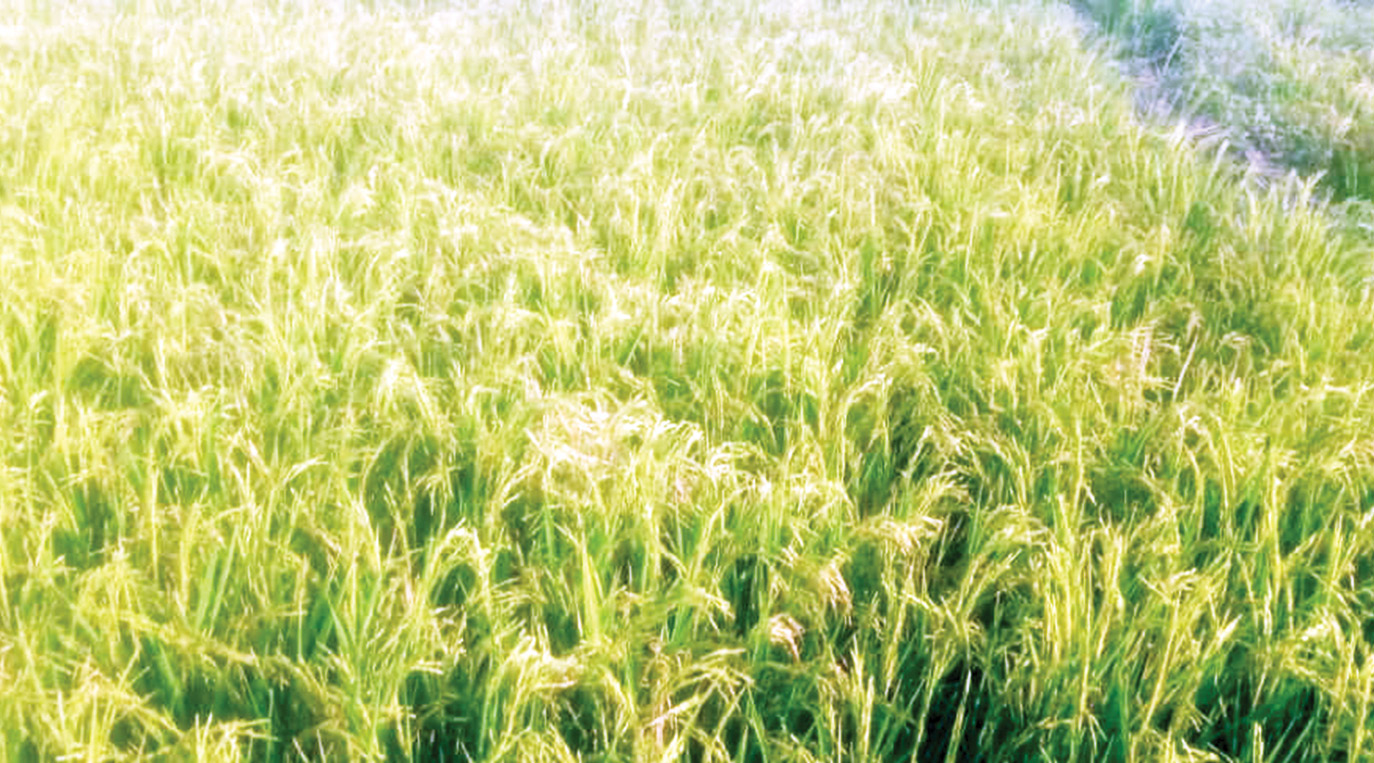
More Kano rice farmers to quit production over losses
More Kano rice farmers are set to quit or cut down production this year due to heavy losses incurred in the last season.
A recent report from the National Agribusiness Policy Mechanism (NAPM), a presidential advisory committee on the same situation, has sparked concern about this year’s production forecast.
The report reveals that approximately 3,500 rice farmers are considering abandoning or scaling back their rice cultivation due to substantial losses estimated at N93 billion incurred during the 2025 wet farming season.
The survey shows that it has covered 33,507 farmers across 13 pilot states and found that 10.6 per cent of rice farmers intend to scale back production in the 2025/2026 dry season.
Findings have also shown that rice production recorded a decline by 7.9 per cent during last year’s wet season as farmers increasingly moved to cash crop production, such as soybeans, ginger and sesame, which currently offer higher profit margins and lower input requirements.
Many rice farmers spoken to by our reporter confirmed that they were done with rice from 2025 as they were left to their fate.
Alhaji Shehu Garun Malam, a rice farmer who claims to have been in production for decades, said he was completely quitting rice farming. He added that he would not cultivate it during the wet season because they were switching to soybeans or sesame, citing declining rice prices.
“The output of rice last wet season wasn’t encouraging at all. The price also crashed despite spending a lot on agro-inputs. Many of us ran into losses. To make it worse, we learnt that the government had issued a licence for rice importation; that is why we are planning to switch to other cash crops to remain in the sector.
“We found out that contrary to rice, soybean production rose by a reasonable percentage in 2025, with farmers earning far above rice per hectare,” he said.
Another farmer, Garba Ubale Yanoko, said although he wanted to continue with rice farming, last wet season losses drained his pocket.
He explained that he was not lucky last wet season as he couldn’t recover 15 per cent of what he spent on farm after harvest.
“I don’t want to talk about it. We know that’s our destiny, but the last wet season was not good for rice farmers. After harvesting, I barely got 15 per cent of what I spent on plantation. That is why, this dry season, a lot of people like me who had incurred losses will not be on the field,” he said.
However, the committee linked rice farmers’ losses to policy decisions taken in July 2024 when the federal government approved duty-free rice imports to curb food inflation.
The committee’s report warned that continued farmer exit from rice production could threaten national food security, and recommended the immediate activation of a guaranteed minimum price, closure of rice import windows and targeted support for dry-season rice farmers to stabilise production and fill the gaps created during the wet season rice production.
Responding, the chairman of the Kano wing of the Rice Farmers Association of Nigeria (RIFAN), Alhaji Abubakar Haruna Aliyu, confirmed the committee’s findings, saying rice production had become very expensive and the market was not encouraging; hence the resolve by some farmers to quit or switch to other crops.
Aliyu added that last year’s wet season came with a lot of challenges; and the farmers, especially rice farmers, have had it very rough.
“Rice farmers spent a lot on farms, but unfortunately, due to the economic trend that warranted a hike in the price of inputs and the drop in the price of paddy, as well as the alleged federal government’s policy on rice importation, their hard work was not rewarding. Many of us incurred losses instead of gain,” he said.
According to the chairman, the travail of the farmers was noted by the federal government and a new intervention scheme to assist farmers has been formed and at the verge of implementation during this year’s dry season rice production.
He explained that with proper and strategic formation, it is believed that the intervention would go a long way in addressing the issue and return rice farmers to the field.
“What we are appealing to the federal government for is a subsidy package in the new intervention scheme. We are proposing a 40 per cent subsidy to farmers for them to be able to bridge the already existing financial gap, as well as 100 per cent recovery success. We are in talks with federal government officials on the matter; and as an association that has been dealing with farmers, we know their strengths and weaknesses. We are appealing that the intervention should come with a subsidy,” he said.
Nigerians can now invest ₦2.5 million on premium domains and profit about ₦17-₦25 million. All earnings paid in US Dollars. Rather than wonder, click here to find out how it works.
Join Daily Trust WhatsApp Community For Quick Access To News and Happenings Around You.
Community Reactions
AI-Powered Insights
Related Stories

NGOS AND IMPACT ON SOCIETY

KPMG Advises Businesses to Reinvent Tax Functions Amid Revenue Drive

Nuhu Ribadu Vs. El Rufai: Battle of The Last Hegemons


Discussion (0)