
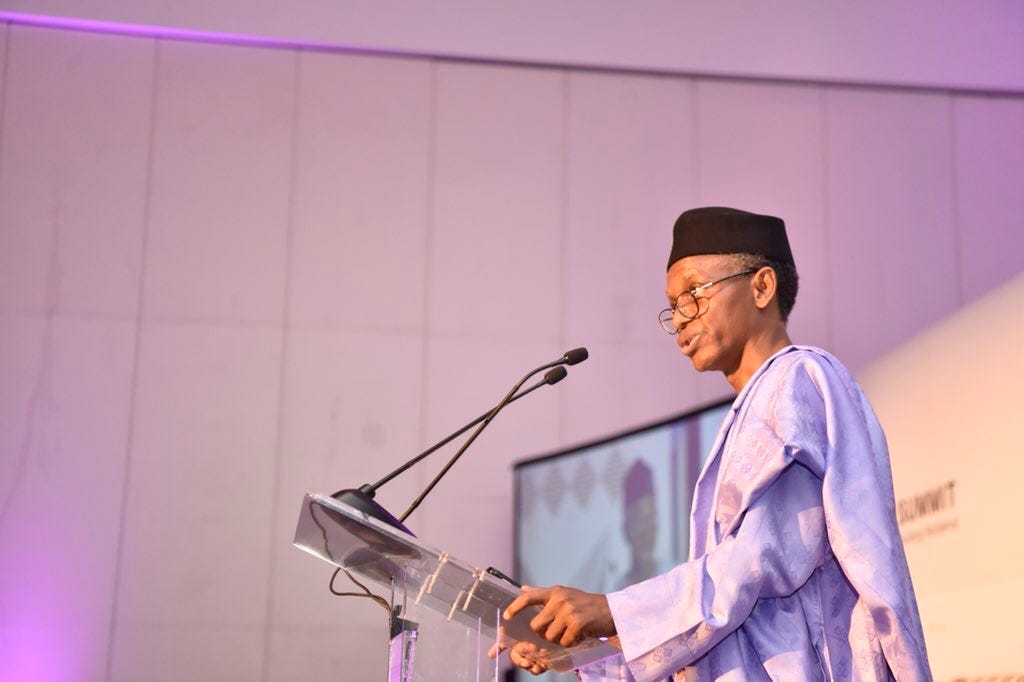
El-Rufai: Misuse of security institutions leads to collapse of public trust
Former Kaduna State governor, Nasir Ahmad El-Rufai, has cautioned against what he described as Nigeria’s growing shift from national security to “regime security,” warning that the trend threatens justice, democracy, and the wellbeing of citizens.
In a statement titled “National Security, Justice, and the People’s Wellbeing: Reclaiming the Purpose of Power,” dated February 8, 2026, El-Rufai said national security should exist primarily to ensure that Nigerians can live in peace, dignity, and without fear, rather than to protect those temporarily in power.
Citing Nigeria’s National Security Strategy (2019), El-Rufai noted that security is meant to be “the cornerstone of development and progress in a free society,” adding that a state cannot be considered secure if its citizens live in fear or if its institutions are weakened by partisanship.
He argued that over the past 26 years of democratic rule, Nigeria’s security and criminal justice institutions have increasingly been repurposed to protect political incumbents and preserve dominance, rather than to safeguard citizens and uphold the Constitution.
“There is a clear difference between protecting the country and protecting a regime,” El-Rufai said, stressing that while governments are temporary, the state and its institutions must endure.
He described true national security as the protection of lives and property, constitutional order, territorial integrity, and public trust.
According to him, regime security treats opposition and criticism as threats, turning security agencies into tools of intimidation and weakening their neutrality.
He warned that such an approach is “morally wrong and strategically disastrous.”
El-Rufai expressed concern over what he described as the selective use of institutions such as the police, the Department of State Services (DSS), the Economic and Financial Crimes Commission (EFCC), the Independent Corrupt Practices Commission (ICPC), and parts of the judiciary against perceived political opponents.
He said the practice of targeting associates and family members of critics without credible evidence amounted to collective punishment, adding that it undermines professionalism within security agencies.
According to El-Rufai, the misuse of security institutions leads to a collapse of public trust, diversion of resources from tackling terrorism and violent crime, and the personalization of state institutions.
He warned that these developments weaken the state, deepen insecurity, radicalize political competition, and discourage economic investment.
He also cautioned that democracies where security agencies serve incumbents rather than institutions risk collapsing, even if elections continue to hold.
El-Rufai called for a return to a human-centred and constitutionally grounded security framework, where agencies owe allegiance to the Constitution, justice is blind to political affiliation, and opposition is recognised as a legitimate part of democracy.
He concluded by stressing that national security belongs to the Nigerian people, not to those occupying public office, adding that lasting peace and stability would remain elusive until security agencies fully return to their role as guardians of the state and servants of the Constitution.
Nigerians can now invest ₦2.5 million on premium domains and profit about ₦17-₦25 million. All earnings paid in US Dollars. Rather than wonder, click here to find out how it works.
Join Daily Trust WhatsApp Community For Quick Access To News and Happenings Around You.
Community Reactions
AI-Powered Insights
Related Stories

NGOS AND IMPACT ON SOCIETY

KPMG Advises Businesses to Reinvent Tax Functions Amid Revenue Drive

Nuhu Ribadu Vs. El Rufai: Battle of The Last Hegemons



Discussion (0)