

We should pray for Nigeria – Senator U K Umar
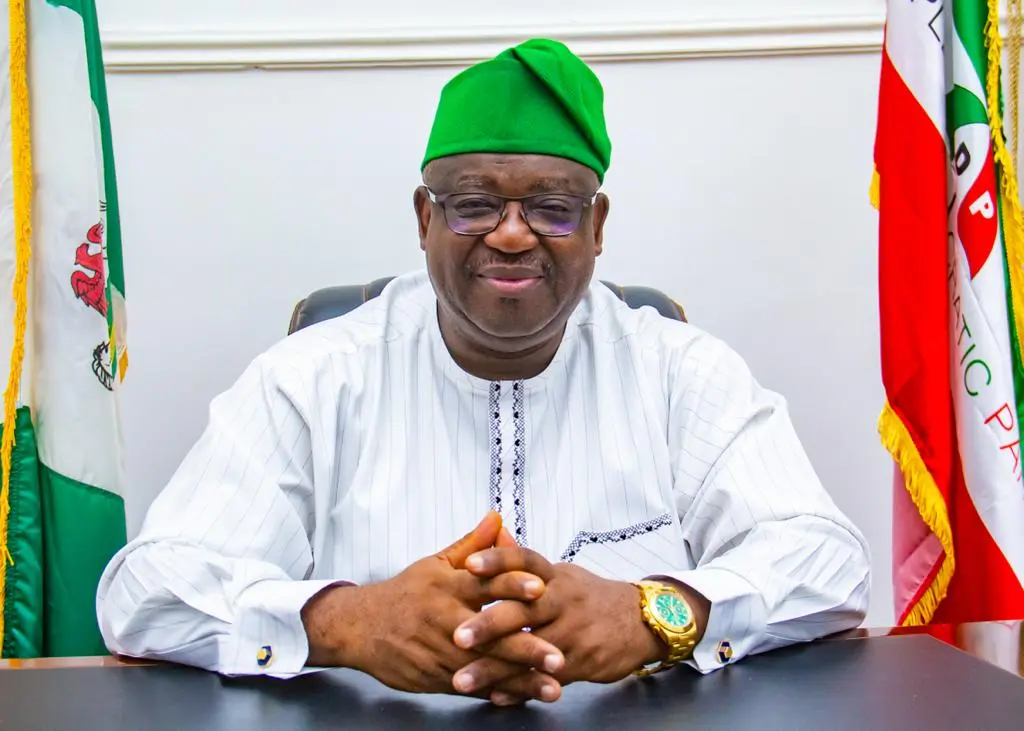
Senator Usman Kibiya Umar, spent most of his career in the Nigeria Immigration Service, where he started as an officer in 1970 and retired as acting comptroller-general in 2000. He was in politics between 2003 and 2007, representing the Kano South senatorial district as a senator in the National Assembly. For most of his life, he has been very active in community service, starting from his alma mater, Birnin Kudu Secondary School, where he has been the chairman of the Old Boys Association. He is the chairman of the Muslim Community Centre, Wuse and many other Islamic and development associations.
Let’s start with your early life in Kano
I was born in Kibiya town, Kibiya Local Government Area of Kano State around 1949. It is difficult to know the exact date because we were not able to trace any.
How do you estimate your age?
It is a funny thing. When we were in senior primary school, our headmaster directed that we bring our date and certificate of birth and almost all of us in our class didn’t have that record. We were given time to go home and see if we could get something.
Unfortunately, I in particular, being the firstborn, my mother didn’t even want to talk about it. When I asked her, she told me to forget about it, that she didn’t know. Although I knew that she knew, but you know how things were done by our mothers – a typical Fulani thing.
So, we came back and sat down in class and started giving ourselves dates of birth. I happened to make some calculations, which obviously couldn’t be correct. I gave my date of birth as June 12, 1949.
Your father couldn’t help?
My father couldn’t help. He was also an old-timer. When I asked him, he said he didn’t know; and that was it and I didn’t press.
You probably started school late; which school did you attend?
Not necessarily late. I started Junior Primary School, Kibiya in 1955. But before then, I had a cousin who was in primary school and he used to take me to school; and that was fine.
And as a son of a village head, they put us in school because if the village head didn’t (send) his son, nobody would.
We started Kibiya Primary School in 1955 and finished in 1958 – that’s junior primary school – and sat for a senior primary school examination, which many of us passed. The few that couldn’t were not taken. I went to Rano Senior Primary School. That was in 1959. We stayed there for another three years. But to be exact, I finished in 1962 because of a very interesting story.
One or two of us were asked to go to craft school; and there was only one in Kano. They picked me and a friend of mine to go to the craft school.
Immediately I was informed that I was going to craft school, many people started laughing: ‘Oh, he is going to be a builder. He is going to be a mason.’ They started making me feel uncomfortable.
So, I went and told the headmaster that I wasn’t going, and he asked why? I mentioned people who were going to secondary school. I said I would rather repeat than go to craft school.
You had to repeat although you were the son of a village head?
Yes. I excelled in that examination, so I was picked to go to Government College, Keffi. I was the only person picked to go to Keffi.
I went to start making arrangement for Keffi; then suddenly, there was another interview by the Northern Nigeria Government and we were asked to go.
We were told that the first principal of the secondary school( Birnin Kudu) a Nigerian, was asked to come and interview us. He picked 60 of us.
A new secondary school?
It was not a new secondary school. It started either in 1959 or 1960, but he wanted a new class because he was a Nigerian and wanted to start with brilliant students so that the Northern Government could see what he could do.
So he picked us. That’s how I missed going to Keffi and had to repeat. My classmates had already gone. Two of them went to Keffi, while others went to Kano Secondary School. That’s the story of me not graduating in 1961 but 1962.
Didn’t you regret not going to Keffi because that was a top elite school?
Honestly, I regretted going to craft school later in the years because the conception we had was really that you would just become a mason. We didn’t know that they were preparing the children. The Northern Government was preparing some of the boys to become engineers etc. That’s what I was told and found out later. I would have been an engineer. But that’s how God wanted it.
How was the experience in Birnin Kudu?
Fantastic. I had a very lively stay there. Some of my classmates were my former classmates that I would have graduated with them, but they were a year my senior.
But Alhamdulillah, we all became friends. I was active in sports and was an all- rounder. So, people liked me. We enjoyed staying in Birnin Kudu.
Your attachment to Birnin Kudu seemed to have continued well after graduation. You graduated in 1967, yet, from 1968 you have been the chairman of the Old Boys Association?
Yes. Actually, the chairman of the association is not for Birnin Kudu Secondary School but the Class of 67. In that class, I am the life chairman. I later became a member of the Board of Trustees (BoT) of the entire Birnin Kudu Old Boys Association. I am still a member.
Why life chairman?
I don’t know. The class decided that they were not going to let me go – that I would continue to be their chairman.
Is that an active group?
Very active till date.
How many of you graduated and how many are still alive?
I think about 59 of us graduated. I was in Class A and some were in class B. They decided that the brilliant ones would be in Class A. But honestly, my classmates were also brilliant because that was the first time they passed an examination. Some of them were picked to go to Moscow or Poland to read Medicine on scholarship. We were the first class to go out of Nigeria to study.
Out of that number, how many are left?
I think that out of 60, 18 or 19 left.
After Birnin Kudu, where did you go?
The Nigeria Railway Corporation came recruiting; so we were sent to Zaria for an examination; and if you passed you were taken to a railway training school. I passed and went there and they gave me the job. I passed the examination and went to railway training school. We went to railway training school. When we started, I found it uncomfortable and very odd because it was not a real straight training course. They would teach you rack and row like a driver.
You left the railway?
I left the railway and went to the School of Agric with some of my classmates. Well, it was farming, it was fun. We had our own house. One day, one of our seniors in ABU, Zaria asked why I was in the School of Agric. He asked what I was doing there and I told him that I found myself there. He told me that there was going to be an interview for a diploma course and asked if I was interested in joining him.
Diploma in Law?
Diploma in Law. I said why not? I went there and was interviewed. I passed and the then Kano State Government decided to take us as court clerks, but in-service members of staff and given scholarships. I joined the course in Zaria and we spent two years.
So you have a diploma in law?
Yes. I passed it. Since we were there, in 1970 we were to do our final examination to pass our diploma. Then something happened, which is not happening now.
One day, a friend told me that there was an ongoing interview to employ people into the federal service and said we should go. I initially refused but later followed him.
Where, Kaduna?
In Zaria. He said that if we passed the examination, some of us would be taken to Lagos.
The issue was that the Federal Civil Service Commission would interview you and give you an appointment pending your examination. If you passed they would take you.
Something interesting happened during that interview. They called people in groups of five. The late Alhaji (Mohammadu) Jega was the acting chairman of the panel because Sule Katagum was the chairman of the civil service.
We were asked to sit and they started asking questions – five of us – but when it came to my turn, they would just skip me.
Then I heard the secretary of the commission say to the chairman, ‘You didn’t ask that boy any question.’ He said yes and the chairman said, ‘Kai yaro, why do you want to join immigration?’
I said I didn’t know about immigration. I just knew it was a federal service. My friend who asked me to follow him was by my side and I said, ‘This is the man who said I should come. He is my friend.’ I was asked to go. While leaving, I heard one of them say ‘this boy will be good in immigration.’ And we left.
I passed my diploma in law examination and my interview.
So you were given a job?
I was given a job straightaway. But let me remind you that we had a job with the Kano State Government as clerks. First, I didn’t know what immigration was. Secondly, I had never heard of Lagos or( could) even spell it.
I went and told my father that I got a job and they said I should go to Lagos. I asked for their advice.
He said he didn’t know anything about that and prayed that Allah would give me the best. He said it was up to me to go or not to go. He said he would only pray for me.
So my father prayed for me and I left. I went to Bello Maitama who had already graduated. The late Alhaji Guda Abdullahi was my uncle, so I told them, as well as Sarkin Ibrahim. These were the three people I contacted. All of them said I must go to Lagos. I told them that I didn’t know Lagos, but they said I must go. I wanted somebody to discourage me, but none of them discouraged me. They just pushed me. That was how I went to Lagos.
I went to Lagos as an immigration officer. By the time I got this encouragement, they had already sent a railway ticket to Lagos.
I got my ticket and went to the railway. I didn’t know anybody. They took me to the railway station and put me in this thing. I had another relative who was working in the Voice of Nigeria. They told him and he came and picked me.
So you went on your own?
I went on my own.
How long was the journey?
It was almost 24 hours. I met one gentleman in the cabin. He was my senior but I never met him. We started discussing and he said he was from Kano but lived in Sierra Leone. He encouraged me and we became very close. Whether he is dead now or not, I don’t know.
You became an immigration officer in 1970 and went to America for studies the same year; how did that happen?
It was not America for studies; I was sent as an immigration attaché. I became an immigration attaché in 1977. It was while I was in America that I took the opportunity to go to the university to do my degree in politics. That’s another story.
Where was your first posting after some years in Lagos?
Within the service. But my first posting outside was the Ministry of Interior. Immigration Service started posting attachés.
Five people were sent – one was sent to England, one to France, one to Germany, one to India, and I was sent to America. We were the first five immigration officers to be sent to the Nigerian embassy as attachés.
That must have been a really big break for you?
I attempted to go back to Zaria to do a degree course, but unfortunately, they couldn’t allow me. They would not send me on in-service.
I went to the permanent secretary of the establishment department and told him that I wanted to go and do a higher degree. He said I would not go, but he would send me to do a course. But I told him that I wanted to do a degree. He insisted that he would rather send me to do a course. That’s why you will see in my curriculum vitae that I was sent to England for a three-month course – a middle management course.
You didn’t know about immigration, but suddenly, you found yourself as an immigration officer in Lagos; how did you cope?
That my cousin encouraged me.
The one in the FRCN?
He offered me accommodation in Obalande and encouraged me. He would pick me in the morning and we would board a bus that would take me to the office. And when we were about closing, he would come and pick me back home.
He had a one-bedroom apartment in Obalande. That’s how we coped. Then, Lagos was Lagos and a northerner was a northerner. I was less than 22 years old.
I didn’t have a machine; I didn’t have a car, I always joined a bus when I was going to the office. Believe me, southerners – I didn’t know whether they were Yoruba, Igbo or whatever – but if I joined a bus, seeing me as a northerner, they would stand up and give me a chance to sit down. Northerners were really respected.
I was very young in the service and a lot of people began to like me. And our senior, the director, the late Aleydeinu, was a northerner. The deputy director, Alhaji Lawal Sambo, was also a northerner. They encouraged us.
I found a few people within the service that were transferred from the Northern State Government to immigration. Although I was young, I was their senior; I was on level eight.
But they received me. I will never forget Alhaji Adamu Idrissa in my life. He really tutored me. He would advise and teach me. Quite a number of them taught me.
So you adjusted to Lagos?
There was no problem. Within one year, I was able to get a one-bedroom house. I spent seven years in Lagos. But I went home every year – just once a year for holidays.
Tell us about your experience in America for three years?
There was a guy called Mr Ebere. When we started discussing, I told him my interest in going to school and he encouraged me. He was also in the University of Maryland. We went there and I spoke to the admission officers and they gave me a diploma course to study.
I didn’t even know what to study, so we discussed with the counsellor and he said I should go and read Politics. They called it Government and Politics. That’s how they gave me a diploma in Government and Politics.
I had my wife and two children. My first son is late. My daughter was actually two years old and he was four.
My wife didn’t go to school, so I encouraged her to go, just to be literate. When she started, I took care of the children. And when I was away, she also took care of the children.
Alhamdulillah, by the time I almost finished my attaché business, I graduated.
Would you say that experience, degree and exposure in America really helped your career in the Immigration Service?
Honestly, it did because many of my colleagues were seniors in age, but we were going together because of promotion. I was always the youngest among them. But I always passed my promotion examination to the next level.
What was your most challenging assignment as an immigration officer posted to many places?
I never worked outside the headquarters until I was posted to Ikeja in 1984. All my services were within – from one section to another.
Going to Ikeja also exposed me to a new job – control, exit and entry. Honestly, I also found it challenging because some of the officers were my seniors in age. But in rank, I was the comptroller.
Gradually, I found some of them getting a little bit difficult because they wondered why this young man would be their boss and whatever. But Alhamdulillah, gradually, we all came together and there was never a problem in Ikeja.
Nigerian immigration officers at airports are known to beg for favours or bribe. Why do you think the Nigeria Immigration Service developed such reputation?
Honestly, I don’t know because at the time I was an officer in charge, nobody would come and face me. In fact, they never attempted to give me money.
And as I said, they were fairly disciplined; even if they were doing it, it was not to my knowledge. I heard about it after I left. From the airport, I think I went back to the headquarters. Then in 1986 I came to Abuja.
Honestly, I heard about it and tried to see the rationale behind it. I tried to see whether people were actually doing it, but I did not come across anybody complaining against anybody. I was waiting to see an American, British or whoever that would come and complain.
Throughout my stay for those two years, nobody ever came to complain to me that an officer demanded something. Few people advised me before I went there, but I said I would wait and see. I was an officer at the headquarters. I had no idea of most of these things.
Do you think it is about low pay or people are just greedy?
I think it is greed because I started as an immigration office with seven pounds. But at that time you could spend one pound to buy rice, condiments; so many things. And I was in a government quarters, so there was no question of paying rent. I was fulfilled.
Anybody coming to Lagos, particularly from Kano, would stay in my house; and before you knew it, he would go out and get a place. They gave them my name.
You did almost every senior job in the Immigration Service, including serving as a deputy comptroller-general, administration. You even served as acting comptroller-general. Do you regret that you didn’t become the substantive head of the Service?
I think my story of not becoming a comptroller-general is the will of Allah. When my late colleague became the comptroller-general, I was his deputy. I never showed that he was my equal.
When he retired, quite a number of people said I was the heir apparent. But God, in his wisdom, decided otherwise; and I took it that way.
It was already Obasanjo’s period. There was a recommendation from the minister, but I don’t know whether it was his personal will or he was asked to do it. In fact, people who didn’t like me even brought me the memo. What they wrote against me was really disgusting.
Was the memo on who should become the comptroller-general?
Exactly. Anybody who saw that memo knew there was something behind it. Fortunately or unfortunately, President Obasanjo presented it to the Council.
People like Sani Zangon Daura challenged that recommendation. I don’t know whether it was because they challenged it or they found the truth that the memo was withdrawn and they allowed me.
Who was your minister?
One Afolabi. The irony of the thing is that they sent it back. I would not underrate my former president, but maybe he was not advised that he could go ahead and approve without going to the Council. It was his duty. But maybe the Almighty Allah made it in a way that such time would not be. And none of the other people that were following me could also become the comptroller-general, so it was withdrawn.
And after about a month, they didn’t refer to the Council again. They quickly appointed another person, who was my junior – the first woman to be comptroller- general.
When they appointed her, I was called by the minister and told about the development because I was the acting comptroller-general. The minister said, “Mr Umar, go and hand over to Mrs Nwizu, she is our new comptroller-general.” That is what I will never forget.
That is life, but I will never forget the way he treated me. I said yes sir and quietly went back. Nobody knew what was happening until I went to the office and alerted my officers.
Was the appointment supposed to be immediate?
Yes. So I was going to write my handover note. I left and didn’t go back until two or three days after. I wrote my handover note.
Allah the all-merciful did a lot of things within that area. The minister, the permanent secretary and the former comptroller-general wanted someone else to be the CG, not even Mrs Nwizu, but wallahi-talahi, the Almighty Allah dealt with them.
When I became a senator and a member of the Internal Affairs Committee, the minister, Afolabi, came before me talking about budget and whatever, but I didn’t show him anything. I just greeted him.
The guy they wanted had an accident and died. The lady that took over from me was sick. She had leukemia, and within one year, she died. That’s Allah’s will, not my mine. I never thought of doing anything to anybody.
When you left the Service you quickly found a place in politics. Usually, first-timers in politics don’t succeed, but you became a senator within few years of leaving the Service. How did you adapt to politics so quickly?
I was never a politician. My people within Kano and environs, particularly within the present Rano Emirate, organised a reception for me. I didn’t know they were doing all those things. I can remember vividly that Kwankwaso was our governor.
It was the time I was planning to leave Abuja finally. I was told that they were organising a reception for me. They directed me on what to do. I think I found myself at Kwanar Dangora, where hundreds of people came to receive me. They followed me to my village and did a lot of things there.
I remember that a month or so after, Kwankwaso appointed me as a member of the Governing Council of the university at Wudil. That’s how they started reviving me.
When I left, I had nothing , honestly. Everybody knew that I had nothing. So my story into politics started. I was in my house one day in Kano and just saw the husband to my daughter. He is a politician. He came to see me, but I didn’t know he was coming to talk about politics. He said he was sent by a group of people. They were in Kibiya House, an office belonging to another of my in-laws, where they wanted to see me.
He acted like he didn’t know, but I knew he knew. I asked why they wanted to see me immediately but he said they just wanted to see me. So I followed him.
When I got there, I saw all the chairmen of the All Nigeria People’s Party (ANPP) of Kano south and some few people I didn’t know. They told their leader to talk to me.
They said, “We called you here to tell you that we want you to be our senator and we want you to say yes, now.” I told them that I was not a small boy, so they would not tell me this sort of thing and I would just listen. I pleaded with them to give me time.
They said they had given me seven days or whatever. I thanked them and left.
Do you think they wanted you because they thought you had a lot of money since you just retired from Immigration Service?
I don’t know whether they thought I had money, but I know they knew I had contributed greatly to the development of the society.
To Kibiya?
Not only Kibiya and Kano, but northern Nigeria and Nigeria. If you look at my curriculum vitae you would see where I became deputy director and the comptroller-general, administration and finance( including) recruitment.
There is no state in this country I have not recruited an individual. I did my best to make sure that I was fair to Nigeria. Yes, I know I am from Kano, Hausa and Muslim, but the most important thing is that I tried to make sure I recruited Nigerians into the Service. And they knew that I recruited a number of people within Kano, especially Kano south.
To cut the story short, I started talking to people about what confronted me. Anybody I talked to said I was the type of person they wanted in politics.
I said I didn’t know anything, but they told me to go and try. Out of more than 20 people I contacted, nobody objected.
How did you manage without the kind of money you hear people spend?
Wallahi, I had no money. I had to go round; and the highest contribution was N1 million. May Allah bless Alhaji Aminu Dantata; he was the only person who gave me N1 million.
Initially, he didn’t want me to go into politics, but when I told him what happened, he gave me the money. That was the highest contribution. Others gave me N100,000, N50,000, N20,000.
So we managed. My classmate and good friend, Kassim Musa Bichi, who had a Mercedes, gave it to me to use throughout that period.
I had better and more cars than Shekarau, who was my governor. We used to go together for campaign, but believe me, I had more cars than him, as well as crowd.
How do you compare being a senator to a civil servant?
It is completely different. I didn’t know what it was to be a senator, but I started seeing what they were doing in the chambers and getting some pieces of advice. Politicians would come and say they did this and that. That’s how it started. I just managed during my first session.
If you look at my curriculum vitae, I may be wrong, but I think I am the only senator who served in eight committees of the Senate, in addition to being a minority leader.
Many of the chairmen were experienced people, but they needed somebody who would write as a civil servant; and I was always available for them. I was always writing for them. I did whatever they wanted.
The funny thing is that if I was appointed into a committee, the chairman would go and lobby that I should not leave. Those chairmen that were my colleagues would go round and plead that they allow me to stay with them.
Generally, you would serve only on three or four committees, but I served in eight.
Towards the end, they encouraged me to go for a second term and I said why not; it may even be better. I was ready.
But you didn’t make the second term, why?
Only the Almighty Allah knows. I was the only senator with Shekarau. He always said, “This is my senator.”
You contested with him?
He was the governor while I was the only senator in his party. Everybody thought it was automatic for me, but it wasn’t. There was a lot of politicking; and as I told you, I didn’t know much and I didn’t have money.
Even as a senator?
Even as a senator. Who would give you money? To be frank, you would get some money but not that way. And you would spend the money and give everybody.
On the issue of second term, honestly, a lot of intrigues happened. And I told you that I was not a real politician. There are a lot of politicians who are interested in certain people.
A lot of people wanted others to come in; and Alhaji Kabiru Gaya rightly became my successor.
As far as I am concerned, the Almighty Allah destined that it would be only one term.
You are noted for community service and involvement in voluntary associations. You started from your old school in Kibiya, Kano and now, nationally. What motivates you to do these things?
I try to attend a lot of Islamic teachings and found that the best thing you can do is to give to your community. And the community will, insha Allah, appreciate you one day, even if it is hereafter. And they have been appreciating me.
I try as much as possible to make sure that if you approach me, if I see something that would help the community, I will do it. And wherever I go, Allah will make it possible for them to make me either the chairman or vice chairman of their association. Honestly, I have no problem whatsoever. I am always ready to see what we can do. And Alhamdulillah, we have done a lot.
You are the chairman of the Muslim Community Centre in Wuse. You are also the chairman of the Abuja Centre for Islamic Propagation, as well as Muslim Forum in Nigeria. How do you find time to do all these?
I try to organise myself and attend all the meetings. As chairman, I am the one that dictates meetings, and I hardly find a clash.
Is the secret in attending all the meetings?
Exactly; almost 99 per cent of them, especially those that I am the chairman. I also attend the Arewa Consultative Forum (ACF), where I am a member of the Board of Trustees (BoT), as well as the Islamic Forum of Nigeria, where I am the chairman of the finance committee. God in his way makes it possible for me to attend.
With your active involvement in these groups, how then do you run your personal life?
To be frank, I don’t have any business per se. But somewhere, somehow, you come across some money.
Alhaji Aminu Dantata (may his soul rest in peace) had respect for me. One day, I think I had less than N20,000. I went to greet him and he gave me N20 million, wallahi. I just didn’t know what to do; believe me. And many of the people I stayed with, especially in immigration, will just see me and ask for my account number. I get a lot of assistance from people and I am very grateful to them.
Tell us a bit about your family life.
I have eight children but the first one died. He would have been 50 now. The last one also died. She was born in the year 2000.
Two are happily married. All of them are married to Nigerians in the United Kingdom. I talk to them and they assist me. The senior one is also abroad working. There is one here in Kano.
I have a farm and I am looking for money to get it running. It is a big farm. If I had money I would be able to get this farm up. But we are struggling.
Is the farm in Kibiya?
In Kibiya Local Government, but along Tundun Wada( Kano).
But you seem to spend most of your life in Abuja.
Exactly. I have house in Abuja, particularly this Muslim community. I started it, so I always make sure that I am there. I have a similar school in Kibiya. I also make sure that it doesn’t die. It is expanding. In Kano, I mostly stayed in Kibiya, but since I left as the village head, the situation became different.
Having seen Nigeria as a top civil servant and politician, are you optimistic that we can deal with all the problems that all of us complain about?
You see, the Nigeria of yesterday is not the Nigeria of today. I feel terribly bad about how things are going. The only thing we can do is to pray for the Almighty Allah to bring us back to what we used to be or at least improve our livelihood.
Honestly, things are terrible, but as devoted Muslims and Christians, we will continue to pray to the Almighty because there is nothing he cannot do. Honestly, I feel terribly bad the way things are going.
You are almost 80, what do you do in your day to day activities?
I exercise. I walk and I make sure that I attend meetings. I discuss with quite a number of my classmates, especially in secondary school. We discuss, joke and pray; that’s it. I always put myself in front of the Almighty Allah, who can do whatever human beings cannot do.
Nigerians can now invest ₦2.5 million on premium domains and profit about ₦17-₦25 million. All earnings paid in US Dollars. Rather than wonder, click here to find out how it works.
Join Daily Trust WhatsApp Community For Quick Access To News and Happenings Around You.



Discussion (0)