
Defection politics: A cancer eating Nigerian’s democracy
The spectacle has become all too familiar. No sooner do elections conclude than the political migration begins—a steady stream of politicians crossing from opposition parties to the ruling party. This growing trend, often celebrated with fanfare and branded caps, is being framed by some as political strategy or even “national unity.”
But let us speak plainly. What we are witnessing is not political sophistication. It is a dangerous regression that threatens the very foundations of our democracy and cripples our nation’s development.
This defection carnival represents one of the gravest threats to Nigeria’s democratic health.
In mature democracies, politicians may change parties based on principle or policy differences. Nigeria’s version follows a more predictable pattern. Defections peak after elections when the “wind of victory” blows strongest, or before primaries when access to the “national cake” appears more certain elsewhere.
Notice how these moves rarely come with substantive explanations of ideological realignment. Instead, we hear empty phrases about “joining the moving train” or “answering the call to support the President.” The unspoken truth? Pure calculation of access, patronage, and political survival.
A vibrant democracy needs a strong opposition. That opposition provides essential checks and balances, scrutinises government policies, offers alternative visions, and holds power accountable. Mass defections systematically weaken this pillar.
First, competitive politics dies. When opposition parties become hollow shells, we drift toward a defacto one-party state. This creates dangerous power monopolies, stifles debate, and reduces elections to coronations. The voter is left with diminished choice—like a market with only one seller.
Second, internal party democracy suffers. The rush to join the “winning side” discourages building strong, ideologically coherent parties. Politics becomes purely transactional. Aspirants shop for parties based on perceived “access to tickets,” not shared values or principles.
Third, accountability evaporates. A weakened opposition means fewer tough questions in legislative chambers, less rigorous oversight, and diminished public scrutiny. When the line between government and opposition blurs, the government becomes less answerable to the people. Impunity flourishes.
The damage extends beyond politics into tangible development outcomes that affect every Nigerian.
Policy inconsistency becomes the norm. Politicians focused on defecting for perks cannot focus on long-term constituency service or nation-building. Development agendas are sacrificed at the altar of personal ambition. Why would a lawmaker planning to defect next season diligently hold their current party or government accountable?
Opposition strongholds suffer neglect. When political loyalty is transactional, the concept of “national constituency” breaks down. Areas represented by opposition members—or by defectors who haven’t fully “proven” loyalty—risk marginalisation in project allocation. Development becomes a reward for political fealty, not a citizen’s right.
Most tragically, the voter is betrayed. The citizen who voted based on a party’s manifesto wakes to find their representative in another party, often supporting policies they originally opposed. This is electoral mandate theft. It tells voters their choice is irrelevant—that politics is a game played over their heads. The result? Cynicism, apathy, and eroded trust in democracy itself.
This trend must be confronted directly for Nigeria’s sake. We propose clear actions:
To politicians: Return to politics of principle. Have courage to stay and build your parties, offer genuine alternatives, and serve those who elected you. True legacy comes from service and steadfastness, not from multiple party logos on your vest.
To political parties: Strengthen ideological foundations and internal democracy. Reward loyalty and performance. Become vehicles for ideas, not just elevators for individuals.
To the National Assembly: Amend the constitution to explicitly state that a lawmaker who voluntarily defects from their election party forfeits their seat, barring genuine party merger or dissolution. The vague “division in the party” clause has been abused beyond recognition. We need clarity and consequence.
To citizens and civil society: Reject this charade. Hold representatives accountable. At the next election, ask directly: “Will you honour my mandate, or trade it for porridge?” Support candidates of conviction, not convenience.
Nigeria faces profound challenges that require serious governance, not political theatre. We need stable, principled, competitive politics where ideas clash, policies are rigorously debated, and government is kept alert by a robust opposition.
The current defection carnival moves us backward—toward a monolithic, unaccountable, and developmentally stunted polity. Democracy is more than election rituals; it is an ecosystem of accountability. That ecosystem is now critically endangered.
The Initiative for Good Governance Advocacy remains committed to promoting democracy that works for people, not just politicians. We call on all Nigerians to join this crucial demand for better. Our nation’s future depends on it.
Hayatudeen Maccido Mohammed is Chairman of the Initiative for Good Governance Advocacy (IGGA), Zaria, Kaduna State Email: [email protected], [email protected]
Nigerians can now invest ₦2.5 million on premium domains and profit about ₦17-₦25 million. All earnings paid in US Dollars. Rather than wonder, click here to find out how it works.
Join Daily Trust WhatsApp Community For Quick Access To News and Happenings Around You.
Community Reactions
AI-Powered Insights
Related Stories

Fatai Buhari: Excellent Fit for ‘Agodi 2027’
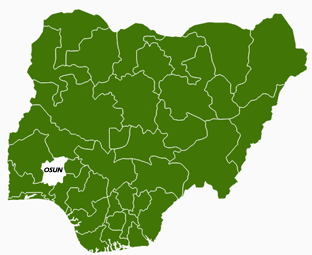
Osun Assembly speaker, 24 lawmakers leave PDP for Accord

Osun APC Reps caucus demands probe of alleged payroll fraud, cites audit findings


Discussion (0)