

Ogun 2027: Adeola Rearing to Go
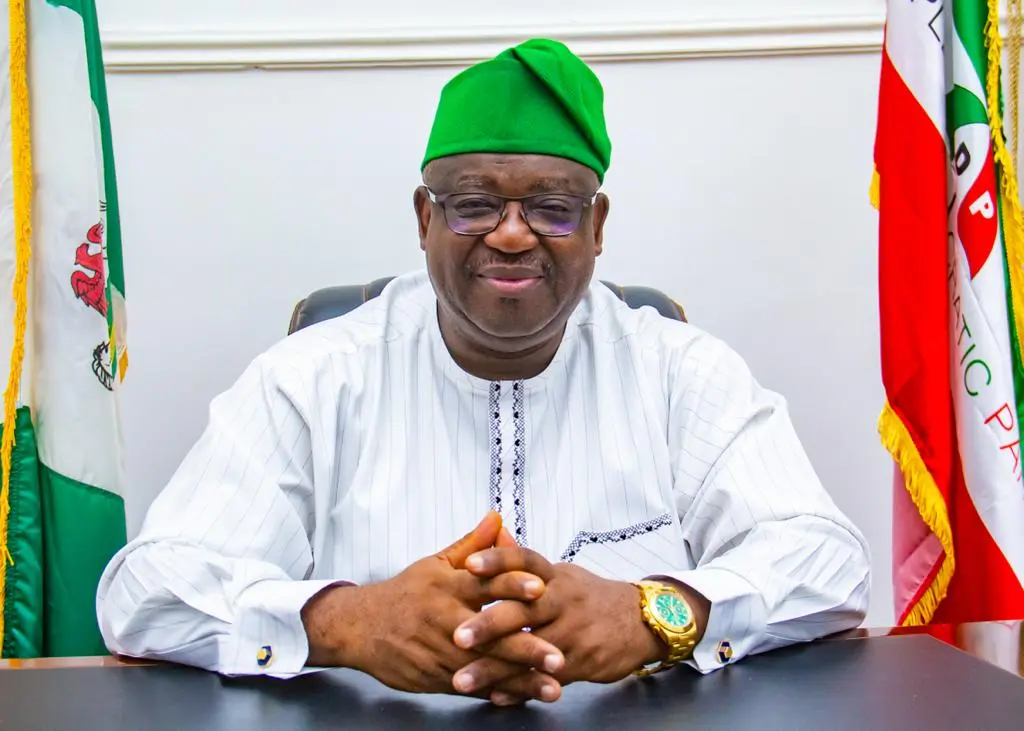
Kunle Somorin writes that Chairman of the Senate Committee on Appropriations, Senator Olamilekan Adeola, based on his political pedigree, is prepared for the All Progressives Congress’ governorship primary in Ogun state ahead of the 2027 general elections.
For nearly half a century, Ogun State has stood as a federation of Yoruba subgroups – Egba, Ijebu, Remo and Yewa. Yet one fact remains: since 1976, Yewa has never produced a governor.
Equity – affirmed by the Nigerian Constitution and Yoruba custom – demands that no part of a polity be permanently excluded from its highest offices. The late Awujale of Ijebuland, Oba SikiruKayodeAdetona, foresaw this imbalance and urged that Yewa should produce the next governor of Ogun State. His prognosis carries truth to its destination. Democracy without fairness descends into exclusion by another name.
Against this backdrop, Senator Solomon OlamilekanAdeola (Yayi) emerges not as a mere aspirant but as a corrective to historical imbalance – a moral and democratic necessity. Attempts to weaponise genealogy – casting him as an outsider – have now met their answer. Yoruba wisdom cautions: Àlejòkì í moìtànilé – a stranger cannot know the full story of the house. That story has been affirmed by those who keep it, and by the institutions that preserve lineage and belonging. As a Yoruba saying reminds us, ìròlèrìnpe, òtítoní í dél’eyìn – falsehood may travel far, but truth arrives all the same.
In Yewaland, Oba KehindeOlugbenle, the Olu of Ilaro and paramount ruler, publicly affirmed Adeola as a son of Yewa. Indeed, Adeola holds the traditional title of Aremo (prime son) of Yewaland, underscoring a lineage rooted in place and custom. The maternal seal followed. At Kemta Day the previous Sunday, Adeola declared: “Ilu iya mi nimowayi. Emi omoAbibatOlasumbo, omoAkinola Baba Pupa from KemtaOdutolu.”
The Alake and paramount ruler of Egbaland, Oba AdedotunAremuGbadebo, then added a defining pronouncement: “Kemtati fun wani Governor!” In Yoruba cosmology, kings are custodians of heritage; their declarations carry authority. Agbàkì í wàl’ojà, kíoríomodétuntunwó – elders do not stand by while a child’s head is misshapen. To question Adeola’s indigeneity now is, effectively, to challenge the crowns.
Constitutionally, a governorship candidate must be an indigene. Nigerian courts often consider attestations by traditional rulers when questions of lineage arise, recognising that in matters of ancestry, custodians of custom provide important context. With these royal affirmations, the central question – indigeneship – can reasonably be regarded as resolved. Eligibility is clear. Whether Yewa or Egba, count Senator Adeola a bona fide candidate. A kì í fi etesíle pa lápálápá – one does not abandon leprosy to treat ringworm. The debate must now shift from ancestry to governance.
On that score, Adeola’s record is measurable and visible across all three senatorial districts of Ogun State. He has facilitated over 270 infrastructure projects across Ogun West alone; empowered 15,000 market men and women with cash grants; trained thousands in entrepreneurship; and supported over 5,000 students through a Scholarship and Bursary Board. He helped reopen the Ikenne–Ilishan road, a corridor associated with the Awolowo era, long overdue for rehabilitation, and donated 102 transformers serving 435 communities.
In Sagamu, youths point to empowerment schemes; in Ifo, traders speak of solar-lit markets; in Abeokuta, students recall scholarships; in Yewa, elders reference roads linking their villages. These are not promises; they are monuments. The works that touch daily life are the truest testimonials across the three senatorial districts.
Politically, the EgbaLokan sentiment has broadened into a wider call for justice, grounded in the ethos of balance and inclusion. This call aligns with the current profile of the Chairman of the Senate Committee on Appropriations, a son of Yewa with an Egba mother. High Chief Bode Mustapha, the Osi of Egbaland, has publicly commended Adeola’s service and described him as highly qualified among the field of contenders in terms of public service records. One voter captured governance’s essence in practical terms: the road he built reduced her car repair costs. Adeola’s dual heritage – paternally Yewa, maternally Egba – is a bridge, not a burden. Tíkì í se tibàbáeni, ó lè se tiìyáeni – what is not of one’s father may be of one’s mother. For advocates of the EgbaLokan agenda, this is a conundrum that requires wisdom. Agbájoowo la fi n s’oyà; owokankì í gb’erùd’órí – it takes joined hands to lift a load. In a state sometimes strained by sub-ethnic rivalry, such a bridge can steady the polity.
Legitimacy, philosophers remind us, is earned. Aristotle wrote: “The good ruler is not he who is born to rule, but he who rules well.” Yoruba thought echoes this in omolúàbí – honour, responsibility and service.
Ìwàl’ewà – character is beauty. Adeola’s record is his manifesto; his projects are his pledges in brick and mortar, in kilowatts and scholarships. The question of origins is closed by law and custom. The campaign must now be fought on competence, character and outcomes.
History also counsels balance. Since 1976, Ogun’s leadership has passed from OlabisiOnabanjo (Ijebu), through periods of military rule, to Olusegun Osoba (Egba), Gbenga Daniel (Remo), IbikunleAmosun (Egba) and now DapoAbiodun (Remo). Yewa’s omission is glaring. The spirit of federal character – understood as an ethic of inclusion and fair representation – reminds us that cohesion is strengthened when all components see themselves in leadership. When law, custom and conscience converge, the argument is unassailable: justice demands that Yewa should have its turn.
Service-delivery indicators reinforce the case. In numerous town halls and community meetings, stakeholders point to reopened roads, restored power, improved market lighting, bursaries and training programmes that have equipped young people to start small enterprises. These are lived realities, not abstractions. As policy moves from spreadsheet to street, citizens measure leadership by the bridges they cross, the lights that stay on and the opportunities that open. The test of governance is not rhetoric but results – how many lives are tangibly improved through would be leaders’ interventions.
It is only fair to acknowledge that Yewa/Awori sons and daughters have every right to aspire to the governorship of Ogun State, even as I acknowledge Yayi’s edge. I do not consider any aspirant a footnote. Each is a chapter in this long drawn struggle that has marginalised people of Yewa/Awori origin. Over the years, names such as GboyegaIsiaka, AbiodunAkinlade, NoimotSalako-Oyedele, BiyiOtegbeye and others have surfaced – each carrying the hopes of their people.
Many observers argue that the seat has eluded Yewa not for lack of talent or ambition, but for want of unity and a common front. Fragmentation, multiple candidacies and internal rivalries have, at times, diluted the collective claim. The lesson is clear: a house divided against itself cannot stand. The right to contend is sacrosanct, but it is best exercised with caution, dignity and a commitment to the larger cause of Yewa’s long awaited turn.
If Senator Adeola has been deemed worthy to sit in the hallowed chambers of the National Assembly, where he has distinguished himself with tangible service and verifiable delivery, then it follows by both logic and justice that he is equally qualified to occupy the Governor’s Office at OkeMosan. The Constitution does not prescribe a lesser standard for the Senate than for the governorship; indeed, both demand competence, integrity and commitment to the people. Having facilitated infrastructure, empowered communities, and touched thousands of lives through scholarships and social programmes, he has already demonstrated the capacity to translate vision into dividends of democracy. To deny him the gubernatorial ticket after such a record would be to contradict both law and custom, and to deprive Ogun State of a tested hand whose service has spoken louder than rhetoric.
Within this context, the emergence of Senator Adeola should be seen not as a threat but as an opportunity. If he is qualified to be a senator and has delivered verifiable dividends of democracy – roads, scholarships, empowerment and infrastructure – what principle would justify denying him a fair contest for the gubernatorial ticket? The crowns have spoken, the Constitution is satisfied and his record is manifest. What remains is for all aspirants to embrace consensus where possible, coalition where necessary and civility at all times. Campaigns should elevate issues, not inflame identities; they should test plans, not impugn persons. A race anchored on programmes, capacity and probity will serve Ogun better than one framed by whispers of ancestry.
The road to 2027 will be defined by three questions that every contender must answer plainly. First, what is your plan to accelerate inclusive growth across Ogun’s three senatorial districts – industrial corridors, agribusiness value chains, urban renewal and rural connectivity alike?
Second, how will you deliver reliable power, water, primary healthcare and basic education to communities that have waited too long? Third, what is your approach to youth employment – skills, finance and markets – so that entrepreneurship is not a slogan but a pathway?
On these questions, Adeola’s portfolio of projects provides an opening bid. Others should place their records alongside his and let the people compare, line by line.
Good politics is, at heart, good governance. It listens, learns and builds. It makes room for difference without turning difference into division. It honours tradition without becoming captive to nostalgia. It remembers that in a republic, leadership is stewardship: those who seek the people’s mandate must show the people’s returns. As the saying goes, ohuntí a bá fi owo se, kì í bàenìkanlórí – the work of one’s hands vindicates. In a competitive field, the voters will look for what is concrete and measurable.
The argument, then, is complete. Indigeneity has been addressed in law and affirmed by custom. The historical omission of Yewa has been acknowledged by monarchs and widely recognised in public discourse. The service record in question is tangible and verifiable. The Constitution demands fairness; Yoruba tradition demands balance; democracy demands justice. All three converge on a simple conclusion: it is Yewa’s turn. And if the race is to be run on competence, delivery and character, Adeola enters it with a record that can be examined without fear or favour.
For now, the crowns have spoken. History calls. Let the campaign begin. In that campaign, one name stands – not as a slogan, but as a standard; not as a whisper, but as a monument; not as a claimant, but as a custodian. Yayi.
-Somorin writes from Abeokuta.



Discussion (0)